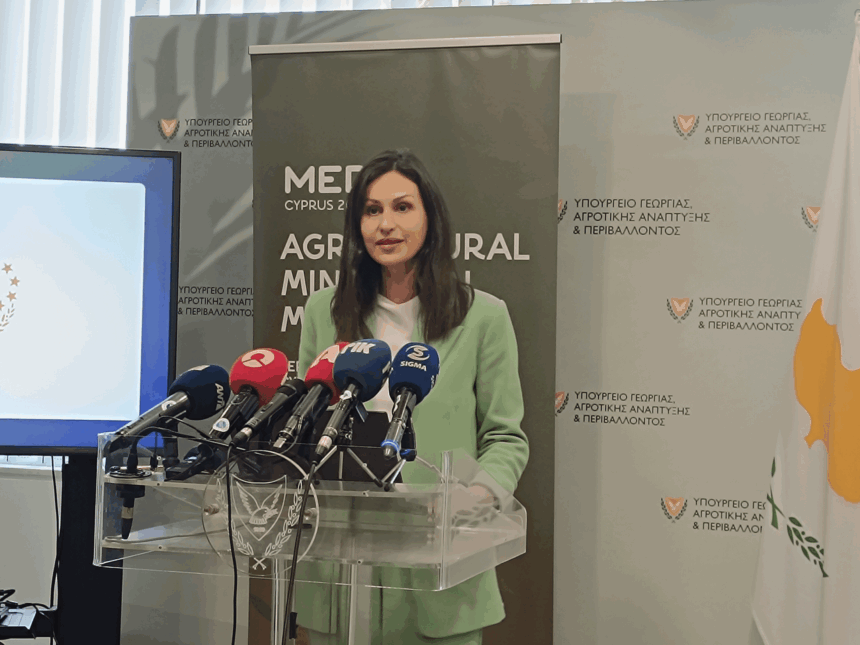
Agriculture Minister Maria Panayiotou announced plans to enhance Cyprus’ desalination capacity as the island grapples with a significant water crisis. Two new mobile desalination units are scheduled for installation in February and March, with one to be located near the Garyllis river and the other close to Limassol’s port.
Desalination units: Expansion of Desalination Facilities
The addition of these two units will bring the total number of operational desalination units in Cyprus to nine. Currently, five of these units are permanent installations located in Paphos, Episkopi, Vasiliko, Larnaca, and Dhekelia. The remaining four, which include the latest additions and one in Kissonerga and another in Moni, are mobile units.
According to Minister Panayiotou, these nine desalination units will collectively produce 282,000 cubic metres of water per day, thereby covering approximately 80 per cent of the island’s water supply needs. Furthermore, tenders have been issued for the installation of three additional mobile units, which are expected to have a combined capacity of 30,000 cubic metres per day. These units will be situated in Episkopi, Ayia Napa, and Vasiliko.
Controversial Plans in Larnaca
In addition to these new mobile units, Minister Panayiotou addressed the ongoing plans for a desalination unit in the village of Mazotos in the Larnaca district. Despite calls from the local village council to halt the project, she confirmed that the water development department is proceeding, and the unit is expected to produce 20,000 cubic metres of water daily.
Measures to Reduce Water Consumption
Alongside the expansion of desalination capacity, the government is implementing other strategies to mitigate the ongoing water crisis. One significant change involves golf course owners in Paphos being given a strict deadline to cease using mains water for irrigation. Following discussions, the owners have been instructed to install the necessary infrastructure to transition away from the Paphos irrigation system before the summer season.
Currently, two of the five golf courses in the Paphos district still rely on mains water, which has serious implications for local farmers by affecting the water quantities available to them. Minister Panayiotou stressed the urgency of this issue, highlighting that the average individual water consumption has reached alarming levels, with some individuals reported to be using over 500 litres per day. This is significantly higher than the national average of 120 to 140 litres.
Calls for Community Action
In light of the current crisis, the Minister has called on the public to reduce their water consumption by at least 10 per cent. She expressed concern that the target has not yet been met and warned that without significant reductions, water cuts may be necessary during the summer months. As part of a broader strategy to encourage conservation, the government is also working on acquiring equipment that can be installed on taps to help consumers save water.
Diminishing Water Reservoir Levels
The urgency of these measures is underscored by the latest statistics from the water development department, which indicate that Cyprus’ reservoirs are alarmingly low. As of now, the reservoirs are only 11.1 per cent full, with a total of 32 million cubic metres of water available. This figure represents a sharp decline from a year ago when reservoirs were 26.6 per cent full, equating to 133 million cubic metres of water.
Breaking down the reservoir levels by area reveals a troubling picture, particularly for the Paphos region, which mirrors the national average at 11.1 per cent. The Polis Chrysochous area has slightly better conditions, with reservoirs at 15.5 per cent full, while the Nicosia district reservoirs stand at 15.7 per cent. However, the southern conveyor is facing the most significant issues, with its reservoirs only 10.3 per cent full, down from 25.7 per cent a year ago.
A particular concern is the Yermasoyia reservoir in Limassol, which is currently at a critically low level of just 0.9 per cent full, a stark contrast to the previous year when it held over 30 times more water.
A Comprehensive Approach to Water Security
As Cyprus continues to face these pressing water challenges, Minister Panayiotou’s announcements signal a renewed commitment to improving the island’s water security through enhanced desalination capabilities and community engagement. With the urgent need for action, stakeholders across the island are being urged to collaborate in conserving water and addressing the ongoing crisis.