tutankhamun tomb — tutankhamun tomb — Egyptian authorities have made a remarkable addition to the Luxor landscape by exhibiting a plaster blocking wall from the tomb of King Tutankhamun. The unveiling took place last week alongside the restoration of two ancient tombs dating back to the New Kingdom period, showcasing scenes that depict daily life and funerary rituals.
Abdelghaffar Wagdy, the director-general of Luxor Antiquities, highlighted the significance of the wall, declaring it a unique artifact that has no equal in Egypt or elsewhere globally. He noted that most Pharaonic tombs have been looted over the centuries, making this artifact incredibly rare. “It is a one-of-a-kind artifact — the only one currently on display more than 100 years after the discovery of Tutankhamun’s Tomb,” Wagdy stated during the exhibition.
The original plaster blocking wall was integral to the sealing of the tomb, discovered by British archaeologist Howard Carter in 1922. This wall, which has now been publicly exhibited for the first time at the Luxor Museum, was used to secure the entrances to the burial chamber and features official stamps that reflect the funerary rituals associated with King Tutankhamun’s burial.
According to the Egyptian Ministry of Tourism and Antiquities, the wall bears seals belonging to Tutankhamun as well as those of the necropolis guards who were responsible for protecting the tombs from theft. This adds an extra layer of historical importance to a piece that has captivated archaeologists and historians alike.
The Valley of the Kings, located on the West Bank of the Nile in Luxor, is renowned for being the burial site of numerous pharaohs and nobles from the New Kingdom. Among its illustrious occupants is Tutankhamun himself, whose tomb, dating back to the 14th century B.C., was famously uncovered nearly a century ago.
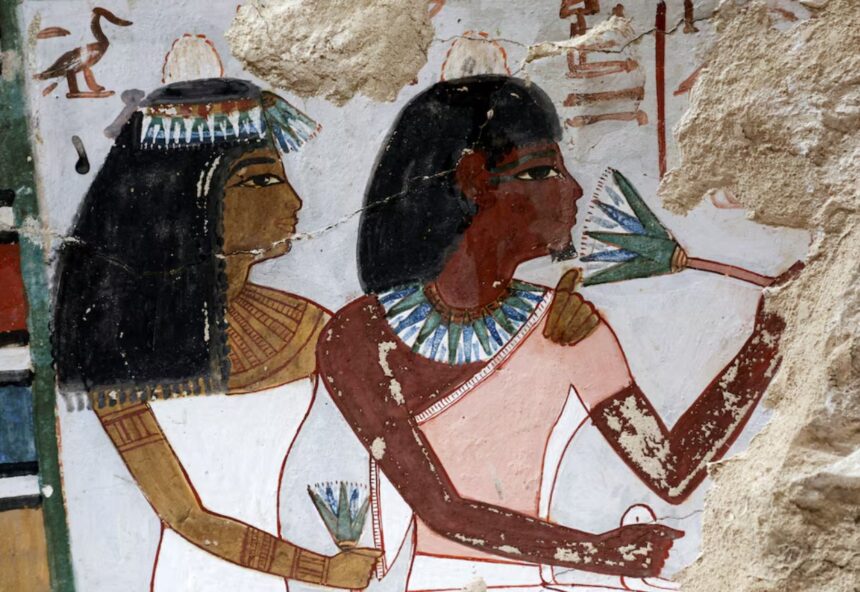
In addition to the Tutankhamun wall, the exhibition also revealed two newly restored tombs belonging to Rabuya and his son Samut, both from the 18th Dynasty. These tombs were serendipitously discovered in 2015 and are of considerable archaeological interest. Hisham El-Leithy, secretary-general of Egypt’s Supreme Council of Antiquities, remarked, “Today we are inaugurating two very important tombs that were discovered by chance.”
The restored tombs are adorned with vivid scenes that illustrate various activities from the era, including agriculture, crafts, bread-making, pottery, and wine production. These depictions provide a fascinating glimpse into the daily lives of those who lived during the New Kingdom, enriching our understanding of ancient Egyptian culture.