limassol businesses — Limassol businesses are grappling with increasing difficulties as labour shortages, administrative bottlenecks, and payment delays create a challenging environment, according to the Limassol Chamber of Commerce and Industry’s (Evel) autumn 2025 business barometer.
- When investments are planned, they primarily target buildings, computer and manufacturing equipment, and renewable energy, while interest in software and intellectual property has waned.
Limassol businesses: Persistent Pressures on Operations
The survey reveals that the issues affecting local businesses are not new but have become deeply entrenched, influencing daily operations and hindering potential growth. The shortage of skilled labour continues to be the foremost concern, mentioned by 22.5% of respondents.
Businesses across various sectors report that demand for skilled technicians, engineers, professional drivers, and specialised sales staff consistently exceeds supply. Many firms are forced to manage with fewer staff or postpone projects due to prolonged vacancies.
Challenges in Recruitment
Although there is a growing acceptance that hiring from abroad is necessary, the process is fraught with challenges. Lengthy procedures and regulatory hurdles, along with escalated employment costs, hinder effective foreign recruitment. This has led many to conclude that labour shortages are becoming a structural issue rather than a temporary setback.
Despite these challenges, recruitment intentions remain relatively positive. Nearly 60% of respondents indicated plans to hire over the next three months, with a focus on skilled positions. However, rather than signalling confidence, this trend underscores the need to secure essential skills just to maintain current operations.
Dissatisfaction with Public Sector Support
Alongside workforce issues, the survey highlighted significant dissatisfaction with public sector services. Government inefficiencies ranked as the second most pressing concern, cited by 15.2% of businesses. Slow processes, fragmented communication, and unclear guidance were common complaints, leading to frustrations that the administrative system complicates routine business activities.
More than half of the respondents expressed that public services were only marginally helpful or not helpful at all in supporting business operations, a stark decline from perceptions earlier in 2025. This widespread sentiment reflects growing concerns about inefficiency rather than isolated incidents.
Deterioration in Payment Discipline
The barometer also pointed to a troubling decline in payment discipline, with issues related to debt collection rising to third place among business concerns, now at 11.8%. This marks the first time the issue has reached double-digit status.
Respondents directly linked payment delays to cash-flow pressures, observing that late payments are increasingly affecting supply chains and liquidity. The situation is further aggravated by delays in the justice system, with 6.7% noting that lengthy legal procedures undermine enforcement, leaving companies vulnerable as they finance clients who fail to meet financial obligations.
Cost Pressures and Competitive Strain
Cost pressures continue to be a significant burden, with rising labour costs due to higher wages and living expenses being a primary concern. Businesses reported that competitiveness is under threat from intense domestic competition and cheaper international markets, particularly from Asia.
Though worries regarding interest rates have somewhat eased compared to previous surveys, financing conditions still appear restrictive, dampening investment enthusiasm. Less than half of respondents indicated plans to invest in the next three months, a decline from earlier assessments.
When investments are planned, they primarily target buildings, computer and manufacturing equipment, and renewable energy, while interest in software and intellectual property has waned.
Sales Expectations and Market Stability
Sales expectations indicate a trend towards stability rather than growth. In Cyprus, nearly two-thirds of businesses anticipate that their sales will remain largely unchanged over the coming three months, with only a small proportion expecting an increase. International sales forecasts are even more subdued as many businesses either predict stability or express uncertainty about external markets.
Perceptions of risk highlight rising costs as the most significant concern in the near term, followed by competition, financial market volatility, and restricted access to finance. Labour unrest and exchange-rate fluctuations were viewed as less pressing but still relevant factors.
Calls for Government Action and Reform
When asked what measures could enhance competitiveness and innovation, businesses pointed to the necessity of investment in digital transformation, the integration of artificial intelligence, collaboration with research institutions, and the simplification of funding processes. However, excessive bureaucracy and inconsistent policies were recurrently identified as barriers, particularly for smaller firms.
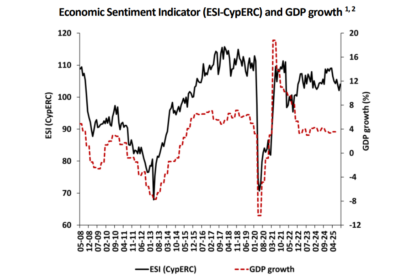
Confidence in the broader economy remains stable yet subdued, with just over 70% of respondents indicating their outlook on the Cyprus economy has not changed recently. Nonetheless, uncertainty persists, fuelled by geopolitical risks, rising commodity costs, international trade tensions, and intensifying competition from abroad.
In terms of government intervention, businesses expressed a desire for reduced business and corporate taxation, streamlining of bureaucratic processes, and clearer regulations. A more responsive public sector was also frequently noted as essential for improving the business climate.
Looking Ahead
The autumn 2025 barometer paints a picture of a Limassol business community that continues to operate, hire, and invest selectively despite the mounting pressures. With entrenched labour shortages, unresolved administrative inefficiencies, and deteriorating payment discipline, the survey suggests that targeted reforms are necessary to alleviate the ongoing strain on local businesses.