The once vibrant Laiki Yitonia is now in terminal decline, with the Nicosia municipality transferring its stewardship back to the interior ministry. Mayor Charalambos Prountzos confirmed the decision to the Cyprus Mail, signalling a significant shift for the area known as the ‘Popular Neighbourhood’. Established in 1983, Laiki Yitonia was a shining example of urban revitalisation, intended to showcase the rich culture and heritage of Cyprus.

Photo: cyprus-mail.com
Laiki yitonia: From Flourishing Hub to Shuttered Streets
Laiki Yitonia, a product of the post-invasion era, was birthed from a collaborative vision between two mayors, Mustafa Akinci and Lellos Demetriades, who sought to unite the divided city. While not formally part of a bicommunal masterplan, it emerged alongside other projects that aimed to rejuvenate neglected areas. The state expropriated derelict buildings in the vicinity of Onasagorou street, which were subsequently handed over to the municipality, allowing Laiki Yitonia to flourish as a commercial hub.

Photo: cyprus-mail.com
Designed by architect Pefkios Georgiades in a traditional style, the area was transformed into a pedestrian-friendly quarter filled with shops, restaurants, and artisan workshops. As a 2017 publication noted, it was a space that attracted thousands of visitors daily, despite some critics dubbing it a ‘fake stage set’.
The Decline of a Cultural Landmark
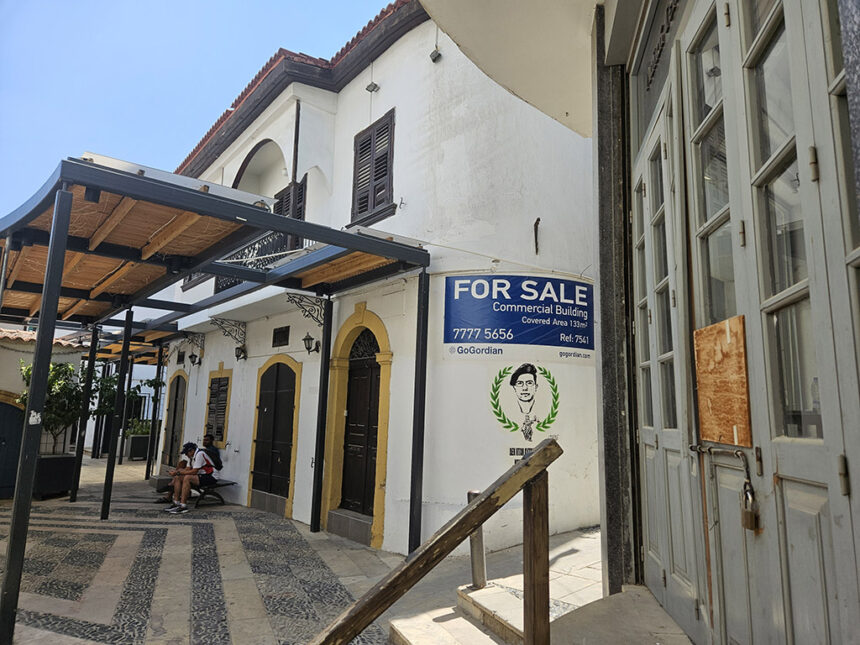
Today, however, Laiki Yitonia presents a stark contrast. The once-bustling narrow lanes are now eerily quiet, with many shops shuttered. Savvas Kyriacou, who runs the Coffee Therapy café on the outskirts of Laiki Yitonia, recalls a time when the area was alive with activity, where traditional crafts were demonstrated to tourists. He laments the decline, noting that visitors now pass through searching for something to do in a place that has lost its vibrancy.
The reasons behind this decline are complex and multifaceted. Ageing artisans have either retired or moved on, and there has been a noticeable shift in consumer habits. The rise of shopping malls has diverted foot traffic away from the old town. As the number of customers dwindled, shop owners began to cut corners, replacing traditional offerings with mass-produced items. The introduction of ‘tourist menus’ further diluted the area’s unique character.
Challenges and Changes in the Neighbourhood
Additional challenges have compounded the situation. Ongoing roadworks disrupted access to the area, while socio-economic shifts transformed parts of the old city into less desirable locales. The Covid-19 pandemic proved to be the final blow for many businesses, with the main restaurant in Laiki Yitonia closing its doors permanently.
Kyriacou exemplifies the current state of the neighbourhood, working long hours to sustain his café while catering predominantly to Erasmus students and local workers. In contrast, Marinos Georgiou, who recently opened a souvenir shop, represents a flicker of hope. He is optimistic that the development of nearby student accommodations will breathe new life into Laiki Yitonia, drawing in more visitors and potential customers.
A New Chapter Ahead
Despite the challenges, Prountzos remains cautiously optimistic about the future of Laiki Yitonia. The municipality is seeking a strategic investor to revitalise the area, although he insists that they never intended to sell it. The aim is to preserve the historical character while adapting to modern needs. However, this transition raises questions about the potential transformation of Laiki Yitonia into a less traditional space.
The mayor acknowledges the difficulties ahead, admitting that the Laiki Yitonia of the 1980s cannot be resurrected in its original form. As the neighbourhood stands at a crossroads, the hope is that with the right investments and a renewed focus on its cultural heritage, Laiki Yitonia can reclaim some of its former glory, even as it evolves into something new.