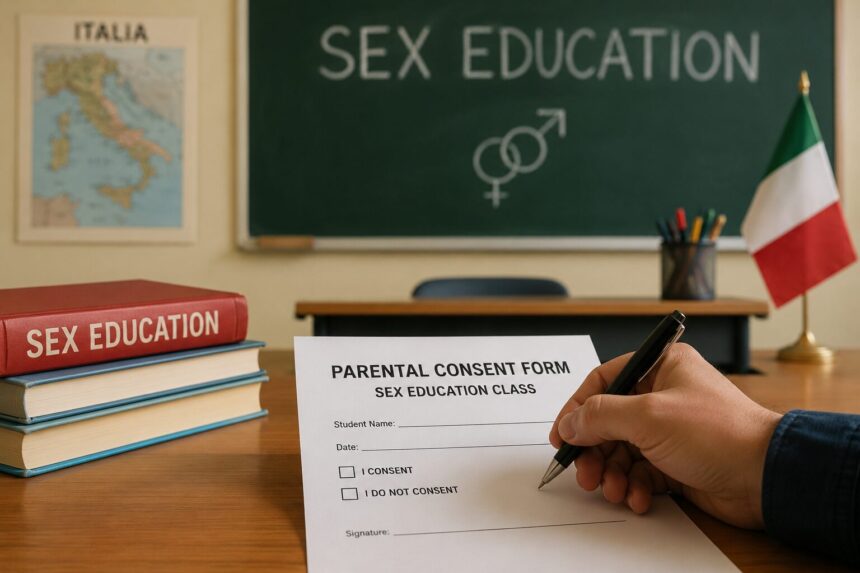
Sex education in Italian schools will now require parental consent, a significant shift endorsed by Prime Minister Giorgia Meloni’s government. This reform has sparked considerable debate, particularly among critics who argue that it may hinder teenagers’ access to essential information on sexual health and identity.
Legislative Changes and Their Implications
The new bill, championed by Education Minister Giuseppe Valditara, received final approval in the Senate on Thursday. Its provisions stipulate parental consent as a prerequisite for any sex education initiatives in schools, effectively excluding such education from nurseries and primary schools. Proponents of the reform believe it aligns with traditional family values, while opponents express concerns over its potential to restrict vital education for adolescents.
Criticism from Opposition Parties
Opposition politicians have voiced strong objections to the bill, describing it as an infringement on the educational rights of minors. Angelo Bonelli, co-leader of the Greens and Left Alliance party, highlighted the absurdity of requiring parental permission for sex education, likening it to seeking consent for teaching history or literature. This sentiment underscores the broader debate on the role of education in addressing contemporary issues surrounding gender and sexuality.
Government Justifications for the Reform
Following the Senate vote, Minister Valditara defended the initiative, asserting that it aims to protect minors from what he termed “the confusion of gender propaganda.” He emphasised that the reform seeks to reaffirm the constitutional principle that parents hold primary responsibility for their children’s education, a perspective that resonates with certain segments of the population.
The Language of Gender Debate
Terms like “gender theory” and “gender propaganda” have become buzzwords in political discourse, often wielded by conservative factions to critique educational policies that challenge traditional gender norms. This rhetoric reflects a wider cultural struggle over the interpretation of gender identity and sexual education in society.
Changes to School Policies Regarding Sex Education
Under the newly enacted law, educational institutions are mandated to notify families at least seven days prior to any sex education activities. This notification must include details about any external experts or organisations involved in the programmes. The goal is to ensure parents are adequately informed and can make decisions aligned with their values.
Support from Traditionalist Groups
Groups such as Pro Vita & Famiglia, which advocate for traditional family values, have applauded the legislative changes. They argue that the requirement for parental consent empowers families to vet and potentially reject educational projects that they perceive as inappropriate. A spokesperson for the group stated, “Parents will be able to learn about, identify and reject in advance inappropriate projects that promote gender fluidity, abortion, surrogate motherhood and an ideological vision of sexuality among minors.”
The Context of Sex Education in Italy
It is noteworthy that sex education is not compulsory in Italy, setting it apart from many other European nations. A survey conducted by Save the Children in 2025 revealed that only 47% of Italian teenagers had received any form of sex education, highlighting a significant gap in knowledge that the new law may exacerbate.
The Broader European Perspective
In contrast, many European countries have made strides in integrating comprehensive sex education into their curricula, recognising its importance in equipping young people with the knowledge they need to make informed decisions about their health and relationships. The Italian government’s recent reform raises questions about the future of sex education in the country and its alignment with broader European standards.
Future Considerations for Italian Education
The implications of this reform are yet to be fully realised, as schools navigate the new requirements. Educators will need to strike a balance between complying with parental oversight and ensuring that students receive the information they need to navigate the complexities of modern relationships and sexual health.
Community Reactions and Ongoing Debate
The decision to require parental consent has ignited discussions within communities across Italy. Supporters of the reform argue that it restores parental authority, while detractors fear it may lead to a generation lacking essential knowledge about their bodies and relationships. As the debate continues, it remains to be seen how educators and families will adapt to this new landscape.