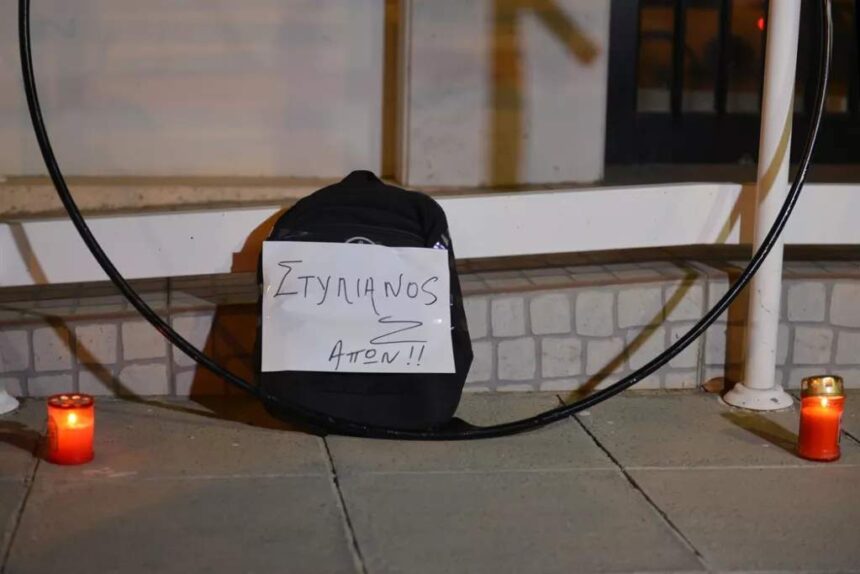
The tragic case of 14-year-old Stylianos Constantinou highlights the grave implications of inadequate state intervention. During a court session in Nicosia, a criminal investigator testified that Stylianos, whose death by suicide in 2019 ignited a series of criminal proceedings, should have been placed under the care of Social Welfare Services for his safety.
- The proceedings are set to continue with further cross-examination, as the court seeks to uncover the layers of neglect and potential abuse that contributed to this heartbreaking case.
Andreas Andreou, the investigator, shared his insights during the ongoing cross-examination in front of the Nicosia district court. He stated unequivocally that had the state acted decisively, Stylianos might still be alive today.
Stylianos’s situation drew attention not only because of his untimely death but also due to the alleged neglect by state services that were supposed to protect him. The court is currently delving into the responsibilities of both the family and state agencies in the lead-up to his tragic end.
In May 2026, two officers from the Social Welfare Services received suspended prison sentences after admitting to neglecting their official duties in connection with Stylianos’s case. Andreou’s testimony acts as a critical examination of those responsibilities, particularly focusing on the actions, or lack thereof, taken between 2010 and 2012 when multiple reports of domestic violence were made.
When pressed by Victor Akamas, the lawyer representing one of the defendants, Andreou confirmed that the third defendant, who was responsible for monitoring Stylianos’s case, had failed to act appropriately based on the information available. “If Stylianos had been removed from his parents, he would probably be alive today,” Andreou testified.
The investigation revealed disturbing details about Stylianos’s home life. Reports surfaced indicating that he had attended school with visible marks and had spoken about being beaten with a belt. Eyewitness accounts suggested that Stylianos described his father’s violence in chilling terms, stating he was “beaten like a dog.” Yet, despite the alarming reports, no concrete medical evidence was collected during the investigation to substantiate claims of physical abuse.
Andreou pointed out that, while some actions were taken, they were insufficient to ensure Stylianos’s safety. He noted that certain incidents were not reported to police, and attempts by Social Welfare officers to engage with the father, who was accused of abusive behaviour, were largely ineffective.
Evidence presented during the court proceedings indicated that, despite the efforts of various agencies, the family environment remained deeply problematic. Andreou expressed concern that the response from the Social Welfare Services lacked the urgency required in such severe circumstances. “From kindergarten until the middle of the second year of primary school, whatever was done to protect Stylianos appears not to have been enough. The situation was out of control,” he stated.
During the investigation, Andreou highlighted concerning details, such as a hunting shotgun being found in Stylianos’s home, which should have prompted immediate action from the authorities. He emphasised that the presence of such a weapon, combined with other indicators of domestic violence, should have led to a more proactive approach from the Social Welfare Services.
The court also examined the prevailing attitude within Social Welfare Services at the time, where keeping families intact was often prioritised over the immediate safety of children. Andreou acknowledged this approach but argued it does not excuse the lack of action taken to protect Stylianos.
An October 2011 multidisciplinary meeting at Stylianos’s school discussed the possibility of removing him from his family, but ultimately, no action was taken. Andreou pointed out that the discussions had identified significant concerns, yet they did not lead to a protective intervention.
The proceedings are set to continue with further cross-examination, as the court seeks to uncover the layers of neglect and potential abuse that contributed to this heartbreaking case.