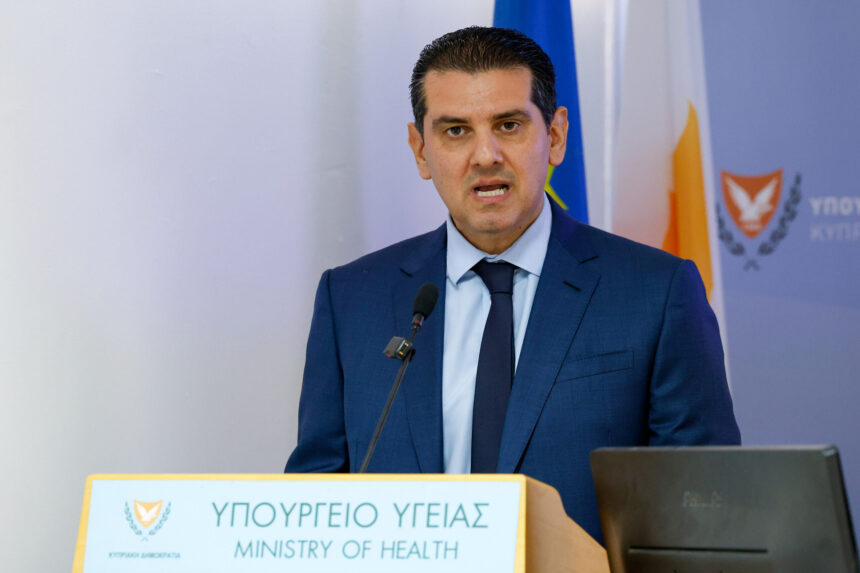
The health ministry has unveiled a budget of €1.51 billion for 2026, representing a robust investment in the nation’s healthcare system, according to Health Minister Michael Damianos.
- The health ministry has unveiled a budget of €1.51 billion for 2026, representing a robust investment in the nation’s healthcare system, according to Health Minister Michael Damianos.
On Friday, Damianos detailed the budget during a session with the House finance committee, noting that it includes €333 million in revenue. A significant portion, amounting to €870 million, will serve as the state’s general contribution to the national health scheme (Gesy), reflecting an increase of €101.2 million from the previous year.
Damianos emphasised that this budget demonstrates a commitment to developing a “modern, sustainable and patient-centred” health system. He outlined plans to strengthen public hospitals, enhance preventive care, and invest in innovation, alongside initiatives aimed at upskilling healthcare personnel.
Healthcare system: Investment in Development Projects
Development projects for 2026 are projected at €64.5 million. These funds will support the construction of a new building for the general state laboratory, the acquisition of updated medical equipment, and software enhancements, all part of the broader recovery and resilience plan.
Regular ministry expenses are set at €1.5 billion, while specific development spending will reach €9.76 million. Notably, a large portion of the ministry’s revenue, approximately €297 million, is derived from salaries of staff seconded to the state health services organisation, which constitutes about 89.2 per cent of the total income.
Ambitious Goals for 2025-2027
During the presentation, Damianos outlined ambitious goals for the 2025-2027 period, including the introduction of new preventive programmes, upgrades to hospital services, and granting further autonomy to Gesy. He noted that reforms are already in progress, such as the establishment of the national clinical documentation centre, the national cancer institute, and the national food safety authority.
“With a focus on prevention, innovation, and transparency, the ministry of health aims to provide safe, high-quality and accessible services for all,” Damianos stated, highlighting the ministry’s forward-thinking approach.
Concerns Raised by MPs
However, not all discussions were positive. MPs raised concerns regarding capacity planning, the state of mental health services, and the functionality of oncology departments. Issues surrounding reliance on temporary staff, misuse of resources within Gesy, and long waiting lists for surgeries and specialist appointments were also emphasised. The need for improved service quality was a recurring theme.
Members of Parliament urged for a more rapid establishment of the national cancer institute and better management of ambulances, alongside calls to reduce hospital-acquired infections and enhance facilities in remote areas.
Contentious Exchanges and Legislative Delays
A particularly heated exchange occurred between Damianos and MPs concerning delays in introducing vital legislation. Deputy health committee chair and Disy MP Savvia Orphanidou questioned the status of the community mental health bill. “Vote first on what I sent you; more will follow,” Damianos retorted, indicating the urgency of the matter from the ministry’s perspective.
Pending legislation also includes frameworks for university clinics, radiology centres, and palliative care services. Orphanidou assured that the committee is striving to finalise all bills and denied any delays originating from Parliament.
Diverse Perspectives on Health Funding
Amidst the discussions, various MPs voiced their opinions on the budget and the health system’s future. Disy MP Charalambos Pazaros warned of the ongoing challenge of funding deficits within Gesy and emphasised the need for financial and administrative independence for public hospitals.
Akel MP Marina Nicolaou expressed disappointment with the government’s approach, citing a lack of long-term planning, staff shortages, and underfunded mental health services. She cautioned that foreign investments in private hospitals could lead to monopolistic practices.
Diko MP Chrysanthos Savvides called for the establishment of a paediatric emergency department at Paphos hospital to ensure equitable service delivery comparable to Nicosia and Limassol. Meanwhile, Edek leader Marinos Sizopoulos lamented a decline in service quality despite increased health spending, demanding immediate corrective measures to address systemic imbalances.
Dipa MP Alecos Tryfonides expressed support for the ministry’s vision but highlighted the need to tackle misuse, reduce waiting times, and enhance prevention efforts. He also called for urgent upgrades to health centres in regions like Troodos, Evrychou, and Pedoulas, alongside measures to combat hospital-acquired infections.