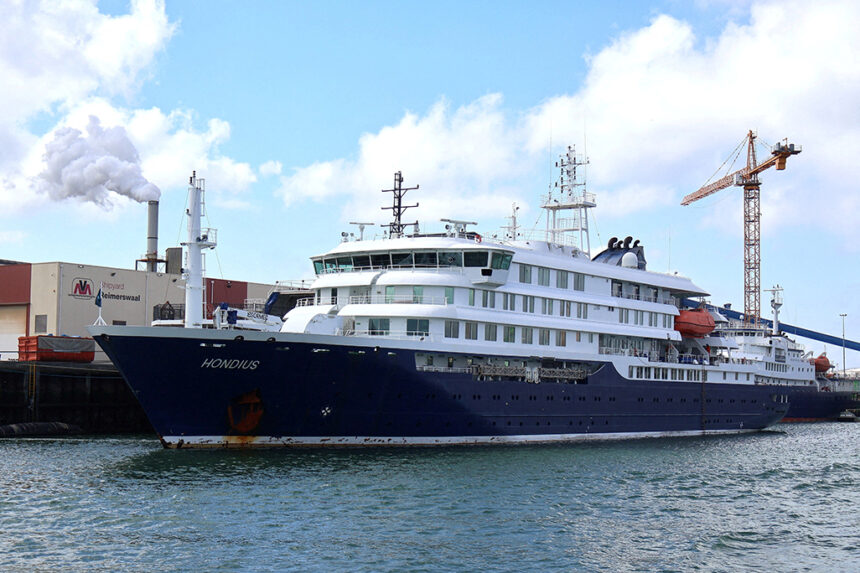
A suspected hantavirus outbreak has led to the evacuation of two individuals from a luxury cruise ship off the coast of Cape Verde. The vessel, which primarily carries British, American, and Spanish passengers, is currently holding around 150 people who are unable to disembark.
The situation escalated after three passengers, including a Dutch couple and a German national, tragically lost their lives. Authorities reported that a British passenger, who had already left the ship, is receiving treatment in South Africa. The urgency of the situation has left many passengers feeling anxious and uncertain.
In a poignant Instagram post, Jake Rosmarin, a U.S. travel blogger aboard the ship, expressed the emotional toll of the ordeal, stating, “We’re not just headlines: we’re people with families, with lives, with people waiting for us at home.” He noted that the uncertainty surrounding the outbreak is particularly distressing.
The World Health Organization (WHO) has reassured the public that the risk of wider transmission remains low, as hantavirus is primarily carried by rodents and is not easily transmitted between humans. Despite this, Cape Verdean authorities have opted to prevent the Dutch-flagged MV Hondius from docking as a precautionary measure to protect public health.
Oceanwide Expeditions, the operator of the ship, confirmed it is “managing a serious medical situation” and is exploring options to screen and safely disembark passengers on the islands of Las Palmas and Tenerife. Plans are also in place to repatriate two crew members displaying symptoms of the virus, alongside the body of the deceased German national and an associated guest who is not ill.
The MV Hondius embarked on its voyage from Ushuaia, Argentina, in March, initially marketed as an Antarctic expedition. The journey took the ship past notable locations such as the Falklands, South Georgia, and Ascension before reaching Cape Verdean waters on May 3.
WHO regional director for Europe, Hans Kluge, reiterated that there is “no need for panic or travel restrictions.” He indicated that the organisation is working with the involved countries to enhance medical care and conduct a thorough public health risk assessment. “Hantavirus infections are uncommon and usually linked to exposure to infected rodents,” Kluge added. “While severe in some cases, it is not easily transmitted between people.”
In South Africa, authorities confirmed that two of the deceased were Dutch nationals—a 70-year-old man who succumbed to the illness on St. Helena, and his wife, aged 69, who died after collapsing at Johannesburg’s OR Tambo International Airport. A laboratory test has since confirmed the presence of hantavirus in the British man receiving treatment in a private clinic.
Hantavirus can lead to severe respiratory illness and is typically transmitted when the droppings and urine of infected rodents become airborne. Although there are no specific treatments for hantavirus, care generally focuses on supportive measures, including mechanical ventilation in severe cases. Symptoms often start with flu-like signs, appearing one to eight weeks after exposure.
The source of this outbreak remains under investigation. A spokesperson for the Netherlands’ National Institute for Public Health (RIVM), which is assisting in the response, noted that it is still unclear how the infection was contracted. Possible scenarios include transmission from rats aboard the ship or infection during a stop in South America, where other rodents could have posed a risk.