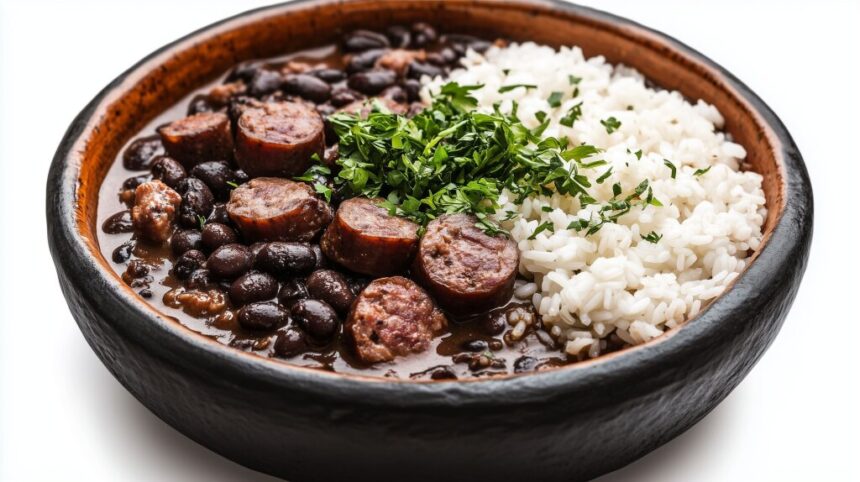
Feijoada is a dish that embodies Brazil’s rich cultural heritage, blending indigenous, African, and Portuguese influences into a beloved national stew. This hearty black bean dish is more than just a meal; it is a reflection of centuries of culinary evolution that took place during Brazil’s colonial period. While its exact origins are debated, most scholars agree that feijoada began to take form in the 18th or 19th century, rooted in the resourcefulness of enslaved Africans who adapted European bean stews to utilise less desirable cuts of meat.
Cultural Roots and Evolution
The history of feijoada is intertwined with Brazil’s complex social fabric. Enslaved individuals transformed Portuguese recipes, creating a nourishing stew that became a staple among local communities. This adaptation not only provided sustenance but also offered a means of cultural expression and identity.
As feijoada became more popular, it evolved from a simple meal into a symbol of unity and celebration, often associated with social gatherings and weekend lunches. Traditionally, it is served with rice, farofa (toasted manioc flour), orange slices, and collard greens, creating a meal that is both flavourful and visually appealing.
Regional Variations Across Brazil
Feijoada is not a one-size-fits-all dish; it varies significantly across different regions in Brazil. In Rio de Janeiro, for instance, it is a cultural institution, often enjoyed in restaurants on Wednesdays and Saturdays. Local versions might favour lighter meats or additional spices, reflecting the preferences of the area.
- Northeast Brazil: Here, the dish may incorporate different types of beans, showcasing regional agricultural practices.
- Southern Brazil: Variations in the south tend to be richer and heavier, often utilising a broader array of meats.
The communal aspect of feijoada cannot be overstated. It is typically enjoyed over several hours, inviting conversation and camaraderie among diners. This leisurely dining experience adds to the stew’s reputation as a dish meant for sharing, reinforcing its role as a social cornerstone.
Feijoada Beyond Brazil
Interestingly, feijoada’s influence extends beyond Brazil’s borders, resonating in places like Cyprus, where similar slow-cooked bean and meat dishes flourish. The Mediterranean’s appreciation for hearty, comforting meals is reflected in these local adaptations, highlighting a shared culinary ethos.
Within Brazilian diaspora communities around the globe, feijoada continues to thrive, evolving yet always maintaining a connection to its roots. International restaurants often feature this beloved dish, showcasing its adaptability while preserving its essence.
A Symbol of Community and Tradition
Feijoada holds significant symbolic meaning in Brazilian culture. It is often associated with conviviality, music, and cultural expression, particularly during weekend celebrations where samba music sets the tone for shared meals. The act of preparing feijoada is considered a ritual that demands patience and skill; the slow simmering process allows flavours to meld beautifully, rewarding those who invest the time in its creation.
Leftovers are a cherished part of the feijoada tradition. Many households believe that the stew tastes even better the following day, as the flavours deepen and mature. This characteristic not only encourages families to enjoy feijoada over multiple meals but also reinforces its role as a dish that transcends the dining table, creating lasting memories.
The Essence of Feijoada Today
Today, feijoada stands as both a national symbol and a living tradition that unites Brazilians through shared flavours and experiences. Whether served in bustling eateries in Rio or crafted in kitchens abroad, it continues to embody Brazil’s resilience, cultural richness, and adaptability.
As new generations embrace this dish, they carry forward the legacy of feijoada, ensuring that its story continues to be told through the lens of flavour and community. In every bowl of feijoada, one can taste not only the ingredients but also the history and cultural narrative that have shaped Brazil into the vibrant nation it is today.