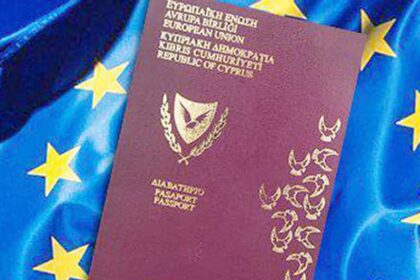
Cyprus’ foreign ministry has expressed its “warm welcome” for the groundbreaking peace agreement signed between Armenia and Azerbaijan, marking the official end of the long-standing Nagorno-Karabakh conflict. The Ministry hailed the significance of this momentous agreement, noting that it has the potential to foster lasting peace and promote prosperity across the region.
The foreign ministry stated, “This historic agreement creates momentum and great prospects for lasting peace and true prosperity in the region,” emphasising that peace will be maintained through mutual recognition of sovereignty, territorial integrity, and the inviolability of borders.
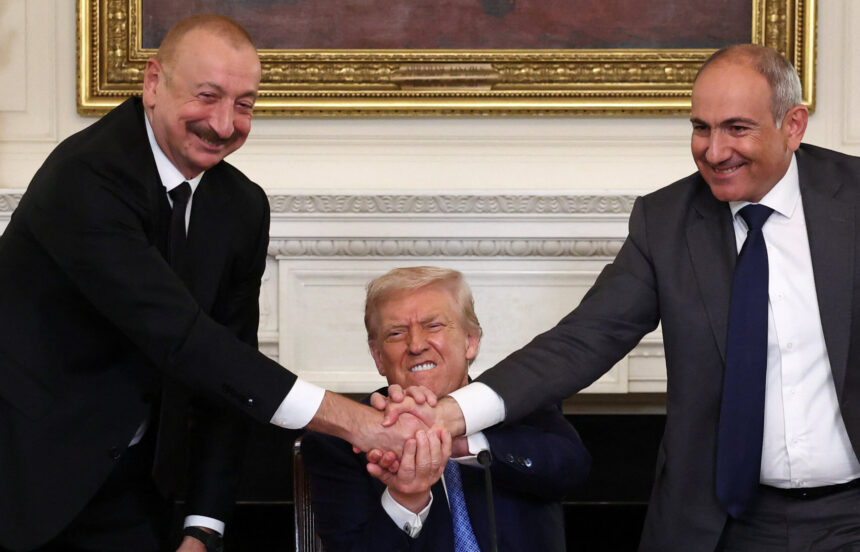
Additionally, the ministry acknowledged the pivotal role played by United States President Donald Trump in brokering the deal, describing his influence as “instrumental.” The peace agreement, signed at the White House, involved Armenian Prime Minister Nikol Pashinyan and Azerbaijan President Ilham Aliyev.
Significance of the Peace Agreement
This agreement not only seeks to formalise relations between Armenia and Azerbaijan but also opens avenues for economic collaboration and infrastructural development in the region. One of the main aspects of the accord is the establishment of the Zangezur corridor—a transport route that will facilitate direct connectivity between Azerbaijan and its exclave, Nakhchivan, through southern Armenia.
In a notable clause, Armenia has granted the US exclusive development rights in the Zangezur corridor for a period of 99 years. This opens the door for substantial investments and infrastructure projects, including rail, oil, gas, and fibre-optic installations, making it a hub for international trade and transit.
With the US now overseeing development in the corridor, it is set to be transformed into the “Trump route for international peace and prosperity,” governed under Armenian law. This unique arrangement illustrates how geopolitical interests can intertwine with regional development, potentially benefiting all parties involved.
Historical Context of the Conflict
The roots of the Nagorno-Karabakh conflict can be traced back to 1988 when ethnic Armenians in the region sought to transfer authority from the Azerbaijani Soviet Socialist Republic to the Armenian SSR. This move triggered a series of events that escalated into violent confrontations, leading to full-scale war after the dissolution of the Soviet Union.
A ceasefire was established in 1994, yet it paved the way for mass displacement of both ethnic Azeris and Armenians, creating an enduring humanitarian crisis. Throughout its existence, the self-declared “Republic of Artsakh” failed to gain recognition from the international community, which further complicated the situation.
The conflict reignited in 2020, resulting in significant territorial gains for Azerbaijan before an armistice was reached. However, tensions remained high, with Azerbaijan imposing a blockade on Nagorno-Karabakh in 2022, claiming to prevent illegal resource transportation. This blockade ultimately led to the capitulation of the “Republic of Artsakh” in September 2023.
As the situation evolves, it has prompted countless ethnic Armenians to flee the region, further altering the dynamics in a historically volatile area.
The Future of the Region
The Cyprus foreign ministry’s commendation of the peace accord underscores the potential for a transformative shift in regional relations. Cyprus is closely following the developments in the South Caucasus, as a peaceful resolution could inspire similar initiatives in other areas facing long-standing disputes.
Moreover, a stable and prosperous Armenia and Azerbaijan could have a ripple effect, fostering trade relationships and collaboration among neighbouring states, including Cyprus. This initiative presents an opportunity to rebuild trust among nations that have faced decades of conflict.
In conclusion, the landmark agreement between Armenia and Azerbaijan not only represents a historic step towards peace but also serves as a reminder of the importance of diplomacy in resolving entrenched conflicts. The Republic of Cyprus stands in solidarity with the region, hopeful for a future where both nations can thrive together in mutual respect.