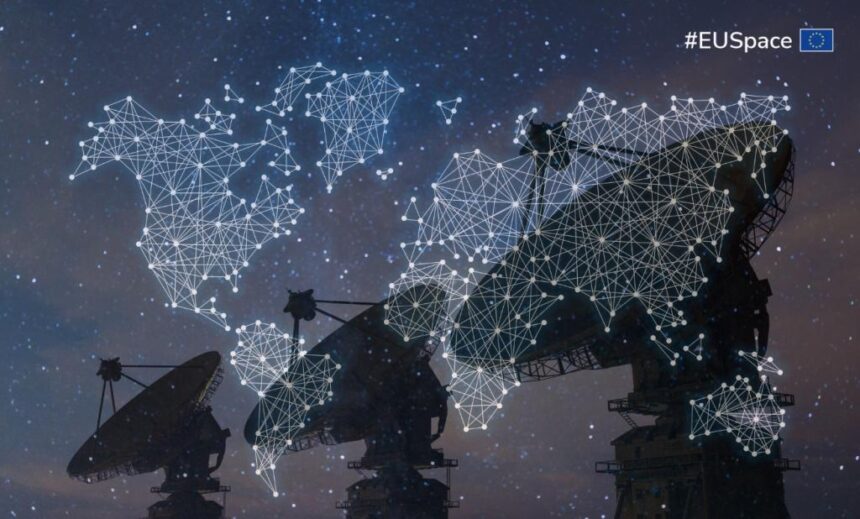
Space is often associated with distant galaxies and ambitious science fiction, but in Cyprus, it is a vital part of daily life.

Photo: cyprus-mail.com
- Space is often associated with distant galaxies and ambitious science fiction, but in Cyprus, it is a vital part of daily life.
- During my recent visit to the EU Space Days 2026 in Nicosia, I witnessed firsthand how space infrastructure supports critical services and enhances safety on the island.
During my recent visit to the EU Space Days 2026 in Nicosia, I witnessed firsthand how space infrastructure supports critical services and enhances safety on the island.
The event kicked off with a search and rescue demonstration at the Joint Rescue Coordination Centre (JRCC) in Larnaca, where the reality of space’s influence became clear. The JRCC is part of the international Cospas-Sarsat satellite system, dedicated to locating emergency distress signals from aircraft, ships, and individuals in peril. Watching the operation, it was evident that this rescue mission relied on an invisible network of satellites orbiting far above us.
This experience illuminated how space technology is not merely a futuristic concept; it is an essential component of modern infrastructure. Policymakers, EU officials, and entrepreneurs discussed a range of topics, from disaster management to telecommunications resilience, revealing just how intertwined space technology is with our everyday activities.
Georgios Synnefakis, GovSatCom programme manager at the European Union Agency for the Space Programme (EUSPA), emphasised the significance of the EU space programme: “It affects everyday life, economic activity, security and crisis response.” He outlined three fundamental capabilities underpinning effective crisis response: satellite navigation, Earth observation, and secure government communications.
In scenarios like wildfires, traditional communication networks may fail, complicating coordination among emergency services. This is where GovSatCom comes into play, enabling rapid access to secure satellite communications, ensuring that responders can remain connected even when terrestrial systems falter. For Cyprus, a nation grappling with increasingly severe wildfire seasons, this connectivity is crucial.
Christodoulos Protopapas, chief executive of Hellas Sat, highlighted the strategic importance of space infrastructure for Cyprus. “If submarine cables were disrupted, Cyprus could effectively be cut off from the outside world,” he warned. Satellite communications provide a critical backup, ensuring that even in times of crisis, the island can maintain connectivity.
Protopapas further explained the importance of European autonomy in space. He noted that relying solely on non-European systems raises concerns about control and reliability. By investing in domestic space capabilities, Cyprus can secure its communications infrastructure and safeguard its data.
Hellas Sat has been an integral part of this growth since its establishment in 2001. Not only does the company operate a major teleport facility in Cyprus, but it also actively collaborates with the Cypriot government to provide vital connectivity services. Protopapas shared his vision for the future, which goes beyond mere connectivity to encompass satellite imagery and Earth observation for enhanced agricultural monitoring and environmental management.
As satellite technology advances, authorities can use it to predict wildfires, assess irrigation efficiency, and improve emergency preparedness across various sectors. These applications are not mere concepts—they are practical tools that can significantly impact day-to-day life in Cyprus.
Furthermore, Hellas Sat is expanding its digital infrastructure, with plans for a Tier IV data centre in Cyprus. This initiative positions the island as a secure hub for disaster recovery and high-reliability digital services, reinforcing its strategic role in the region.
As we look to the future, the real narrative surrounding space may not revolve around celestial conflicts but rather the control and utilisation of satellites that underpin our societies. In this new landscape, Cyprus is not merely an observer; it is an active participant in shaping its own destiny through space technology.