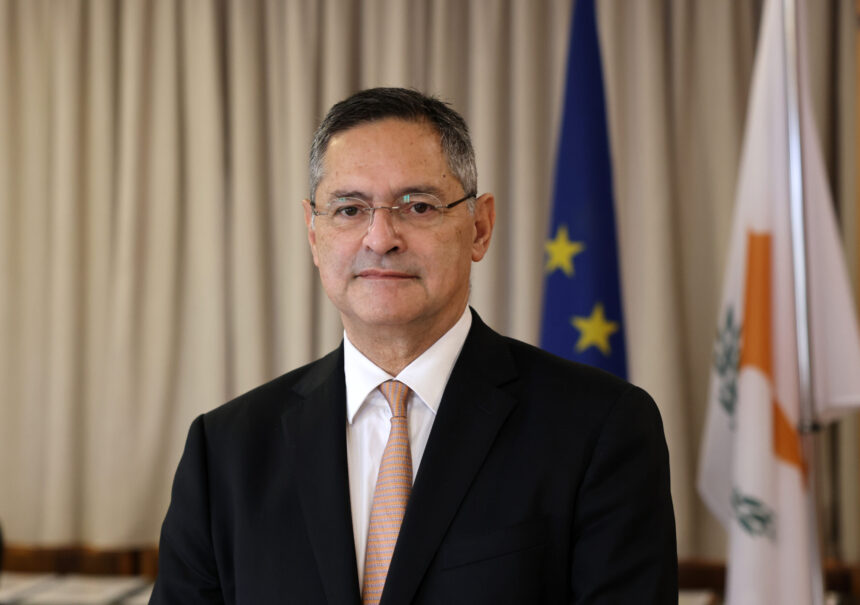
The Central Bank of Cyprus (CBC) governor Christodoulos Patsalides has called for the implementation of compulsory financial literacy lessons in schools, stressing that such education is crucial in equipping young people for today’s complex economic landscape.
In his article titled “Investing in the financial literacy of the new generation,” Patsalides highlighted the growing importance of financial education in public discourse, stating that Cyprus consistently ranks low in financial literacy levels across the European Union.
Statistics from the Organisation for Economic Cooperation and Development (OECD) reveal that only 58.8% of young people in Cyprus achieve a basic understanding of financial concepts. In contrast, 80.1% of individuals aged 40 to 49 meet this benchmark. Alarmingly, just 12.9% of young people attain the minimum standard of overall financial literacy compared to 19.1% among their older counterparts.
Patsalides pointed out that these figures reflect not just a lack of knowledge but also the inadequate financial education available within families, society, and schools. He noted that the Cyprus Financial Literacy and Education Committee, established in June 2024, aims to address these issues. Chaired by the CBC and including members from the finance and education ministries, as well as the Cyprus Securities and Exchange Commission, the committee’s mission is to implement a National Strategy for Financial Literacy and Education.
One of the committee’s strategic goals is to enhance financial education in both public and private schools. The governor remarked that the current environment necessitates better financial management skills, especially as young people navigate the immediate access to credit and online investments.
“Financial decisions are being made faster than ever, but not necessarily with the required knowledge or risk assessment,” he stated, cautioning against the misinformation prevalent in the digital age. He expressed concern that the allure of quick profits from investments, including cryptocurrencies, often leads to poor financial choices among the youth.
Patsalides proposed that a standalone financial literacy course should be integrated into the school curriculum, allowing students to gain essential knowledge and practical skills. This course would enable them to connect theoretical concepts with real-life scenarios, such as budgeting and investment assessment, better preparing them for adult life.
He also acknowledged the initiatives by Education Minister Athena Michaelidou to bolster financial education in public schools. A six-hour programme focusing on personal budgeting, saving, and borrowing has already been rolled out for third-year gymnasium students, with plans to extend it further in subsequent years.
In addition, financial education has been woven into health education classes for sixth-grade students. The committee is committed to developing comprehensive educational materials that cover a wider range of financial topics, including taxation and insurance, to ensure that students receive a well-rounded financial education.
Patsalides emphasised the importance of moving from theoretical knowledge to the practical application of financial skills in everyday life. A national financial literacy website is also in the works, set to serve as an information portal with reliable resources and tools to aid citizens’ financial decision-making.
As the governor remarked, “The need for a substantial strengthening of financial literacy remains more timely than ever.” He underscored that investing in financial education is not merely an educational enhancement but a critical step towards fostering informed citizens and resilient households.
In closing, he quoted Nelson Mandela, stating, “Education is the most powerful weapon which you can use to change the world,” reinforcing the idea that financial literacy is foundational for a more sustainable economic future.