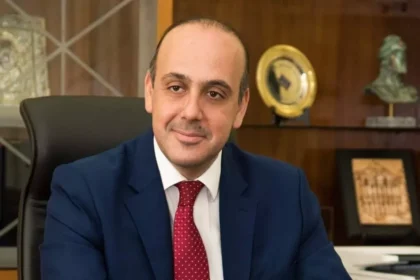
The quest for Atlantis continues as Robert Sarmast, a one-time seeker of the legendary city, returns to Cyprus this month with fresh insights and plans for a new expedition.

Photo: cyprus-mail.com
- The quest for Atlantis continues as Robert Sarmast, a one-time seeker of the legendary city, returns to Cyprus this month with fresh insights and plans for a new expedition.
Over the years, the world has been captivated by stories of sunken cities, with a study revealing around 2,600 submerged sites across 19 countries, many linked to ancient flood myths. Cyprus, with its rich history, is home to sites like the ancient port of Amathus, now an underwater archaeological park near Limassol, and the submerged remains of Salamis.

Photo: cyprus-mail.com
More than two decades ago, Sarmast stirred excitement among enthusiasts of ancient myths when he attempted to locate Atlantis off the coast of Cyprus. With support from the Cyprus government, he led two expeditions, but the quest eventually faded, leaving the location of Atlantis shrouded in mystery.
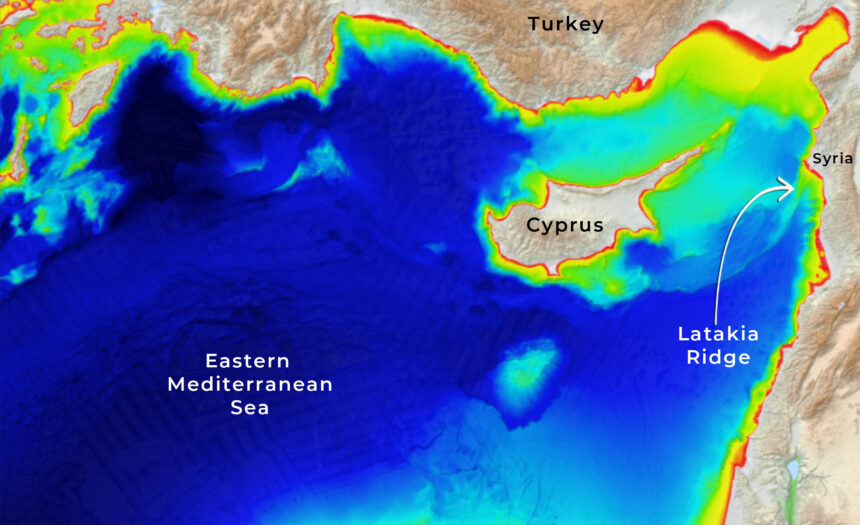
Now, Sarmast is back, armed with a new book titled The Sunken Peninsula: An Astonishing Underwater City at the Latakia Ridge, and a renewed ambition to investigate the Latakia Ridge, located about 20 miles off Syria’s coast yet still close enough to Cyprus. This time, however, the focus is not on Atlantis but on identifying whether certain underwater structures observed two decades ago are man-made.
Atlantis: Shifting the Focus from Myth to Science
The project’s promotional material from the Latakia Ridge Research Institute (LRRI) explicitly distances itself from the mythology surrounding Atlantis. “The term ‘Atlantis’ is loaded with mythology,” the blurb states, emphasising a commitment to scientific investigation. Sarmast and his team are concentrating on a specific anomaly on the Latakia Ridge that may be either natural, artificial, or a blend of both.
During a recent lecture at the University of Cyprus, Sarmast unveiled AI-enhanced underwater maps that reveal a highly geometric structure lying half a kilometre beneath the waves. This cutting-edge technology allowed researchers to identify the site by instructing the AI to “find what doesn’t fit the background geology.” The results, confirmed by multiple independent datasets, suggest these patterns are not merely mapping errors.
New Findings and Future Expeditions
While Sarmast is careful to clarify that they are not declaring the discovery of a lost city, he insists that the geometric anomaly warrants further examination. “If this structure turns out to be entirely natural, it will still force us to rethink how such geometry can arise on the seafloor,” he noted. If any part is engineered, it could open a new chapter in the understanding of human history in the region.
The newly identified site lies beyond previous search areas, highlighting the limitations of earlier expeditions that lacked the technology needed to explore this region thoroughly. With modern, high-resolution maps and AI-assisted terrain analysis, the LRRI believes they can provide fresh insights into the ancient Mediterranean landscape.
Implications for Ancient Civilisation
Sarmast’s research posits that if the structures are confirmed as engineered, they might support theories proposed by Russian geophysicists in the mid-20th century, suggesting parts of the north-eastern Mediterranean were above sea level more recently than previously thought. This discovery could redefine Cyprus’s role in the ancient world, potentially reshaping narratives about the emergence of complex civilisations.
Part of Sarmast’s visit to Cyprus also involves planning a scientific expedition aimed at obtaining physical evidence of the anomaly through core sampling and high-resolution sonar surveys. This mission could require a significant financial investment, with costs potentially ranging from millions to tens of millions of dollars.
A Call for Collaboration
As he outlines his plans, Sarmast is keen to engage the scientific community in this endeavour. “We are not asking anyone to accept a lost civilisation,” he clarified. “We are asking them to look at a very specific anomaly and help us explain something that, so far, doesn’t fit any standard geological pattern.”
With the next steps grounded in field science, the upcoming expedition could either reveal a natural mechanism explaining the peculiar layout or suggest human engineering predating current understandings of ancient water management. As Sarmast prepares for this new chapter, the excitement surrounding the mysteries of the deep continues to grow.