buildup of — buildup of — The assembling of warships around Cyprus has raised concerns about the government’s stance on military involvement in the ongoing conflict. President Nikos Christodoulides has made a notable push for military support, showcasing a significant shift in the island’s foreign policy.
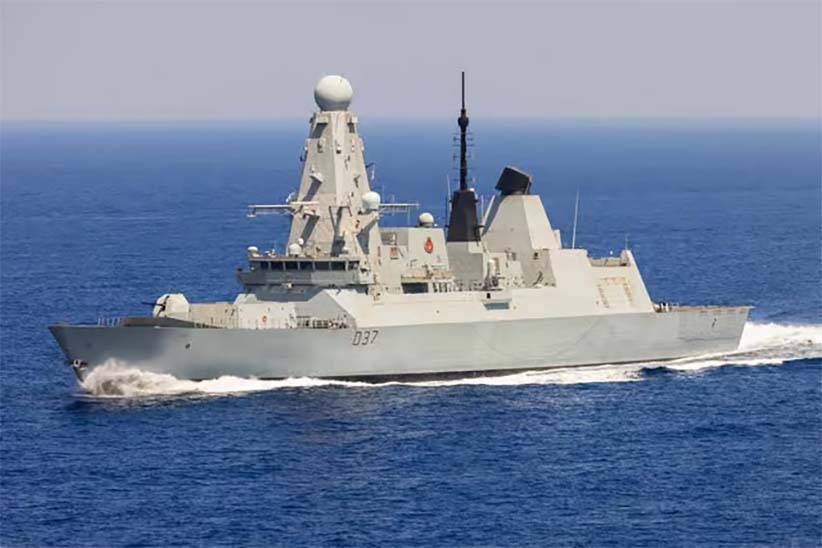
As of late Tuesday, two frigates from the Greek navy were expected to arrive, with additional support promised by French President Emmanuel Macron, who will send two more frigates along with anti-missile and anti-drone defence systems. British Prime Minister Keir Starmer has also deployed a warship to bolster the island’s security. The move is unprecedented in Cyprus’s request for military assistance from major EU powers, reflecting a strategic pivot amidst rising tensions.
Christodoulides’ actions have been praised, particularly his engagement with Greece’s Defence Minister Nikos Dendias, where he expressed gratitude for what he termed a “particularly substantive as well as symbolic move.” This could be seen as an effort to strengthen ties within the European Union, which has shown a willingness to assist Cyprus.
However, the government has been careful to emphasise that Cyprus “never took part, is not taking part, nor will it take part in any war operation.” Spokesperson Konstantinos Letymbiotis reiterated this stance while briefing journalists. This repeated assurance indicates a government struggle to balance its military posturing with a commitment to a humanitarian role.
The mixed signals coming from the government may inadvertently fuel perceptions of Cyprus as a potential target. While military support is meant to enhance security, the framing of these actions can imply involvement in the conflict, raising questions about the island’s actual neutrality. The British base in Akrotiri has already faced threats, evidenced by a drone attack that, while causing minimal damage, highlights the risks present in the region.
As Cyprus welcomes international support, the underlying message may be muddled. While the arrival of frigates is intended to bolster morale and security, it also complicates the narrative of neutrality the government seeks to project. Observers note that the presence of military vessels, even for protective reasons, could inadvertently make Cyprus appear more involved in the conflict than it wishes to be.
The government faces a delicate balancing act: maintaining relationships with powerful allies while assuring the public and international community of its non-combatant status. The recent military cooperation with Greece, France, and other European nations marks a new chapter in Cyprus’s defence strategy, yet it also necessitates clear communication to avoid misinterpretation of the island’s intentions.
As the geopolitical landscape evolves, Cyprus must navigate its role carefully. The push for military assistance, while beneficial in terms of security, could lead to unintended consequences if not managed properly. The current situation serves as a reminder that actions can speak louder than words, and the complexities of international relations often require nuanced strategies.