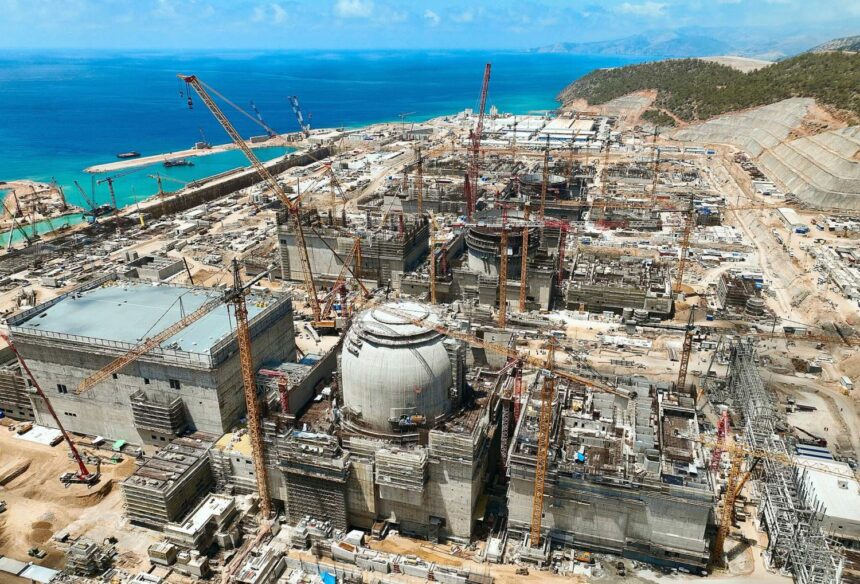
akkuyu nuclear — The Akkuyu nuclear power plant under construction in Turkey has come under scrutiny from the Cyprus Environmental Organisations Federation (OPOK), who assert that it poses a significant public health risk to Cyprus. Located approximately 65 kilometres from the island, the plant’s impending operation of its first reactor in 2026 has sparked increasing concerns over environmental safety and transparency.
Akkuyu nuclear: Environmental Risks Highlighted by OPOK
On Wednesday, OPOK issued a statement emphasising the need for prevention and the importance of environmental protection in light of the project. During a session of the Parliamentary Environment Committee on 11 February, discussions focused on the potential impacts of the plant and Cyprus’ preparedness to handle any incidents that may arise.
Lack of Consultation Raises Alarms
The committee meeting revealed that while the Republic of Cyprus does not formally oppose the construction of the Akkuyu plant, there are serious concerns regarding the lack of substantial consultation and information-sharing from Turkey, which is not a signatory to the Espoo Convention. This absence of legal obligation to inform neighbouring states about environmental impacts has led to heightened apprehension among Cypriots.
Preparedness Measures in Place
State services assured the committee that they are operating within existing legislation, conducting regular sampling checks and continuous monitoring of the environment. Currently, two permanent marine radiation monitoring stations are in operation, with plans for a third to bolster surveillance capabilities.
The Electra Plan for Crisis Management
Under the “Electra” plan, a coordinated effort involving 25 state services aims to manage potential crises related to the nuclear plant. This group focuses on sampling, dispersion modelling, public health, and operational coordination. Emphasis was placed on the critical first 24 hours of any incident, given the plant’s proximity to Cyprus.
Seismic Activity and Environmental Concerns
OPOK has raised issues that extend beyond emergency preparedness, particularly the location of the plant in a seismically active region. Although it was stated that the Mersin area was chosen for its comparatively lower seismic activity, the federation highlighted that environmental consequences could arise throughout the plant’s operational life. Key concerns include the continuous intake of seawater for cooling and the thermal discharge into the Mediterranean, which could disrupt marine ecosystems.
Potential Transboundary Effects
In the event of a nuclear or radiological accident, OPOK warned that the ramifications would not be contained to Turkey. Radioactive materials could cross borders through air masses and sea currents, leading to serious public health impacts and detrimental effects on fisheries, agriculture, and tourism in Cyprus. The Mediterranean’s semi-enclosed nature could exacerbate the duration and severity of any pollution events.
Revising Emergency Protocols
OPOK further argued that the operation of a nuclear facility so close to Cyprus necessitates ongoing revisions of emergency protocols, the establishment of robust early warning systems, and consistent public communication. The federation remains opposed to nuclear energy, asserting that it is neither a safe nor sustainable option for future energy needs. They advocate for a transition towards renewable energy sources and enhanced energy efficiency to safeguard future generations.