eu-mercosur — Farmers are preparing to protest against the EU-Mercosur trade agreement, with MEP George Georgiou highlighting significant concerns about food safety standards and the future of traditional Cypriot products.
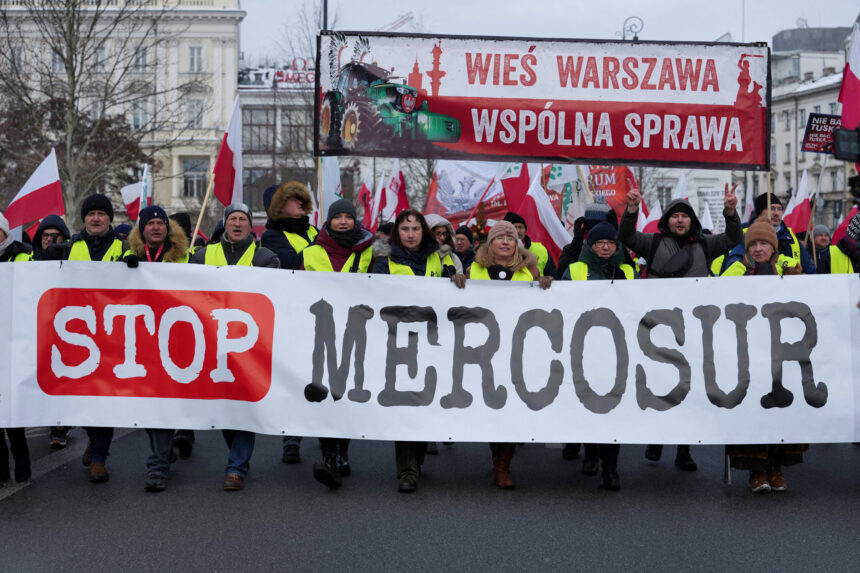
- Farmers’ union president Michalis Lytras announced that protests are set for Saturday, February 14, with a march planned from Eleftheria square to Europe House and then to the presidential palace.
- He stated, “We say no to a trade that baptises environmental destruction and deregulation as development,” emphasising the long-term health implications for consumers if local production falters.
- Christina Nikolaou, head of Akel’s environmental committee, described the agreement as contradictory to EU goals on deforestation and pollution, labelling the situation as “paradoxical.”
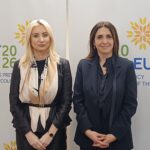
During a press conference at Europe House, Georgiou expressed strong opposition to the agreement, stating it threatens to flood the market with low-cost, mass-produced imports, which could jeopardise both public health and local agriculture.
He remarked, “The negatives in many areas are so many that we say we will not accept it,” emphasising that the deal could undermine the quality of food and fail to protect iconic products like halloumi.
Farmers’ union president Michalis Lytras announced that protests are set for Saturday, February 14, with a march planned from Eleftheria square to Europe House and then to the presidential palace.
Lytras condemned the agreement as “a tombstone for the agricultural sector,” reflecting widespread discontent among local farmers. Georgiou reiterated that they are not against European integration, saying, “We recognise the benefits of subsidies, but we want a Europe that serves its citizens, young people, health security and the environment.”
Despite the anticipated challenges, Georgiou plans to submit amendments to the agreement in Strasbourg next week, though he holds limited expectations for success. He urged the president to form alliances with other affected member states to advocate for farmers in negotiations surrounding the EU’s budget.
While major changes to the agreement seem unlikely, Georgiou stressed the importance of continuing political pressure to mitigate potential damage. He stated, “We will fight to limit the damage and to heal the wounds that this agreement will cause.”
Georgiou also pointed out that a ruling from the European Court of Justice regarding the legality of the agreement is expected within 18 to 24 months; however, he warned that the deal could come into effect before a decision is reached. He labelled this situation as “institutional deviation,” which would be difficult to reverse.
He contrasted Cyprus’ situation with that of other EU member states, noting that Greece had successfully secured protections for 21 traditional products through impact assessments, while Cyprus “failed even to safeguard halloumi.”
Criticism was also directed at the production standards in Mercosur countries, with Georgiou highlighting that these often involve pesticides banned in the EU and are produced in regions where farmers can operate at lower costs—something Cypriot producers cannot compete with.
He stated, “We say no to a trade that baptises environmental destruction and deregulation as development,” emphasising the long-term health implications for consumers if local production falters.
Christina Nikolaou, head of Akel’s environmental committee, described the agreement as contradictory to EU goals on deforestation and pollution, labelling the situation as “paradoxical.”
Concerns were echoed by representatives from the consumers’ association, the Laona foundation, and beekeepers in attendance, all warning that the agreement could exacerbate pressures on local producers and weaken environmental and consumer protections throughout the EU.