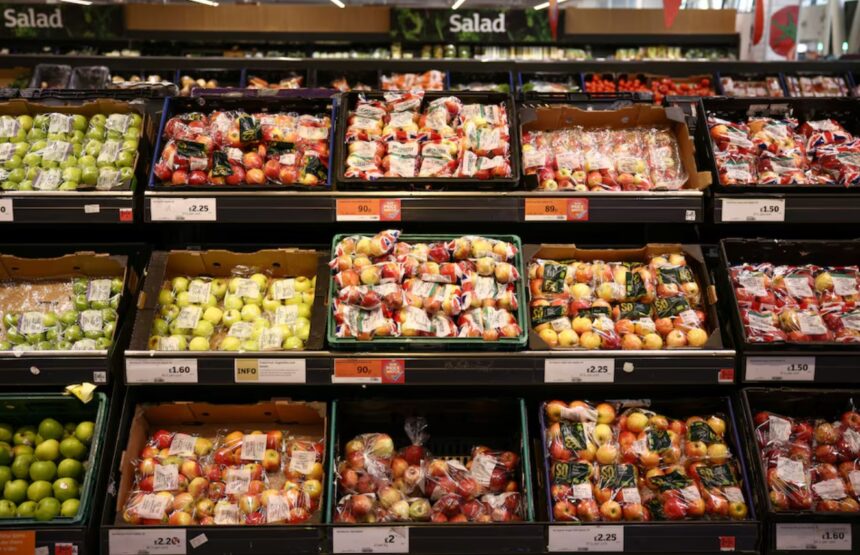
UK grocery inflation has eased to 4 per cent in the four weeks leading up to January 25, marking the lowest rate since April last year. This development offers some respite for consumers as they navigate rising costs, according to data from market researcher Worldpanel by Numerator.
The previous report indicated grocery inflation at 4.3 per cent, highlighting a slight but significant decline. This new figure serves as an early indicator of potential pricing pressures, particularly ahead of the official UK inflation data set to be released on February 18.
The Bank of England is closely monitoring food prices, acknowledging their crucial role in shaping public inflation expectations. In December, Britain’s headline inflation rate reached 3.4 per cent, the highest among the Group of Seven (G7) advanced economies.
In terms of market performance, Worldpanel reported that UK grocery sales increased by 3.8 per cent year-on-year in value terms, although this represents a decline when accounting for inflation’s impact on volume. Fraser McKevitt, head of retail and consumer insight at Worldpanel, noted, “While grocery sales continue to grow and inflation eased to its lowest level in months, value remained front of mind for many – with own label hitting a record high, accounting for more than half of all grocery spend.”
Looking at individual retailers, Tesco, the industry leader, saw its sales rise by 4.4 per cent year-on-year, and its market share grew by 20 basis points to reach 28.7 per cent. Sainsbury’s also reported an impressive growth of 5.3 per cent in sales, taking its share to 16.2 per cent.
In contrast, discount retailer Lidl GB emerged as the fastest-growing bricks-and-mortar chain, with sales soaring by 10.1 per cent. Meanwhile, Ocado, the online supermarket, recorded an impressive growth of 14.1 per cent, solidifying its position as the fastest growing overall retailer.
However, Asda, the third-largest player in the market, continues to face challenges, with its sales declining by 3.7 per cent, resulting in a market share of 11.5 per cent, down 80 basis points compared to the previous year. This marks a troubling trend for the supermarket as it struggles to maintain its footing in a competitive landscape.