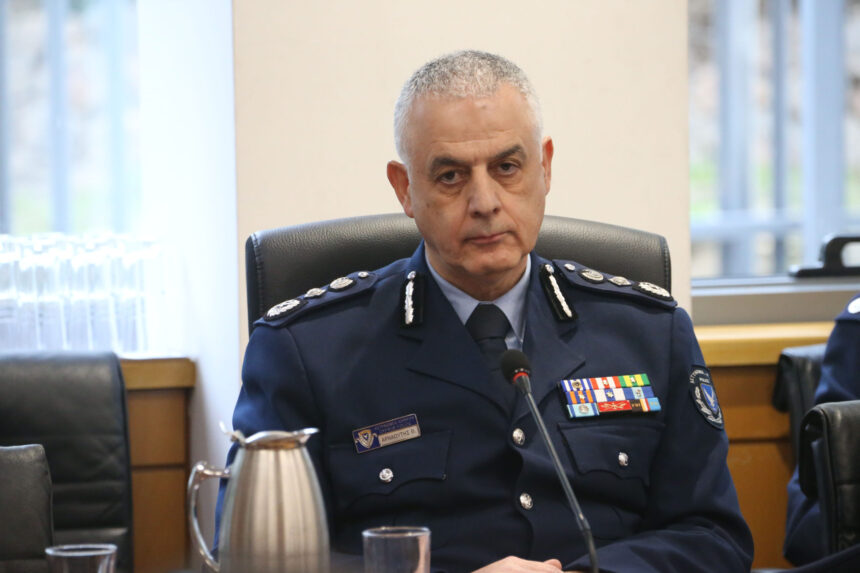
police reform — A tense debate erupted on Wednesday in the parliamentary legal committee regarding police reform, particularly concerning changes to police working hours. Police chief Themistos Arnaoutis maintained his position despite strong opposition from unions and a growing public outcry.

Photo: cyprus-mail.com
The controversy centred on Arnaoutis’ decision to alter the shift system for over 1,000 front-line officers. Unions have described the move as “unilateral and damaging,” prompting protests outside the House as officers voiced their dissent.
Police reform: Arnaoutis Defends Shift Changes
During the committee meeting, Arnaoutis firmly refused to reconsider the reform. He cited powers granted under article 8 of the police law and emphasised that the harmonisation of police working hours with the public service was previously approved by the cabinet and ratified by parliament in 2019, although it had not been fully implemented by prior administrations.
Framing the changes as part of a broader push for modernisation, Arnaoutis pointed to operational needs, budget constraints, and the heightened demands stemming from Cyprus’ presidency of the EU council. He stated, “The modernisation of the police is not against its people, but for them,” trying to reassure MPs of the necessity for these adjustments.
Unions Challenge the Reform Narrative
However, police unions were quick to reject this narrative. Nikos Loizides, president of the Isotita (Equality) union, expressed frustration over the lack of consultation, claiming that officers were “paying the price through fewer rest days and indirect pay losses,” while the total working hours remained effectively unchanged. He highlighted audit service findings that demonstrated failures to grant statutory rest days, warning that the new system would exacerbate fatigue and psychological pressure on staff.
Angelos Nikolaou, president of the police association SAK, added that requests for dialogue had been ignored prior to the decision’s announcement, describing officers as “physically and mentally exhausted.” He cautioned that a tired officer is “less effective and more exposed to danger, at a time of rising criminal activity.”
Heated Exchanges in Parliament
The meeting grew increasingly heated, with Arnaoutis demanding respect after facing critical language regarding his decision. He noted that he had “been mocked publicly for days,” defending his stance against the backlash.
Calls for a temporary suspension of the reform pending further dialogue were met with Arnaoutis’ refusal. He argued that the matter was already before the courts and could not be paused institutionally. Committee chairman Nikos Tornaritis, a member of the Disy party, asserted that police reorganisation was not merely a political preference but a constitutional obligation, especially as serious crime was on the rise and “public confidence in security had been shaken.”
Concerns Over Timing and Labour Peace
Opposition MPs raised concerns about the timing of the reform, with Akel MP Aristos Damianou labelling it a “damaging unilateral choice at a critical moment.” He argued that reducing rest days and income would undermine frontline capacity just as crime was becoming more aggressive and organised. Damianou called for the complete withdrawal of the decision, warning that internal unrest would weaken the police response.
Diko MP Christiana Erotokritou and Dipa MP Alekos Tryfonides urged all parties to return to substantive talks without prerequisite formalities. Elam MP Sotiris Ioannou warned that demanding efficiency while cutting financial benefits was contradictory, arguing that such measures directly eroded public security.
Protests Outside Parliament
Outside the parliament building, around 100 police officers demonstrated as the session unfolded, holding banners denouncing cuts to their working conditions. The Isotita union has initiated a recourse with the administrative court, although it stated it would consider withdrawing the case if an agreement is reached through dialogue by early February.