Innovative telepresence technology is evolving, offering exciting possibilities from holograms to virtual dining and immersive education. Researchers are pushing the boundaries of how we connect across distances, aiming to transform everyday interactions into multidimensional experiences.
Telepresence technology: Holograms Inspired by Sci-Fi
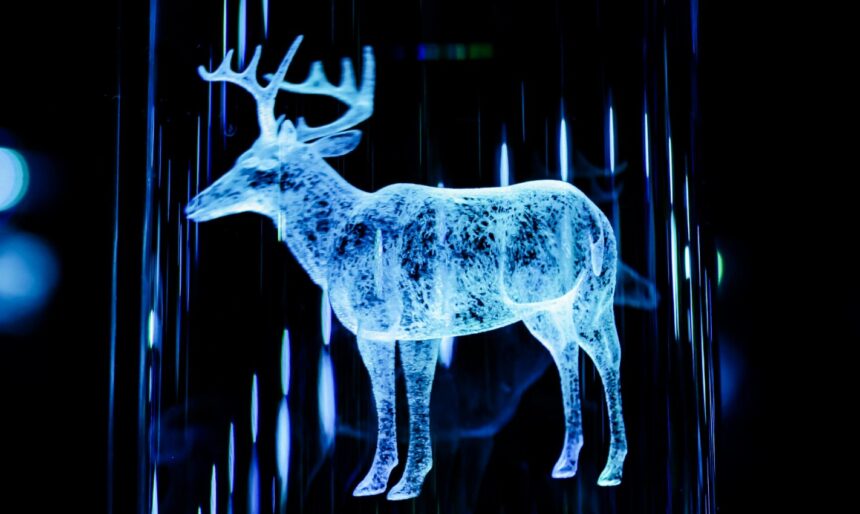
For Maurizio Murroni, an associate professor of telecommunications at the University of Cagliari in Italy, the Star Wars franchise serves as a significant inspiration for his work. “In the Star Wars universe, they regularly project holograms of people to have conversations across the galaxy,” Murroni stated, highlighting his vision for future communication methods. His leadership of the HEAT initiative, funded by the EU, aims to make holographic communication a part of daily life.
Bringing Holograms to Reality
The HEAT project focuses on developing low-latency telepresence technologies, ensuring that delays in communication are minimal. Using standard cameras, such as those on smartphones, individuals can be scanned and transformed into holograms that can be viewed through virtual reality headsets or projectors. This innovation seeks to eliminate the barriers that have previously limited holograms to entertainment and special events.
From Gimmicks to Practical Applications
Despite their long history, holograms have been largely viewed as novelties. A notable instance occurred in 2012 when a hologram of Tupac Shakur was projected at the Coachella Valley Music & Arts Festival. However, many early holographic systems were costly and required high-speed internet connections, restricting their practical use. The HEAT initiative aims to change this narrative by making immersive telepresence accessible in homes.
Enhancing Human Connections
Murroni emphasised the importance of real experiences, especially highlighted during the COVID-19 pandemic. “During COVID-19 we all saw how important it was to offer a real experience to people,” he remarked. The goal is to foster connections among individuals who are physically apart, whether for personal, professional, or health-related reasons.
Collaborative Efforts to Advance Telepresence
HEAT is not alone in this pursuit; another EU-funded initiative called SPIRIT is also striving to make immersive telepresence more accessible. With testbeds established in Germany, Belgium, and the UK, SPIRIT focuses on improving the underlying network infrastructure necessary for efficient data transport. This aspect is crucial, as the vast amounts of data needed for real-time telepresence can overwhelm existing systems.
Optimising Data Transport
Tim Wauters, a postdoctoral researcher at the University of Ghent, explained that the protocols used for transmitting data during video calls have been significantly improved, reducing latency from several seconds to mere milliseconds. This reduction can lead to more natural interactions, whether in conversations, collaborative music sessions, or remote healthcare assessments.
Real-World Applications of Telepresence
One of the most intriguing applications of telepresence technology involves the Mugaritz restaurant, a two-Michelin-star establishment in Spain, which collaborated with SPIRIT to create a virtual dining experience. Participants were able to enjoy a meal at home while feeling as if they were in the restaurant itself. “You consume the dishes at home, but have the feeling of being in a restaurant,” explained Peter Van Daele, a professor at Ghent University and the SPIRIT project coordinator.
Beyond Dining: Expanding Horizons
The potential of telepresence extends far beyond dining experiences. It could revolutionise psychological therapy practices, remote robotic controls, and interactive training sessions. In healthcare, for instance, doctors might be able to consult with patients through immersive telepresence, even using tactile technology to examine patients remotely. “We even developed tactile systems whereby the doctor can feel parts of the patient’s body from a distance,” Van Daele noted.
Imagining the Future of Education
Education stands to benefit significantly from advancements in telepresence. Murroni envisions a classroom where students could virtually explore the solar system, experiencing the sensations of different planetary environments. “Imagine if students could jump across the solar system,” he said, showcasing the transformative potential of immersive learning experiences.
Fostering Creativity through Collaboration
The HEAT initiative also collaborates with artists and creatives, encouraging innovative uses of technology. Murroni remarked on the unique perspectives that artists bring to the table, stating, “As a scientist, I find it great to interact with artists. They offer these wholly fresh perspectives.” This collaboration has led to experimental projects where sensory experiences, such as smell, are integrated into performances to enhance audience engagement.
As researchers continue to develop and refine telepresence technologies, the future holds promise for more immersive and meaningful connections across distances. With initiatives like HEAT and SPIRIT leading the way, the vision of a world where holograms and virtual experiences become commonplace in our lives is closer than ever.