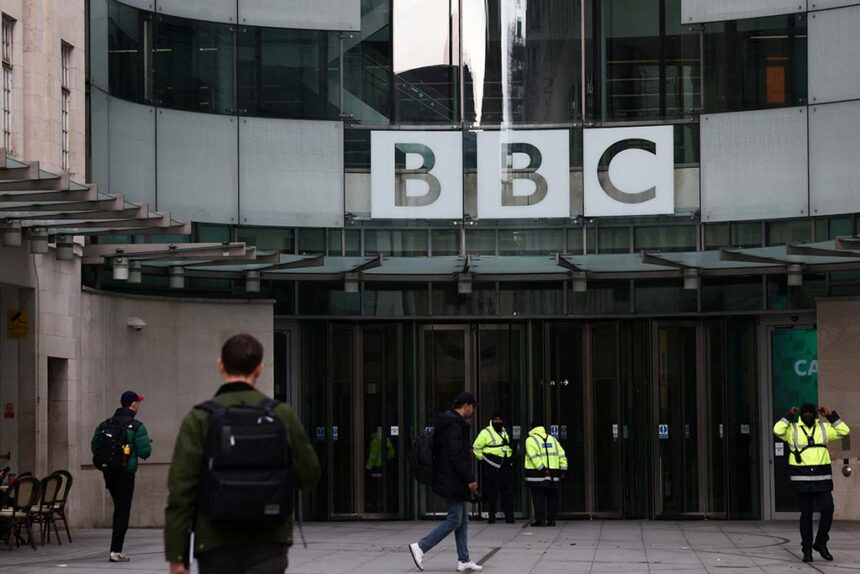
Trump’s $5 billion defamation claim against the BBC has raised eyebrows and could pose serious implications for the US-UK special relationship. The focus keyword here is defamation, and this lawsuit presents a unique intersection of legal, political, and media dynamics.
The basis of the claim stems from an edited clip of Trump’s speech on January 6, 2021, which was aired in a Panorama programme in October 2024, just days before the US presidential election. The BBC’s splicing of the footage allegedly distorts Trump’s message, suggesting he incited violence during the Capitol riots. This manipulation, according to Trump, amounts to a malicious falsehood that could irreparably damage his reputation.
In addition to the $5 billion defamation claim, Trump is pursuing $5 billion under Florida’s deceptive trade practices legislation, which permits lawsuits against entities that cause reputational harm through unethical means. The challenge for Trump lies in establishing that the edited footage caused significant harm to his reputation in Florida, a prerequisite for the court’s jurisdiction. The BBC contends that the programme could not have adversely affected Trump’s reputation, especially since he won the presidential election in November 2020.
Trump’s history of litigation and his penchant for aggressive legal strategies complicate matters. As former UK Prime Minister Theresa May noted, Trump has a track record of advocating for lawsuits to address grievances, particularly against perceived adversaries. The BBC, often viewed as a liberal entity, presents an ideal target for Trump, whose base frequently criticises the organisation for its alleged biases.
The circumstances surrounding the edited footage are particularly troubling for the BBC. A faction within the organisation appears to have resurrected the contentious splice, which had previously gone unnoticed by Trump, and leaked it to media outlets. This has given Trump a platform to portray himself as a victim of institutional bias, potentially galvanising his supporters and further polarising public opinion.
Trump’s speech on January 6 is pivotal to the case. He addressed a crowd with a call for strength, urging them to ‘fight like hell’ for their country. Critics argue that such language, particularly when taken out of context, could be interpreted as incitement to violence. Trump’s assertion that the BBC’s portrayal is defamatory hinges on proving that the splice misrepresents his intent and message.
Legal experts have noted that Trump’s case presents significant challenges. While he may have a strong basis for claiming that the edited footage is misleading, the burden of proof lies with him to show that he did not incite the violence at the Capitol. If the case proceeds to trial, Trump’s past actions, including his comments during the riots and subsequent pardons, may come under scrutiny, complicating his defence.
The implications of this lawsuit extend beyond the courtroom. Should Trump prevail, it could set a concerning precedent for media organisations and their editorial practices, particularly in politically charged environments. The potential for a substantial financial award could create a chilling effect on journalistic integrity, particularly for those covering polarising figures like Trump.
As the legal battle unfolds, the ramifications for the BBC and its reputation as a purveyor of impartial news could be profound. Trump’s strategy appears to be aimed not merely at financial restitution but at undermining the BBC’s credibility as a prominent global media outlet. This confrontational approach poses a unique challenge for the UK’s soft power in the international arena.
In the current political climate, where media narratives can significantly influence public perception, the outcome of this case could resonate far beyond the immediate parties involved. The relationship between the US and the UK, often characterised by shared values and mutual respect, may be tested as this high-profile legal saga continues to unfold.