French archaeologists have made a remarkable discovery in Larnaca, unearthing an intact room dating back to the 8th to 7th centuries BCE. This significant find at the Kition-Bamboula site reveals ceramic vessels preserved against the walls, left undisturbed for nearly 2,700 years.
A Glimpse into Ancient Cypriot Life
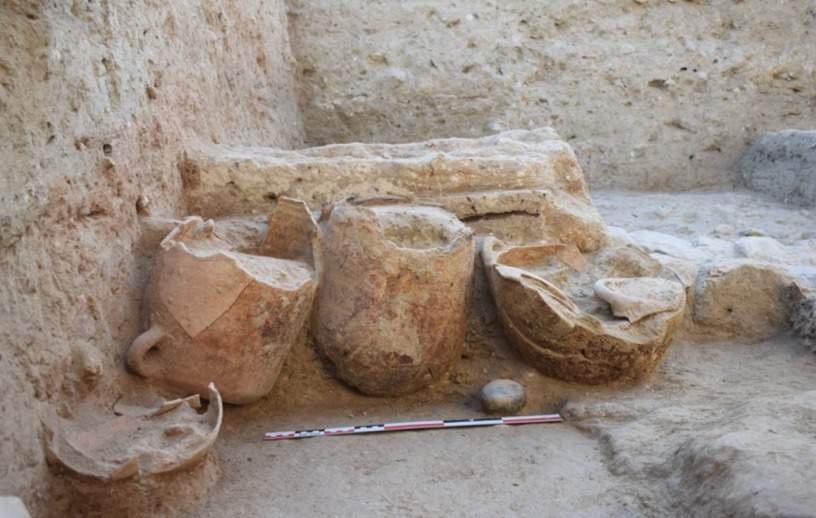
This room, which is the oldest discovered in this sector of the ancient site, was found during the French archaeological mission’s field season, which concluded in October 2025. The Department of Antiquities confirmed that the team located the Archaic-period room north of a large looter’s trench that had previously compromised its southern wall.
Structure and Preservation
The room’s eastern and northern walls remained intact, constructed from stone with mudbrick upper sections. Interestingly, one of the walls still features a white plaster coating on its western face. The collapse of the mudbrick structure helped to preserve the furnishings within the room, providing a unique snapshot of the past.
Contents of the Intact Room
Inside the room, six ceramic containers were found exactly where they had been placed centuries ago, three against the northern wall and three against the eastern wall. The collection included:
- Imported Phoenician commercial amphoras
- Locally made Plain White amphora and jug
- A Bichrome barrel-jug
Two of the Phoenician amphoras were discovered upside down, with their tops and bottoms removed, hinting at their intended use or storage method at the time.
Expanding the Excavation’s Scope
This season’s excavations also ventured beyond a large pit that had previously dominated the site. This pit, which dates to the 4th century BCE, yielded over 100 fragments of Phoenician ostraca, representing around 75 different texts that are currently under study. By digging deeper and wider, archaeologists revealed two parallel looter’s trenches dating back to the Classical period. These trenches cut through earlier structures, damaging some walls while exposing partially preserved floor levels that indicate various phases of use during that time.
New Discoveries Beneath the Classical Surface
Among the finds was a small deposit containing two vases and a pebble, located beneath one of the Classical floors. The presence of a cooking pot in this deposit suggests it may have been a foundation deposit, akin to those found at the palace of Amathous.
Significance of the Find
While excavation in the central area ceased at Classical-period levels, the team’s work to the east and north unveiled Archaic floor levels and walls. The intact room stands out as the most notable discovery from this season, providing valuable insights into the lives of people in ancient Cyprus.
Future Prospects for Archaeological Study
The French mission operated in a trench to the northwest of Kition-Bamboula, extending their exploration from earlier campaigns that had primarily focused on the large Classical-period pit containing Phoenician texts. As the work continues, experts hope to uncover further artefacts that could shed light on the cultural and historical context of the region.
A Community’s Connection to the Past
The discoveries at Kition-Bamboula not only enrich our understanding of ancient Cypriot life but also foster a connection between the modern community and its historical roots. Archaeological efforts like those of the French mission play a crucial role in preserving these links to the past, ensuring that future generations can appreciate the rich tapestry of history that defines Cyprus.