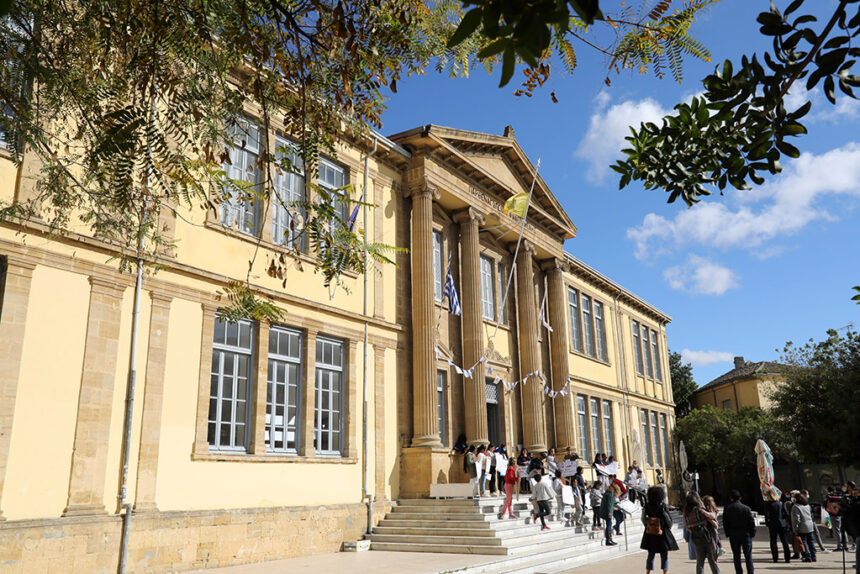
nicosia school — nicosia school — The future of the historic Phaneromeni school in old Nicosia is now in doubt, five years after plans were made to transform it into the School of Architecture for the University of Cyprus.
- As discussions continue, the future of the Phaneromeni school remains uncertain, reflecting the broader challenges facing the redevelopment of old Nicosia.
The Cyprus Association of Architects (CAA) expressed concern on Wednesday regarding the stagnation of the project. Their worries were heightened following comments from Archbishop Georgios, who indicated that the church is contemplating opening its own school due to the deadlock in negotiations.
Originally, a deal was forged between the church, the state, the municipality, and the University of Cyprus, under the leadership of the former Archbishop Chrysostomos. The agreement aimed to renovate the 19th-century building to house the university’s architectural programme and expand student accommodation in the area.
As part of this agreement, the Ministry of Finance was to lease the Phaneromeni school facilities from the archbishopric for 33 years, with plans to fund an additional building behind the school. The renovation was initially projected to cost €5 million, announced in 2021.
However, the CAA pointed out that despite the long-term lease, the building remains “abandoned and underutilised”. Disagreements among the involved parties have contributed to the current impasse, although specifics were not disclosed.
Archbishop Georgios stated that the Ministry of Finance had withdrawn its commitment to fund the new building, which was essential for the School of Architecture’s vision. “We wanted the university to come down because we believed it would help support the old city of Nicosia, which is why we signed a relevant agreement,” he explained. “However, this is now collapsing through no fault of ours.”
The archbishop highlighted that the finance ministry’s decision not to finance the new construction could have been advantageous for the church. Not only would the renovation benefit the church through the long-term rental income, but it would also restore an important historical building.
Despite still wanting to utilise the Phaneromeni school for administrative and research purposes, the university’s current intentions do not align with the original agreement. “If they had wanted to renovate it as another school, this would have fallen within the scope of the agreement,” Georgios noted. However, he remarked that the university did not plan to repurpose it as another educational institution.
In light of these circumstances, the church is now considering establishing its own private school within the building, focusing on the Greek language and history, catering to students interested in pursuing theology or philology.
The CAA has urged all parties to engage in constructive dialogue to resolve the existing differences and move forward with the original renovation plans. They emphasised the importance of the Phaneromeni building as a significant part of Nicosia’s architectural and cultural heritage. Its rehabilitation for educational and housing purposes would be crucial for revitalising the historic centre and enhancing the presence of youth in the old city, thereby providing a significant boost to the local economy and society.
As discussions continue, the future of the Phaneromeni school remains uncertain, reflecting the broader challenges facing the redevelopment of old Nicosia.