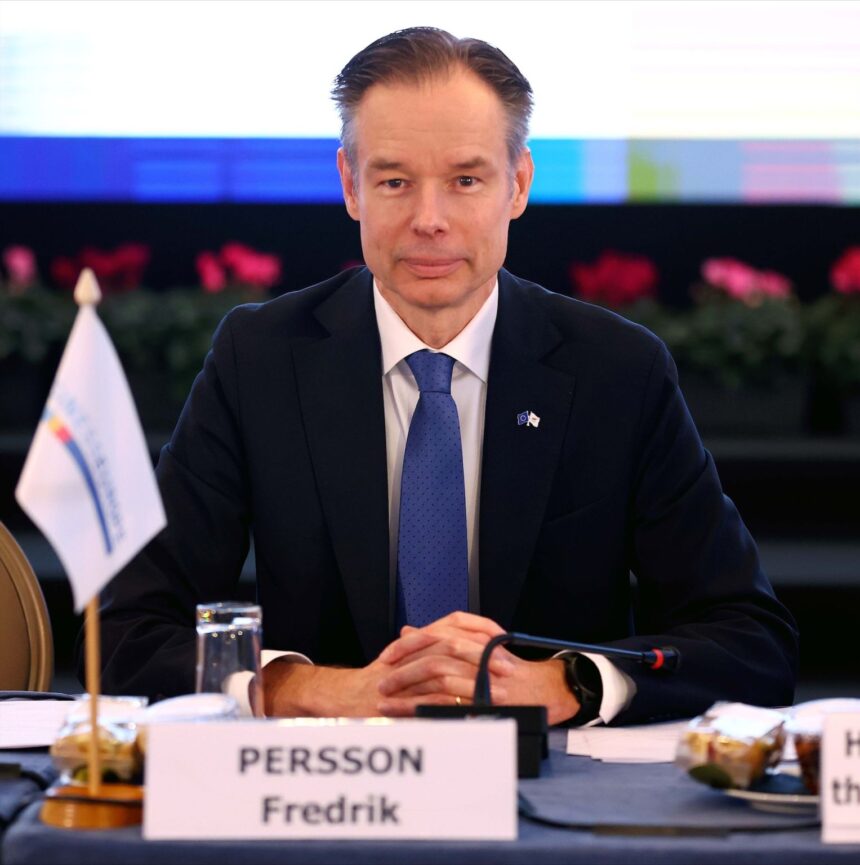
cyprus eu — cyprus eu — European businesses have high expectations for the Cyprus Presidency of the Council of the EU, according to Fredrik Persson, president of BusinessEurope. In a recent interview with the Cyprus News Agency (CNA), Persson underscored the need for significant advancements in competitiveness and regulatory simplification as Cyprus prepares to take on the rotating presidency on January 1, 2026.
Cyprus eu: Business Leaders Unite Ahead of Presidency
BusinessEurope convened the heads of its member federations on November 20 and 21 to discuss priorities for the upcoming institutional cycle. The organisation represents 42 federations across 36 countries, encompassing around 25 million companies. Persson highlighted the critical role of Cyprus’ Employers and Industrialists Federation (Oev) within this collective.
Clear Message from European Companies
The consensus from businesses across Europe is clear: excessive regulatory pressure is a significant barrier to growth. Persson stated, “Regulation, regulation, regulation” is the primary obstacle, particularly for small and medium-sized enterprises (SMEs), which constitute 99 per cent of BusinessEurope’s membership. He argued that firms are “overburdened by over-bureaucracy” and called for Europe to “unleash the power of business.”
Competitiveness at the Forefront
Competitiveness is another major concern as the EU grapples with economic challenges. Persson emphasised that these issues resonate across member states, from Nicosia to Helsinki and Lisbon. He pointed to the Draghi and Letta reports on competitiveness and the Single Market as indicators of the long-standing challenges facing Europe.
Europe Falling Behind
Persson noted that while the US economy has doubled over the last three decades, the EU’s growth has only exceeded 60 per cent. This disparity has resulted in limited fiscal space for security, social welfare, and investment. He warned, “If we do not invest in the future, Europe will become a worse place to live.”
Rising Compliance Costs
The increasing cost of compliance poses another significant challenge. Companies currently allocate resources for regulatory adherence equivalent to their investment in innovation. Persson described this situation as unsustainable, stating that “the compliance department is as big as the department that files patent applications.” He highlighted the over-production of legislation as a hindrance to Europe’s progress.
Legislative Disparities
Persson compared the legislative landscape, noting that over 13,000 pieces of legislation were adopted during the previous EU Commission mandate, while the US federal level enacted only 3,500. He asserted that the Cyprus Presidency arrives at a pivotal moment, refuting the idea that presidencies are only relevant for larger member states.
Opportunities for Cyprus Presidency
Persson believes that Europe is “at a crossroads,” and while the European Commission has begun making the right decisions, businesses have yet to feel a tangible impact in their daily operations. He asserted, “Until it happens there, it has not happened at all.”
Essential Legislative Packages
He stressed the importance of advancing the “omnibus” package during Cyprus’ term, which is intended to facilitate business activity. This represents both a major responsibility and a significant opportunity for the presidency. Additionally, he identified smaller yet critical initiatives, such as the e-posting framework governing the posting of workers, as vital for enhancing mobility within the EU.
Improving the Single Market
Despite the EU’s self-identification as a Single Market, only 20 per cent of trade occurs between member states, in stark contrast to 70 per cent in the US. Persson noted that this lack of mobility negatively affects economic performance. He pointed out that Cyprus, a country familiar with international business, understands the significance of cross-border freedom.
Realistic Expectations for Outcomes
When asked about the potential for tangible results by the end of the presidency in July, Persson expressed optimism. He stated that businesses would not tolerate further delays from Brussels and that BusinessEurope intends to collaborate closely with Cyprus and Oev. “I am convinced that we will have an impact that will not surprise me, but may surprise some in Brussels,” he remarked.
Key Priorities for BusinessEurope
Looking ahead, Persson outlined three essential areas for BusinessEurope: first, simplification of regulations to ensure that investment in compliance does not equal that in research and innovation; second, deepening the Single Market, which he claimed could unlock substantial growth and competitiveness gains; and third, addressing the impending labour market challenges posed by Europe’s ageing population.
Addressing Labour Market Challenges
With projections indicating that by 2050, around 35 million Europeans will exit the workforce, Persson warned of significant skills shortages driven by advancements in AI and new technologies. He stated that rather than facing unemployment, the focus will shift to finding the right talent.
Energy Costs and Trade Relations
Energy costs remain a vital issue, as Europe struggles to compete with the US and China. Persson called for technological neutrality, improved energy interconnections, and diversified sources. He emphasised the importance of competitive energy prices to prevent business closures, highlighting Cyprus’ initiatives in natural gas as a preferable option over external sources.
Maintaining Trade Partnerships
On the trade front, Persson acknowledged the US as Europe’s largest trading partner but recognised recent tensions. While he noted that the current trade framework with Washington is not perfect, he asserted that it is preferable to a trade war. Furthermore, he pointed to potential agreements with Mercosur, Mexico, Indonesia, and India as means to diversify the EU’s trading relationships.
Looking Forward with Confidence
Despite Europe’s dependence on China, Persson described the relationship as one filled with both opportunities and challenges, necessitating a balanced approach. He concluded with optimism for the Cyprus Presidency, stating, “I am also absolutely certain that it will be a huge success,” bolstered by the integral role of Oev.