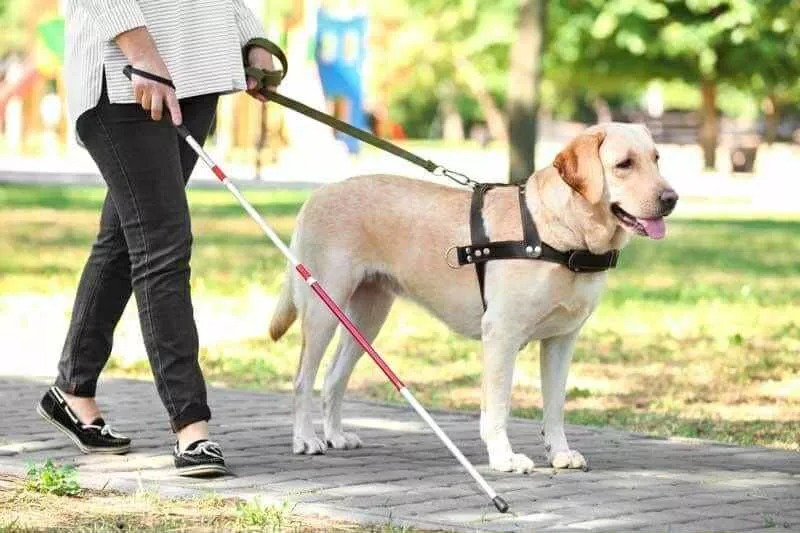
Legislation aimed at guaranteeing service dogs access to public transport has gained traction following an incident involving Paralympian Karolina Pelendritou in Athens. The Transport Committee has backed a bill that would ensure service dogs can accompany their owners on all forms of public transport and taxis, addressing a significant gap in current legislation.

Photo: in-cyprus.philenews.com
Service dogs: Incident Sparks Legislative Change
The call for change came after Pelendritou faced refusal from a taxi driver to allow her assistance dog into the vehicle. This incident highlighted the challenges faced by individuals with disabilities when navigating public transport systems. Stavros Papadouris, the leader of the Movement of Ecologists and the bill’s proponent, emphasised the need for clearer laws to protect the rights of people with disabilities who rely on service dogs.
Broad Support for the Bill
The bill has garnered support from various stakeholders, including the Transport Ministry, the Road Transport Department, and the police. However, during discussions, concerns were raised regarding the extent of authority that should be granted to the transport minister over the regulation of service dog breeds and equipment. Papadouris noted that the legislation is an important step, but he acknowledged that further discussions are necessary to address additional issues such as training and associated costs.
Concerns from Various Organisations
During the parliamentary discussions, several organisations voiced their concerns regarding the proposed legislation. The Law Office stressed the importance of a holistic approach to service dog regulations, suggesting that licensing authority might need to be transferred to a different ministry to ensure proper governance.
- The Organisation for the Promotion of Vocational Education and Training (POVEK) expressed scepticism, highlighting the need for clarity on how service dogs would be transported.
- The inter-city taxi association acknowledged the acceptance of service dogs but pointed out that they have faced complaints from other passengers regarding their presence in vehicles.
- Christakis Nicolaides, president of the Cyprus Confederation of Organisations of the Disabled, underscored the necessity for individuals to move freely and independently, stating that public transport should be obliged to accept service dogs.
International Standards and Training Issues
Nicolaides noted the disparity in training standards for service dogs between countries, stating that while some dogs are trained to follow up to 150 commands, Greek dogs typically follow around 50 commands. This difference raises questions about the adequacy of training frameworks currently in place for service dogs in Cyprus.
He also pointed out the challenges surrounding funding for acquiring service dogs, mentioning a past initiative where the police trained guide dogs, which unfortunately did not continue. The lack of ongoing support for such training programmes has left many individuals with disabilities struggling to obtain the assistance they need.
Legislative Perspectives
DISY MP Demetris Demetriou weighed in on the discussion, suggesting that legislation should not be necessary for what he considers an obvious right. He drew parallels to past proposals regarding public breastfeeding and priority for pregnant women, implying that in a well-functioning society, the acceptance of service dogs on public transport should be inherently understood.
Looking Ahead: The Importance of Inclusive Transport
As the bill progresses through parliament, the focus remains on ensuring that people with disabilities can navigate their communities without barriers. The discussions surrounding this legislation are vital, not only for those who rely on service dogs but for the broader principle of inclusivity within public transport systems.
With increasing awareness of the rights of individuals with disabilities, it is crucial for legislative bodies to take pragmatic steps towards establishing clear and comprehensive regulations that support inclusivity. The upcoming sessions in parliament will be pivotal in shaping the future of service dog access in public transport across the country.