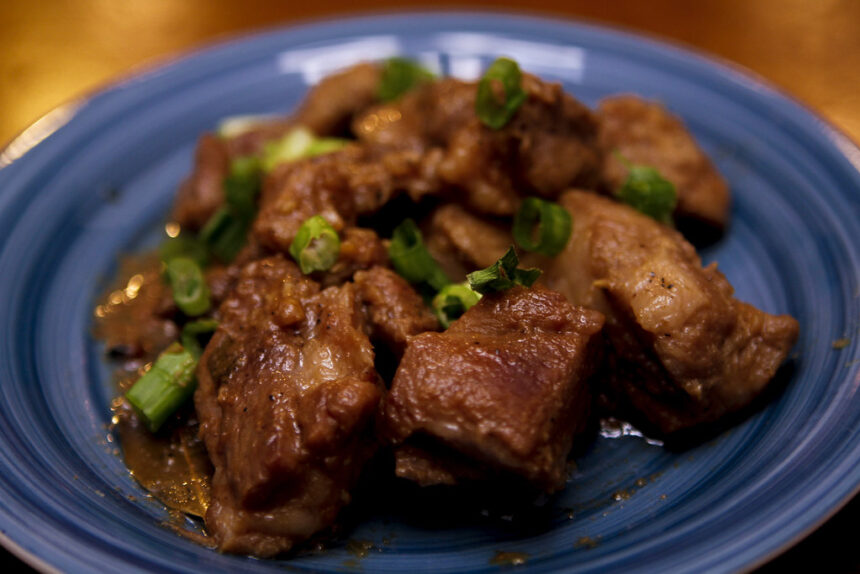
Pork adobo captures the essence of Filipino culinary identity like few other dishes can. This hearty stew, simmered to perfection in a blend of vinegar, soy sauce, garlic, and spices, is a beloved staple in Filipino households. It embodies comfort, adaptability, and a rich tapestry of cultural history.
Pork adobo: The Origins of Adobo
The name adobo is derived from the Spanish term adobar, which means to marinate or season. When the Spanish colonisers arrived in the Philippines in the 16th century, they encountered indigenous cooking methods that involved preserving meat through stewing in vinegar and salt. Recognising similarities to their own marinating techniques, they chose to name this dish adobo, even though the preparation largely remained true to its native roots. Over time, the introduction of soy sauce by Chinese traders further diversified the dish, replacing salt and adding another layer of flavour.
A Versatile Dish
While pork adobo is the most recognised version today, it is not confined to a single meat or method. Adobo is more of a flavour philosophy, allowing for variations in ingredients and techniques. Chicken, seafood, tofu, and various vegetables can all find their way into this beloved stew. Regional differences add to its charm; in Bicol, for instance, coconut milk is incorporated for a creamy texture, and in Cavite, mashed liver is used to thicken the sauce. Elsewhere, ingredients like annatto seeds or turmeric contribute colour and a unique earthiness.
The Perfect Balance
At its core, pork adobo masterfully balances contrasting flavours – salty and sour, pungent and mellow. The stew becomes even more delightful when left to rest, as the meat absorbs the garlicky, vinegary braise. This characteristic has made adobo a practical dish for Filipinos living abroad, offering a taste of home that can be savoured even continents away. Many families pass down the recipe as one of the first culinary lessons for children, making it synonymous with family gatherings and cherished moments.
Adobo as a Culinary Ambassador
Though firmly rooted in Filipino culture, adobo has emerged as a culinary ambassador on the global stage. It graces the menus of modern Asian bistros and Filipino cafés from London to Los Angeles, introducing new audiences to its rich flavours. In Cyprus, where the pork is abundant and vinegar-based marinades are familiar, local communities have embraced adobo, often incorporating regional ingredients like local wine vinegar or serving it alongside village bread.
Pork adobo is not just a dish; it is a symbol of resilience and cultural pride. It requires no special occasion to be enjoyed, only a commitment to time and patience in preparation. In every bowl of adobo lies a story of heritage, a testament to the Filipino spirit, and a reminder of the comfort found in shared meals.