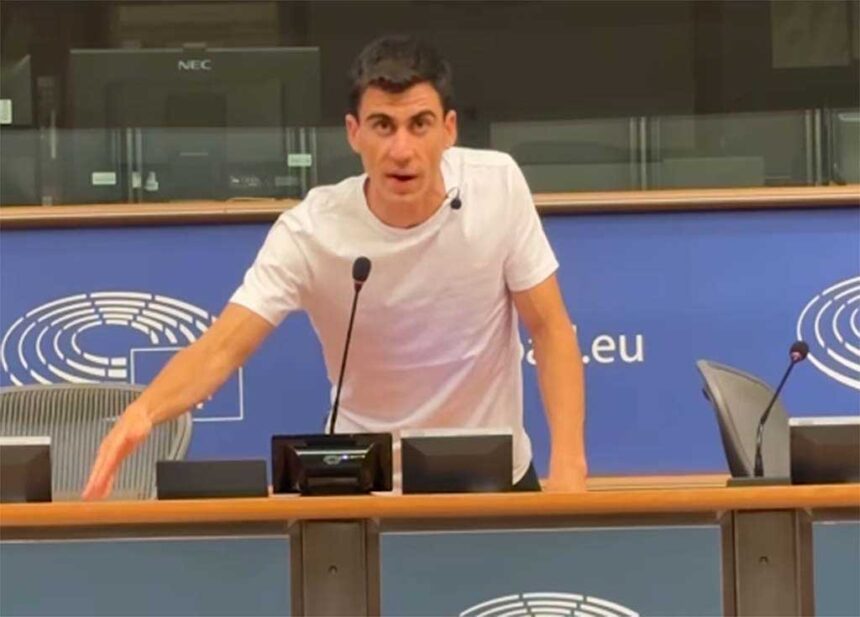
eoka fighter — Cyprus’ political parties expressed outrage after a podcast hosted by MEP Fidias Panayiotou featured historian Michalis Michael, who questioned the widely accepted narrative surrounding the death of Eoka fighter Grigoris Afxentiou.
Eoka fighter: Controversial Claims Spark Backlash
Michael’s remarks suggested that the commonly held belief—that British forces received information about Afxentiou’s hideout, set it ablaze, and killed him—might not be entirely accurate. He recounted a different version of events, stating, “It is said that Afxentiou told [his fellow fighters], ‘get out and I will stay here’.” This assertion has ignited a firestorm among political factions in Cyprus.
Historical Context and Forensic Findings
The historian revealed that a forensic report from a 2017 trial involving Afxentiou’s comrades presented new details about his demise. According to Michael, the report described Afxentiou’s body as having a hole in his right temple, a gouged-out left eye, and a broken jaw. He highlighted inconsistencies in the initial claims surrounding Afxentiou’s death, stating, “The initial claim of the forensic doctor was that he committed suicide. Later on, he said that the bullet was fired from a distance of 60 centimetres. So, he probably did not commit suicide.”
Political Reactions from the Right
The backlash from political parties was swift. The Democratic Rally (Disy) was one of the first to respond, condemning Michael’s assertions as an affront to Cypriot history, which they believe has been shaped by the sacrifices of heroes like Afxentiou. A statement from Disy declared, “The claim … that Grigoris Afxentiou committed suicide or was shot by a fellow activist constitutes slander and an attempt to desecrate the hero’s sacrifice.” They insisted that Afxentiou’s legacy must remain untarnished by what they refer to as leftist ideologies.
Diko’s Stance on National Memory
The Democratic Party (Diko) also voiced its indignation, asserting that Afxentiou’s sacrifice is a cornerstone of national dignity and collective memory. They stated, “It is a monument of honour which cannot be questioned or distorted in any way which would insult the sacrifices of our heroes.” Diko urged political figures to refrain from exploiting historical narratives for petty political gain.
Akel Defends Historical Inquiry
In contrast, the left-wing party Akel defended Michael, emphasising his role as a historical researcher. They remarked that his comments were a necessary part of understanding the complexities of history. Akel noted, “It is clear that some are creating scarecrows for themselves to fight and sell cheap patriotism.” They further highlighted a historical tidbit, stating that their newspaper was the only one that refused to publish Afxentiou’s wanted notice during the British colonial pursuit.
Escalating Tensions Between Parties
The tension escalated when Disy accused Akel of adopting a narrative aligned with British colonial sentiments, claiming that they undermined Afxentiou’s legacy. Disy fired back, stating, “For the sake of history, Akel did not support, but in fact disagreed with … the most brilliant fight of Cypriot Hellenism.” This exchange exemplifies the deep divisions within Cypriot political discourse regarding the interpretation of historical events.
Presidential Intervention
Later in the day, President Nikos Christodoulides joined the fray by sharing a photo of Afxentiou’s wanted poster on social media, captioning it with a quote attributed to Afxentiou: “In the ultimate need, I will fight and die like a Greek, but they will not catch me alive.” This intervention underscores the significance of Afxentiou’s legacy in contemporary Cypriot politics, as leaders navigate the contentious terrain of historical memory.