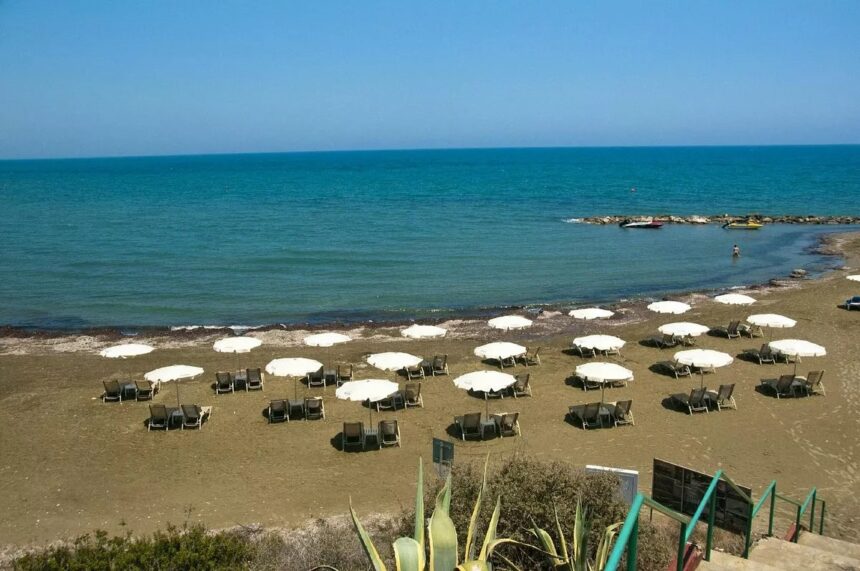
Pebbles at Faros beach in Pervolia will be restored after the Agriculture Ministry rejected the Dromolaxia-Meneou Municipality’s illegal removal plan. The Department of Public Works is now investigating the possibility of returning the removed materials to their original locations.
Pebbles: Illegal Pebble Removal and Its Consequences
The illegal removal of pebbles from Faros beach has reportedly been ongoing for several years, with the aim of creating a sandy beach to attract tourism. This initiative, supported by both the municipality and Larnaca MP Prodromos Alambritts, has raised significant environmental concerns.
Official Stance on Environmental Protection
Agriculture Minister Maria Panagiotou has firmly stated that the ministry will not reconsider the approval request for pebble removal. She highlighted the importance of enforcing legislation to preserve the natural beauty and environmental value of the island’s beaches. “This intervention removes a significant volume of surface layer (pebbles) which hold the lower sand layers,” she explained, emphasising the negative impact on coastal erosion.
Environmental Impacts of Removal
During a recent discussion regarding the issue, Minister Panagiotou noted that exposing the sand below the pebbles does not justify the removal process. The Department of Environment has expressed that the removal of pebbles not only compromises the beach’s aesthetic but also its structural integrity, making it more susceptible to erosion.
Recommendations from the Department of Environment
The Department of Environment has urged the Department of Public Works to assess the situation thoroughly. They recommended that the pebbles piled at the back of the beach should be re-spread to restore the natural characteristics of Faros beach. This recommendation aims to improve the beach’s resilience against coastal erosion, which has been exacerbated by previous removal activities.
Community and Environmental Advocacy
Concerns about the pebble removal have been voiced by various citizens and environmental groups. The Department of Environment has repeatedly addressed complaints and participated in discussions involving multiple agencies, including the Fisheries and Marine Research Department and the Environment Commissioner.
Ongoing Efforts to Halt Removal Activities
The issue was revisited during a meeting held on 30 April 2025, where officials from the Department of Environment and the Department of Public Works reached an agreement to cease any further removal activities. They collectively recognised the need to restore the accumulated material to enhance the beach’s natural resilience.
Long-Term Solutions for Faros Beach
Minister Panagiotou reiterated that creating an artificial sandy beach is not a valid approach for tourism development. She pointed out that the environmental pressure exerted by human interventions at Faros beach necessitates immediate action to protect its natural resources. “Moving pebbles to create an artificial sandy beach appearance does not constitute action for tourism development,” she stated, underscoring the urgency of enforcing existing laws.
Looking Ahead
The Agriculture Ministry’s firm stance indicates a growing awareness of the need to balance tourism development with environmental conservation. The restoration of the pebbles at Faros beach is seen as a crucial step in preserving the natural landscape, ensuring that future generations can enjoy its beauty.
As discussions continue and the Department of Public Works evaluates the restoration process, the community remains hopeful for a sustainable solution that aligns with both environmental integrity and tourism interests.