In a significant development concerning diplomatic relations in the Republic of Cyprus, the resignation of the UK trade envoy to Turkey, Afzal Khan, has stirred conversations about the ongoing political sensitivities surrounding the island. The Cyprus foreign ministry welcomed this decision, affirming that it underscores that there is “no room for tolerance” regarding actions deemed provocative.
Khan’s Resignation: A Reflection on Cyprus’ Political Landscape
On Saturday morning, Khan submitted his resignation to UK Prime Minister Keir Starmer, citing the need to avoid distractions from governmental efforts in securing favourable trade agreements. Khan, who also serves as an MP for Manchester Rusholme, stated, “It was best to stand down at this time so not to distract from the hard work the government is doing.”
The Cyprus foreign ministry reacted strongly, characterising Khan’s resignation as a “significant development” that aligns with the island’s broader political landscape. The ministry asserted that his visit to the Turkish Republic of Northern Cyprus (TRNC) on August 8 was not only ill-advised but also constituted outright “unacceptable and provocative action.”
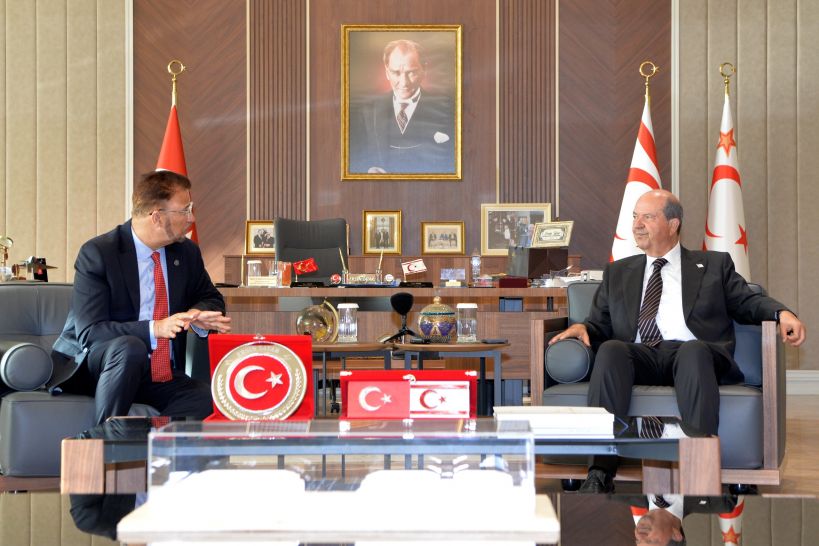
During his controversial trip, which included a meeting with Turkish Cypriot leader Ersin Tatar, Khan was photographed with gifts adorned with the TRNC flag. This engagement was met with immediate backlash both within Cyprus and in the UK, leading to calls for coordinated responses from political figures on both sides.
The Broader Implications of Khan’s Visit
The foreign ministry’s statement highlighted that such actions, which can be classified as fostering or tolerating a subordinate formation, have political consequences. The ministry emphasised the need for a robust and unified message against any acts that undermine the Republic of Cyprus’ sovereignty.
<p“Khan’s meeting with Tatar signals that there must be clarity in our stance against actions that legitimise the TRNC,” the ministry articulated. It expressed concern that Khan’s actions could embolden further international interactions with the unrecognised northern part of Cyprus, which is a persistent source of tension on the island.
In an interview with the BBC, Khan maintained that his visit was of a personal nature and that he funded the trip himself. He noted that he was in the region to visit his nephew and to receive an honorary degree from an academic institution. Khan argued that his trip should not reflect on his official role, mentioning that similar visits by other British parliamentarians in the past had not drawn such criticism.
Responses from Political Leaders
The responses to Khan’s resignation have varied across the political spectrum. Ersin Tatar condemned the fallout from Khan’s resignation, suggesting it reflects a larger “tyrannical Greek Cypriot mentality.” Tatar’s comments implied that the pressures faced by Khan are part and parcel of a broader strategy aimed at isolating Turkish Cypriots from the international community.
“This is the mentality we are facing,” Tatar stated, indicating a belief that such dynamics have long stifled dialogue and understanding regarding the Cyprus issue. His remarks resonate with a sentiment among many Turkish Cypriots who feel marginalized in the ongoing discussions about the island’s future.
On the other hand, UK’s shadow foreign minister, Wendy Morton, expressed support for Khan’s resignation but insisted that Prime Minister Starmer should have acted sooner. This highlights a fracture not only in diplomatic relations but also within British political circles regarding Cyprus policy.
Christos Karaolis, president of the National Federation of Cypriots in the UK, was unequivocal in his condemnation of Khan’s visit, stating that his position had become untenable following his actions in the occupied northern part of Cyprus. This sentiment echoes the need for clearer diplomatic guidelines that respect the Republic of Cyprus’ sovereignty while addressing the complexities of the island’s political status.
The Path Forward for Cyprus
As the Republic of Cyprus navigates these intricate political waters, the implications of Khan’s resignation extend beyond immediate diplomatic relations. The incident serves as a reminder of the delicate balance required when engaging with the historical and ongoing conflicts on the island.
Moving forward, it is imperative for all involved parties—both local and international—to approach the Cyprus issue with a sensitivity that fosters constructive dialogue. Addressing the underlying tensions is essential for any progress towards a peaceful resolution that respects the rights and aspirations of all Cypriots.
In this context, the sharp reactions to Khan’s visit underline the broader necessity for a unified stance from the international community regarding the sovereignty of the Republic of Cyprus. The emphasis must remain on promoting stability and fostering relationships based on mutual respect and recognition of established borders.