transport emissions — Transport emissions in Cyprus have surged, accounting for a striking 37.9 per cent of the nation’s greenhouse gas emissions in 2023, as revealed by a recent European Commission report. This figure puts Cyprus above the EU average, highlighting the significant environmental impact of transportation on the island.
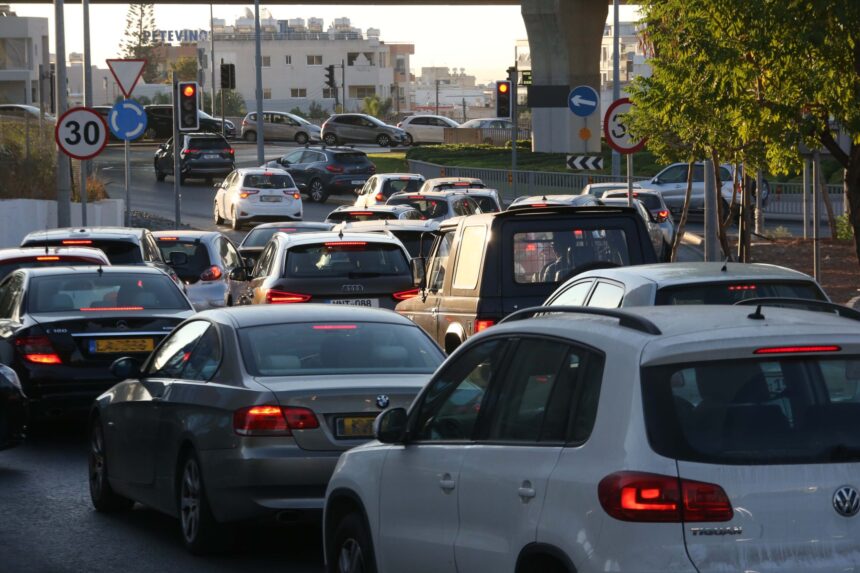
According to the report, titled Transport and tourism in the European Union – Current trends and issues, drivers in Cyprus faced an average of 40.2 hours lost in peak-time traffic last year. This congestion is considerably higher than the EU average of 28.6 hours, indicating a pressing issue for commuters navigating the island’s roadways.
Private vehicles dominated domestic passenger transport, with 83.5 per cent of journeys made by car, slightly above the EU average of 82 per cent. In contrast, buses and coaches accounted for 16.5 per cent of transport, which is notably double the EU average of 8.2 per cent. This heavy reliance on cars contributes significantly to the emissions figures.
In total, transport-related greenhouse gas emissions in Cyprus reached 3.9 million tonnes of carbon dioxide equivalent in 2023. This figure is in stark contrast to the EU’s total emissions of 1.039 billion tonnes, where transport accounts for 31 per cent of overall emissions. The implications of these statistics are alarming, as they underscore the urgent need for sustainable transport solutions in Cyprus.
Despite the environmental concerns, Cyprus has made strides in road safety. The report indicates that the country ranked eighth among the EU’s 27 member states for the lowest number of road deaths per million inhabitants, with 36 fatalities recorded in 2023. Additionally, it ranked 14th for the lowest number of deaths per distance travelled, with 46 fatalities for every 10 billion passenger kilometres. These figures reflect an overall improvement in road safety but do not mitigate the challenges posed by traffic congestion.
As the demand for electric vehicles rises, the report noted that Cyprus is making progress in charging infrastructure. The power-output target under the Alternative Fuels Infrastructure Regulation was set at 608 kilowatts. However, the available charging output on the island is significantly higher at 15,472 kilowatts, indicating a readiness to support electric vehicle adoption.
In aviation, Larnaca Airport emerged as Cyprus’ busiest airport in 2024, handling approximately 8.876 million passengers. The total passenger traffic across the island’s airports reached 12.514 million, which accounts for 0.8 per cent of the total EU traffic. Interestingly, Larnaca also managed almost all of Cyprus’ air cargo, processing 30,600 tonnes out of a national total of 30,700 tonnes.
Maritime transport also plays a crucial role in Cyprus’ transport landscape, with Limassol being the primary port for passengers in 2024, serving 9,000 passengers. Zygi port, on the other hand, was pivotal for cargo, handling 4.212 million tonnes, or 47 per cent of the total port freight of 8.945 million tonnes across the island.
The Commission’s report highlights transport’s vital role in the EU, emphasising its contribution to quality of life, economic resilience, and environmental challenges. With about 1.4 million transport companies employing around 10.4 million people across the EU, the sector is integral to both local and international economies.
As Cyprus navigates its transport challenges, the findings from the European Commission serve as a reminder of the need for sustainable practices. The increasing congestion and emissions underscore a necessary shift towards more eco-friendly alternatives and improved infrastructure to enhance the quality of life for its residents.