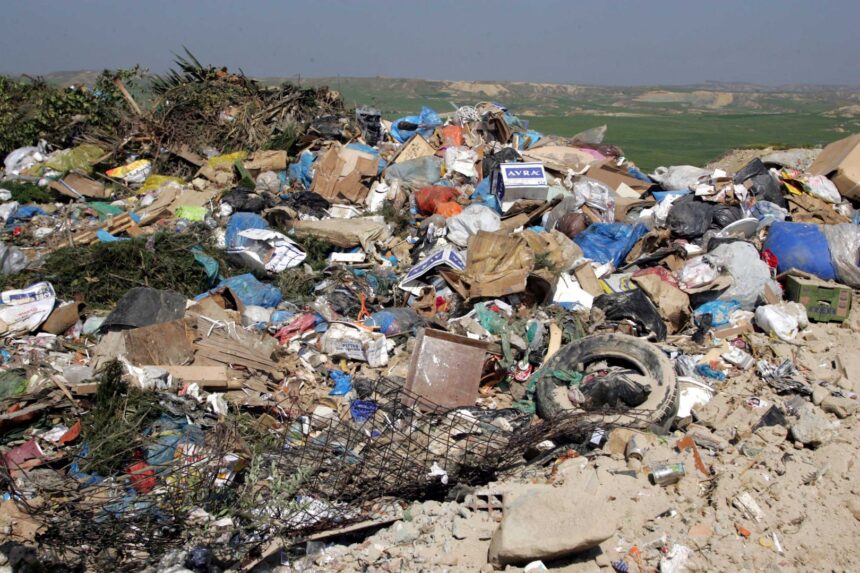
Households should not bear the cost of government failures in waste management, according to the Union of Municipalities, which praised parliament’s recent decision to reject a proposed landfill tax. This legislation, which aimed to introduce a €10 fee per tonne for waste sent to landfills, was voted down by 26 to 19 in the House plenum on Tuesday.
Parliament’s Decision Reflects Public Concerns
The rejection of the landfill tax was met with relief by the Union of Municipalities, which argued that the financial burdens of the state’s shortcomings in waste management should not fall on local authorities or households. The union has consistently raised concerns about the lack of adequate infrastructure necessary for effective waste management in Cyprus.
“The decision justifies our documented and persistent interventions,” stated a representative from the union. They emphasised that neither local government nor the public can shoulder the costs associated with the state’s ongoing failures in waste management practices.
Concerns Over Waste Management Infrastructure
Before the vote, several MPs voiced their concerns that Cyprus has not developed the necessary infrastructure to reduce landfill dependency. The parliament’s decision came amid warnings from the government that rejecting the tax could jeopardise €23 million in European Union funding intended for waste management projects.
The agricultural ministry described the outcome as “a particularly negative development”, noting that the potential loss of funding would result in a total of approximately €48 million, which included national co-financing. The ministry asserted its commitment to implementing a comprehensive waste management strategy, despite the setback.
Call for Fair and Coordinated Waste Management Solutions
In light of parliament’s ruling, the Union of Municipalities reiterated its support for Cyprus’ environmental commitments and the transition towards a circular economy. However, they insisted that achieving these objectives must not result in additional costs for households.
“The achievement of these goals requires comprehensive planning, adequate infrastructure, substantial cooperation of all stakeholders, and a fair distribution of responsibilities,” the union added. They further elaborated that environmental targets cannot be realised by shifting costs onto citizens for issues that are beyond their control.
Next Steps for Government and Local Authorities
The union has urged the government to initiate immediate consultations with local authorities to develop a fair and applicable framework that meets both environmental obligations and the country’s commitments to the European Union. They stress that any new framework should not impose unjust financial burdens on the public.
As the situation unfolds, the union plans to continue submitting “responsible and documented proposals” designed to shape an effective waste management policy that serves the interests of the environment, local government, and society at large. They maintain that a collaborative approach is necessary to ensure the success of any future strategies.
Implications for Future Waste Management Policies
The rejection of the landfill tax underscores the necessity for a strategic pivot in Cyprus’ approach to waste management. Stakeholders agree that without a solid foundation of infrastructure, any additional financial measures would be ineffective and could exacerbate existing issues.
Moreover, the union’s call for a coordinated effort highlights the importance of involving all relevant parties—government, local authorities, and the public—in discussions about future waste management policies. This collaborative approach is essential for developing solutions that are not only effective but also equitable.
Public Sentiment and Future Engagement
The outcome of the parliamentary vote demonstrates a growing awareness among lawmakers and the public regarding the challenges inherent in Cyprus’ waste management system. By rejecting the landfill tax, parliament has opened the door for further dialogue and potential reform, which could lead to improved waste management practices that benefit both the environment and local communities.
As discussions continue, it is crucial for the government to engage with local authorities and the public to foster a transparent and inclusive process. This will ensure that all stakeholders are informed and involved in shaping a sustainable waste management framework that aligns with both national and EU objectives.