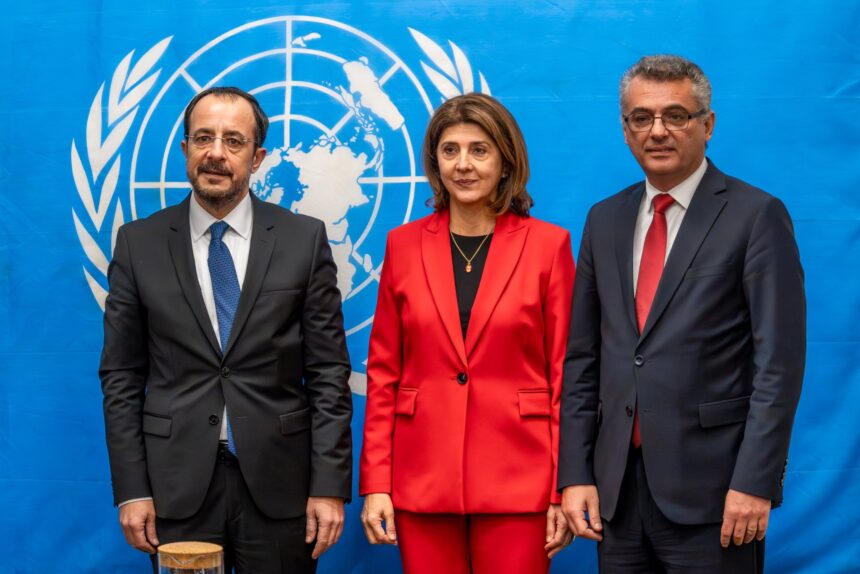
The focus keyword, Cyprus problem, is at the forefront of discussions following media reports suggesting the UN is exploring a ‘looser’ solution to the longstanding issue.
- The focus keyword, Cyprus problem, is at the forefront of discussions following media reports suggesting the UN is exploring a 'looser' solution to the longstanding issue.
- Turkish Cypriot leader Tufan Erhurman also expressed caution, suggesting that while ideas are circulating, none have reached a level that would justify public discussion or acceptance.
On Monday, United Nations Secretary-General Antonio Guterres’ spokesman, Stephane Dujarric, refrained from confirming or denying these reports. His comments came after an article in the Independent on Sunday reignited interest in the topic, which had previously been highlighted by the newspaper Politis three weeks ago. Dujarric acknowledged the media’s curiosity but remained non-committal, stating, “We have seen it. We have read the publication. [Guterres] and his envoy, Maria Angela Holguin, remain committed to supporting the leaders in Cyprus towards the resumption of negotiations.”
The reports suggested a framework involving two constituent states, with a minimal central government focused mainly on essential competencies for international and EU functionality. The proposed central government would consist of a presidential council led by the leaders of the two communities, supported by a small cabinet handling key areas such as foreign affairs and finance.
Furthermore, the reports hinted at potential guarantees from NATO, which could involve the presence of troops from Turkey, Greece, France, the UK, and the US on the island. This aspect raised eyebrows, especially in light of the sensitive political climate surrounding Cyprus.
In terms of implementation, the proposed solution appeared to envision a transitional phase lasting two to three years, during which Turkish Cypriots would cede territory in exchange for enhanced rights concerning trade and direct flights to Ercan (Tymbou) airport.
However, Cypriot deputy high commissioner in London, Spyros Miltiades, was quick to dismiss these notions, stating, “As far as I know, there has been no formal UN proposal that either side has been asked to respond to. The ideas being circulated appear to be speculative rather than a concrete proposal or plan.” He emphasised that meaningful progress must follow the established UN-led process.
The official stance was echoed by Yiannis Antoniou, the deputy government spokesman, who declined to comment on the potential for NATO guarantees or a ‘looser’ solution, reinforcing that discussions on such content are not currently on the table.
Turkish Cypriot leader Tufan Erhurman also expressed caution, suggesting that while ideas are circulating, none have reached a level that would justify public discussion or acceptance.