BirdLife Cyprus has successfully tagged a griffon vulture chick for the first time, marking a significant milestone in the conservation efforts for this endangered species in Cyprus.

Photo: en.philenews.com
- BirdLife Cyprus has successfully tagged a griffon vulture chick for the first time, marking a significant milestone in the conservation efforts for this endangered species in Cyprus.
- After tagging, the team vacated the area, closely monitoring the chick until its parents returned, demonstrating their commitment to the welfare of the species.
On July 10th, the organisation embarked on this mission after the successful transportation of vultures from Spain to Cyprus, aiming to bolster the local population. This particular chick is notable as it is the first offspring of ‘Molly’ and ‘Ramon’, two vultures that were brought to the island as part of the initiative.

Photo: en.philenews.com
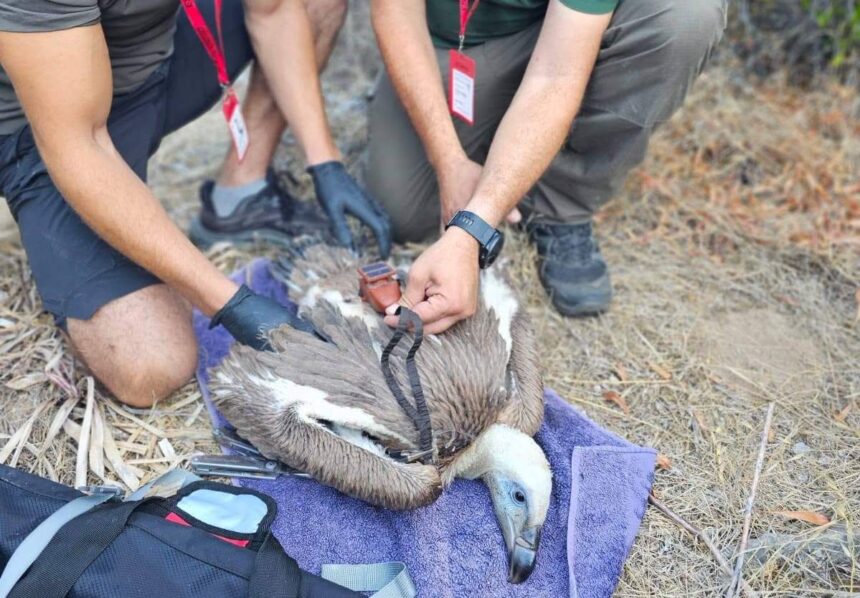
The tagging process was meticulously planned. BirdLife Cyprus monitored the nest closely to ensure the chick was the appropriate age for tagging, which is typically around 90 days. With the necessary permissions secured from the British Bases, a professional climber was dispatched to carefully retrieve the chick from its nest.
Once safely on the ground, a representative from the Game and Fauna Service fitted the chick with a GPS transmitter and a ring, while a veterinarian assessed its health, confirming it was in excellent condition. The entire operation was completed in about two hours, with the team ensuring minimal disturbance to the bird throughout the process.
After tagging, the team vacated the area, closely monitoring the chick until its parents returned, demonstrating their commitment to the welfare of the species.
This effort is a part of ‘Project Gypas’, an initiative aimed at increasing the griffon vulture population in Cyprus to at least 200 individuals. The situation has been dire, with only 37 griffon vultures recorded on the island as of 2025. Local wildlife has faced challenges, including incidents where vultures have suffered fatal injuries from human infrastructure, such as electrocution from power lines.
BirdLife Cyprus expressed optimism about the future, stating, “A new gypa is slowly preparing to spread its wings over the Cypriot countryside.” This sense of hope is crucial as the organisation continues its vital work to ensure the survival of these magnificent birds in their natural habitat.