The Mafia State report has ignited controversy, with claims that its contents should never have reached the police and the cabinet. Lito Kariolou, the lawyer representing Makarios Drousiotis, the book’s author, voiced her concerns during a recent state television interview.
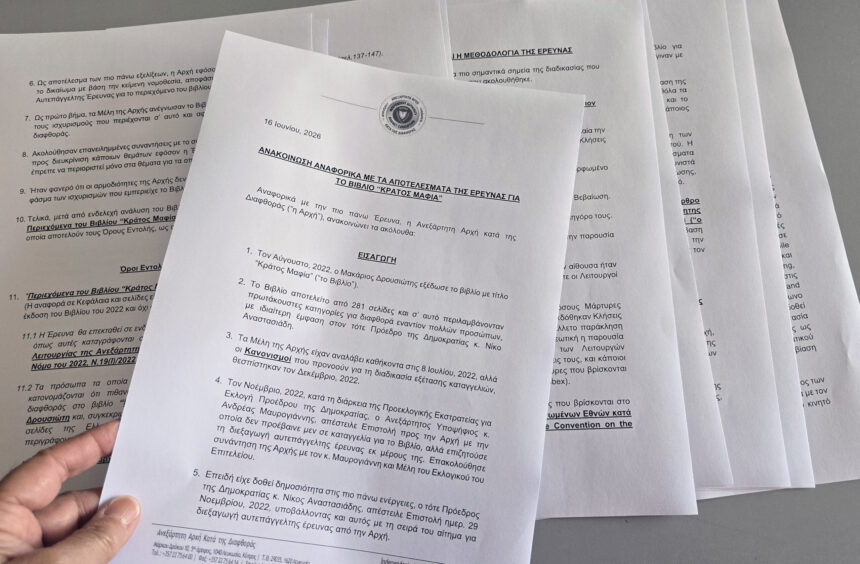
Kariolou described the transfer of all investigation materials by the Legal Council, which was established after the recusal of both the attorney-general and deputy attorney-general, as an example of “institutional collapse.” She stated that the council, composed of senior legal counsel, had inappropriately shared the full contents of the investigation, including witness testimonies and evidence, with both the police and the Council of Ministers.
“When we are talking about the paralysis of the institutions, this is what we mean,” she remarked, underscoring her belief that the confidentiality of witnesses was compromised. According to Kariolou, the investigating officers had secured critical testimonies from individuals who had never previously engaged with the Cyprus police, and who may have been reluctant to provide such testimonies to the police directly.
When questioned about the potential for leaks from the police regarding sensitive witness statements, Kariolou expressed serious concerns, referencing previous issues with police conduct in various aspects of the investigation. She stated, “The police are involved; in several chapters of the investigation, we had serious problems with actions of the police.”
Kariolou was adamant that the cabinet should not have received the investigation report. The witnesses had been assured of confidentiality by the inspecting officers, a claim she did not provide evidence for, but one she believed was critical to their willingness to testify.
“In this way and the administering of the matter, witnesses and testimony were exposed irreparably to possible dangers,” she stated, emphasising the gravity of the situation where witness testimonies, meant to be protected, had been left vulnerable to leaks and potential intimidation.
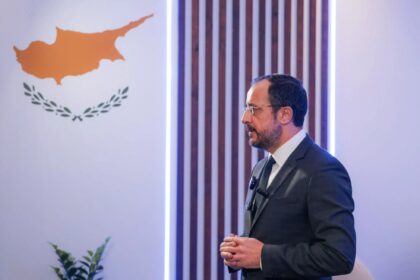
The lawyer also critiqued President Nikos Christodoulides for his involvement, noting his previous role as a minister in the Anastasiades government. She highlighted that the president had provided testimony to the investigative committee and publicly commented on his interactions with Andreas Vgenopoulos, a Greek banker alleged to have been involved in bribery schemes.
Kariolou questioned why President Christodoulides had not recused himself from the process, stating, “For what reason had Mr Christodoulides not recused himself? We are at an impasse.” The implication was clear: the integrity of the investigation was at stake, and the president’s past connections raised concerns about impartiality.
To resolve this impasse, Kariolou supported a proposal from another lawyer suggesting that the Transparency Commissioner, who had been overseeing the Mafia State investigation, be granted the authority to appoint criminal investigators and lead the criminal investigation moving forward. However, this would require a change in the law to empower the anti-corruption authority to conduct such an investigation.
In June, the authority had already indicated that former president Nicos Anastasiades and others could face criminal liability following their investigation into allegations made against them by Drousiotis. The ongoing fallout from the Mafia State report highlights significant concerns regarding institutional integrity and the safeguarding of witness testimony in sensitive investigations.