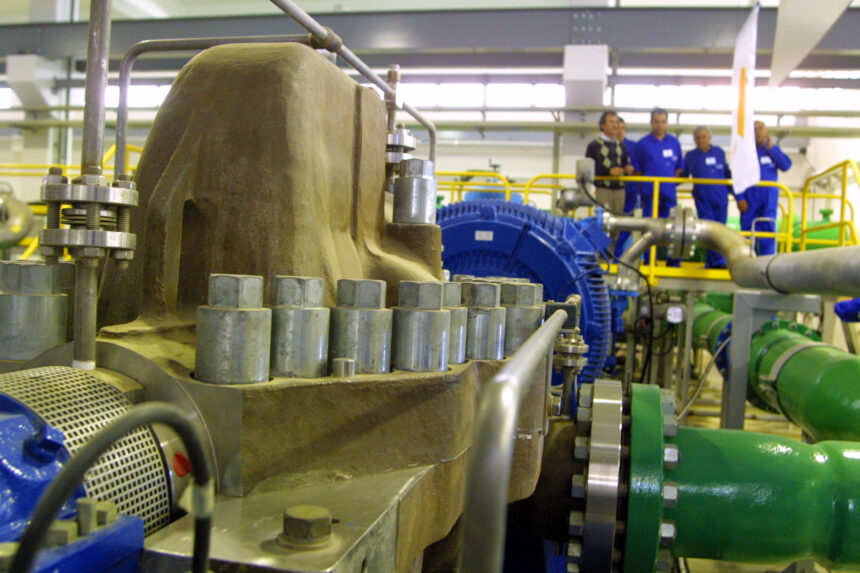
The debate over desalination is heating up in Cyprus as local communities express growing concerns about new facilities planned to combat increasingly frequent droughts. This year’s heavy rainfall provided temporary relief, but the reliance on desalination is becoming increasingly necessary as reservoirs face depletion.

Photo: cyprus-mail.com
Community Concerns in Mazotos
Earlier this week, the community council of Mazotos urged the president to reconsider plans for a mobile desalination unit in the area, highlighting potential environmental and archaeological impacts. The proposed unit, while described as temporary, has a capacity of 20,000 cubic metres of water per day, expandable to 40,000 m3, which residents argue is too large for a facility intended to be easily relocatable.
Defining Mobile vs. Permanent Desalination Units
The Water Development Department (WDD) defines a permanent desalination facility as a large, fixed installation designed to provide a long-term, reliable water supply, while a mobile or temporary unit is characterised as smaller and portable, tailored for short-term needs. Local residents are wary of the long-term implications of the Mazotos unit, fearing it could lead to permanent water infrastructure in their community.
Government Plans and Legal Challenges
The government has made significant progress regarding the Mazotos project, initiating environmental studies and starting the tender process. Officials aim to have the facility operational by summer 2027. However, the local community council has formally challenged the cabinet’s decision, and the matter is set to be decided in an administrative court.
Current Desalination Capacity in Cyprus
Cyprus currently operates five permanent desalination plants with a total nominal capacity of 235,000 m3 per day. These include Dhekelia, Larnaca, Vasilikos, Limassol, and Paphos. Additionally, there are three mobile units in operation, contributing an extra 37,000 m3 per day. The WDD estimates that desalination meets approximately 67% of the island’s water needs for 2024, a figure that can rise to 76% during extreme drought conditions.
Financial Aspects of Desalination
The financial implications of these facilities vary significantly year to year, influenced by the volume of water ordered. In 2024, the estimated cost is projected to be €118 million. Furthermore, permanent desalination plants consume about 187 gigawatt-hours of electricity annually, accounting for roughly 4.2% of the country’s total energy production.
Environmental Considerations and Future Developments
While the existing plants do not utilise renewable energy, there are plans to incorporate photovoltaics at the Larnaca facility and establish agreements with renewable energy producers for future operations. The WDD has also stated that new permanent plants scheduled for completion by 2029 will incorporate renewable energy sources.
Emerging Facilities and Innovations
In addition to the planned mobile unit in Mazotos, another desalination facility in Garyllis is nearing completion. This 10,000 m3 facility will draw from brackish water sources, marking a departure from conventional seawater desalination methods. The Garyllis unit is currently undergoing testing, with commercial operations expected to commence once quality standards are met. The mobile units previously donated by the United Arab Emirates are now integrated into the Moni facility.
Challenges Ahead: Water Stress and Sustainability
Despite ongoing investments in desalination, experts warn that these measures alone may not address the broader issue of water stress in Cyprus. Hydrologist Giorgos Christodoulou has pointed out that as the population grows and climate change exacerbates water scarcity, it is critical to reconsider the economic model and adopt more sustainable practices. The impact of desalination on marine environments, particularly due to the production of brine, remains a concern, emphasising the need for a balanced approach to water management.
Government Goals and Future Outlook
Agriculture Minister Maria Panayiotou has publicly stated the government’s ambition to meet 100% of water needs by 2050, a goal that has sparked debate among experts. While technological advancements in desalination may provide short-term relief, a holistic strategy focusing on conservation, water reuse, and sustainable development is essential for ensuring long-term water security.