legal-medical cooperation — legal-medical cooperation — The need for closer cooperation between the legal and medical professions in addressing challenges arising from technological advances, particularly artificial intelligence, emerged as a focal point at the inaugural interdisciplinary conference on law and medicine in Nicosia.
- He further stressed the necessity of distinguishing between complications, risk, adverse outcomes, and liability to foster a safer medical environment.
Legal-medical cooperation: Bridging Law and Medicine
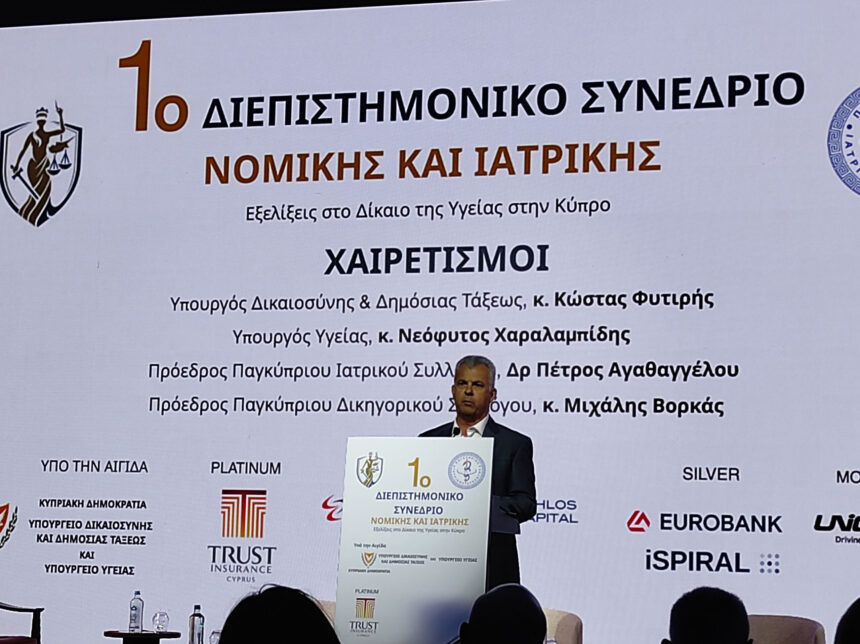
The conference, titled Developments in Health Law in Cyprus, was organised by the Cyprus Bar Association and the Cyprus Medical Association. It brought together experts to explore pressing issues, including medical liability, patient rights, bioethics, health data management, and the impact of AI on healthcare.
Government Perspectives on Healthcare Evolution
Health Minister Neophytos Charalambides opened the conference by highlighting its significance in merging two critical fields that safeguard human life, dignity, and fundamental rights. He acknowledged that rapid advancements in healthcare and biomedical technology are presenting both opportunities and responsibilities.
Charalambides expressed that protecting personal data, ensuring the ethical use of artificial intelligence, and maintaining transparency are challenges that necessitate ongoing vigilance and collaboration. He emphasised the need for health law to evolve alongside societal needs, ethical principles, and international developments. Key topics such as patient rights, medical liability, and equal access to medical services must spur meaningful dialogue and interdisciplinary cooperation.
Justice and Medical Integration
Justice Minister Costas Fitiris echoed the need for synergy between justice and medicine, the two foundational pillars of a democratic state. He remarked that the quality of society is reflected not only in economic indicators but also in public health and the integrity of justice systems.
Referring to Cyprus, Fitiris noted significant reforms in the health sector, particularly the introduction of the national health system, Gesy. However, he cautioned that technological advancements are bringing new challenges, including those associated with AI, genetic data, telemedicine, and cybersecurity.
“Every technological advancement must be accompanied by a clear institutional framework, safeguards, and effective protection of citizens’ rights,” Fitiris stated, reaffirming the importance of medical and legal confidentiality as essential to a democratic society.
Complexities in Modern Medical Practice
Petros Agathangelou, president of the Cyprus Medical Association, addressed the increasing complexity of contemporary medical practice. He pointed out that physicians operate within a landscape shaped by scientific advancements, legal obligations, and heightened public expectations. Agathangelou argued for a clear and equitable framework that not only protects patients but also empowers doctors to practise medicine with confidence.
He further stressed the necessity of distinguishing between complications, risk, adverse outcomes, and liability to foster a safer medical environment.
The Call for Interdisciplinary Cooperation
Michalis Vorkas, president of the Cyprus Bar Association, emphasised that access to justice and healthcare are fundamental human rights. He advocated for stronger interdisciplinary cooperation, accountability, and adherence to the rule of law, noting that both sectors face significant challenges that require comprehensive approaches.
“The trust of citizens is built through accountability, transparency, and constructive public dialogue that leads to meaningful and effective reforms,” Vorkas concluded, underscoring the need to protect citizens’ rights to healthcare and legal access in both principle and practice.