man oushe — man oushe — Man’oushe, a simple flatbread, has become synonymous with the early morning rituals across the Levant. As dawn breaks, the comforting aroma of man’oushe zaatar wafts through the air, weaving itself into the fabric of daily life. Before the city awakens and the world stirs, bakeries and home kitchens come alive, where dough is lovingly prepared, pressed, and adorned with fragrant herbs.
Man oushe: A Culinary Tradition Rooted in History
The origins of man’oushe can be traced back to the ancient bread-making traditions of the Fertile Crescent. For millennia, communities have baked flatbreads on hot stones or in clay ovens, utilising the wheat that flourishes in the region’s arid climate. These practices are not merely culinary; they represent a cultural connection to the land and its resources.
The Meaning Behind the Name
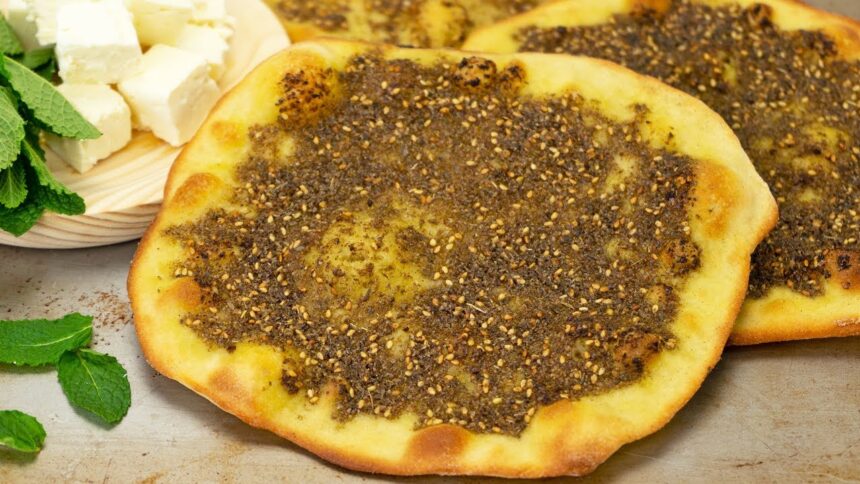
Derived from the Arabic verb na’asha, meaning to engrave or imprint, the name man’oushe captures the essence of this cherished dish. Before the dough is placed in the oven, fingertips create small dimples, which are then filled with zaatar—a flavourful blend primarily made of wild thyme, sesame seeds, sumac, and olive oil. This mixture embodies the essence of the Levantine landscape, offering a vivid taste that is both comforting and familiar.
The Social Fabric of Man’oushe
For generations, man’oushe has transcended the realm of mere food; it has been a symbol of community and connection. Traditionally, women would prepare the dough at home and bring it to communal ovens at dawn. The bread, once baked, emerged golden and fluffy, the zaatar toasted to perfection, creating an irresistible breakfast option that was both practical and delightful.
Evolving from Home to Street
As urbanisation took hold in the nineteenth and twentieth centuries, dedicated bakeries began to emerge, specialising in man’oushe. What was once a domestic ritual transformed into a street-corner indulgence, allowing more people to savour this flatbread as part of their morning routine. With its easy portability, man’oushe became a breakfast staple, perfect for children heading to school or workers heading to the fields.
Modern Variations and Regional Flavours
While the classic zaatar and olive oil combination remains a beloved favourite, the world of man’oushe has expanded to include a variety of delicious toppings. Soft white cheeses like akkawi can be spread beneath the herbs, adding a creamy texture, while halloumi provides a delightful salty contrast. For those seeking a heartier meal, minced lamb, tomatoes, or even a freshly cracked egg can transform this flatbread into a satisfying breakfast.
The Art of Baking
Modern ovens and refined flours have subtly altered the texture of man’oushe, yet the fundamental character endures. Each bite offers a crisp edge while remaining tender within, a delightful contrast that continues to resonate with lovers of this dish. The process of baking has also adapted to include local variations, showcasing regional differences that give man’oushe its unique personality.
Regional Distinctions and Cultural Significance
The Levant is rich with diverse culinary traditions, and man’oushe is no exception. In Lebanon, the zaatar blend may have a tangy twist from the use of sumac, while Syrian variations might favour a greener, herbaceous profile. Palestinian olive oil, pressed from the autumn harvest, adds a peppery depth that elevates the dish’s flavour.
A Culinary Cousin in Cyprus
In Cyprus, the embrace of man’oushe has been a natural fit, as thyme and olive oil are also fundamental to Cypriot cuisine. Bakeries there now prepare man’oushe alongside local breads, often pairing the Levantine zaatar with Cypriot halloumi. This culinary exchange exemplifies how food travels, carrying with it the memories, flavours, and warmth of shared cultures, reinforcing the notion that man’oushe is more than just a meal; it is a symbol of unity.
The Comfort of Tradition
As the sun rises, the scent of man’oushe zaatar serves as a fragrant reminder of home for many across the Levant and beyond. It encapsulates a sense of belonging, evoking memories of laughter-filled kitchens and bustling bakeries. Whether enjoyed fresh from the oven or packed for a busy day ahead, man’oushe continues to be a cherished morning companion, embodying both tradition and innovation in every bite.