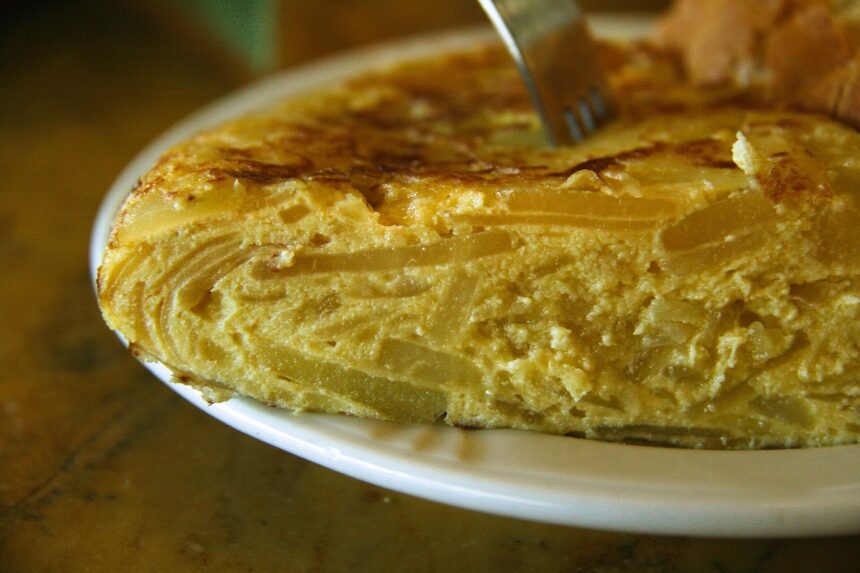
Tortilla Española is a dish that may seem too simple to be memorable, yet its rich history and comforting flavours make it unforgettable. A staple in Spanish cuisine, this dish is known as tortilla de patatas in its homeland and is found across kitchen tables, cafés, and tapas bars alike. With its golden hue and smooth texture, it embodies both everyday nourishment and a touch of celebration.
The Humble Origins of Tortilla Española
The origins of Tortilla Española are rooted in practicality. Dating back to the 18th and 19th centuries, it emerged during a time when potatoes were becoming integral to the Spanish diet. For many rural families, this combination of eggs and potatoes was a reliable source of sustenance, serving as a filling meal that was both affordable and nourishing. Over time, what began as a utilitarian dish evolved into a comforting favourite, cherished for its simplicity and heartiness.
A Lesson in Patience
Creating the perfect tortilla requires a gentle hand and a patient approach. The process begins with slicing potatoes that are then cooked slowly in generous amounts of olive oil until they are soft and tender. This method eschews haste, allowing the flavours to meld beautifully without becoming overly crisp. Once the potatoes are ready, they are folded into beaten eggs and returned to the pan to set.
One of the most nerve-wracking moments for novice cooks is the flipping of the tortilla. With a plate placed firmly on top of the pan, the cook must turn the tortilla over in one swift movement, a small act of bravery that is essential to achieving the perfect texture. This moment is often a rite of passage for anyone who wishes to master this iconic dish.
The Great Onion Debate
One of the most engaging aspects of Tortilla Española is the ongoing discussion about the inclusion of onion. Some chefs advocate for finely sliced onions to be cooked alongside the potatoes, believing that they add sweetness and depth to the dish. Others staunchly argue against their presence, insisting that a true tortilla should remain onion-free.
This friendly debate highlights the personal connection many have with the dish. Regardless of the preference for onion, one thing remains clear: Tortilla Española is a canvas that reflects individual tastes while maintaining its classic foundation. Variations may include a touch of chorizo or bell pepper, yet the traditional version is often seen as the gold standard.
Seasonal Adaptability
Tortilla Española is incredibly versatile, adapting effortlessly to the changing seasons. During the warmer months, it is often served at room temperature, making it an ideal choice for picnics or as a filling addition to sandwiches enjoyed on the beach. Conversely, in the cooler months, it transforms into a comforting dish that pairs beautifully with bread and a fresh salad. Its ability to retain flavour and texture makes it an excellent option for meal prep, as it keeps well and travels easily.
Cross-Cultural Connections
Interestingly, Tortilla Española finds a sense of familiarity in Cyprus, where olive oil, eggs, and potatoes are also kitchen staples. While Cyprus may not have a traditional version of the dish, the Mediterranean philosophy of allowing ingredients to shine through is very much present. The seamless integration of Tortilla Española into Cypriot cooking is a testament to its universal appeal.
What Makes Tortilla Española Timeless?
Perhaps the true essence of Tortilla Española lies in its unpretentious nature. It does not seek to impress with elaborate flavours or complicated techniques; rather, it invites appreciation for the quality of its ingredients and the care put into its preparation. This quiet confidence is what makes it a beloved dish in Spain and beyond.
As you explore the world of Spanish cuisine, the presence of Tortilla Española is hard to miss. Its comforting embrace, whether served as a main dish or a tapas option, continues to resonate with those who cherish simple yet fulfilling food.