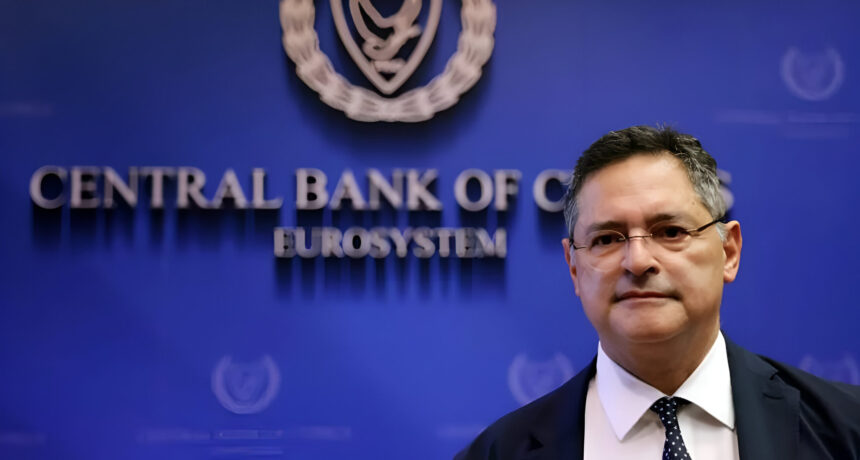
ecb rate — ecb rate — The Central Bank of Cyprus (CBC) governor Christodoulos Patsalides has indicated that a rate hike from the European Central Bank (ECB) is becoming increasingly likely in June. However, he made it clear that any such move would depend heavily on data and would not signal the commencement of a broader tightening cycle.
- “The ECB is data dependent and it is meeting-by-meeting policy decision making,” Patsalides explained. He stressed that the institution does not pre-commit to future policy increases.
Patsalides shared his insights during an interview with the financial news agency MNI, which were later highlighted by Bloomberg. He pointed to a deteriorating economic backdrop characterised by rising oil prices and growing uncertainty, both of which heighten inflation risks across the euro area.
As he remarked, “As things stand, things are worsening.” He further stated, “So, things are pointing to a raise in interest rates.” Despite this indication, he emphasised that the ECB has not locked itself into any specific policy pathway, focusing instead on a meeting-by-meeting approach to decision-making.
“The ECB is data dependent and it is meeting-by-meeting policy decision making,” Patsalides explained. He stressed that the institution does not pre-commit to future policy increases.
Patsalides elaborated on the current assessment of the energy price surge, questioning whether it is a temporary supply shock or if it could feed into broader inflation dynamics through demand. “What we are observing is a rising price, and this is evident,” he stated. He added, “The question is whether these rising prices will emigrate into the demand side of the equation, in which case the ECB and monetary policy would have an impact.”
He cautioned that if the shock remains confined to the supply side, premature tightening could harm economic activity. “If it is merely a supply shock and it does not spill over to the demand side, then acting pre-emptively could be costly,” he warned. “It could be detrimental to growth.”
During the April meeting, the ECB opted to maintain the deposit rate at 2 per cent, with policymakers choosing to wait for updated projections and additional data expected in June. Patsalides described the broader environment as highly uncertain, influenced by geopolitical tensions and ongoing supply disruptions.
“Persistent rising prices increase the risk of infiltration into core inflation,” he noted. He also mentioned scenarios where the ECB may decide to keep rates unchanged in June, should geopolitical tensions ease or if inflation expectations remain stable.
“So, this is a scenario under which the ECB would not have to raise interest rates,” he said. He firmly rejected the notion that a potential increase in June would mark the beginning of a sustained tightening cycle, stating, “Moving in June, that does not mean that we are entering a new cycle.”
The CBC governor reiterated that the ECB would continue to evaluate conditions on a meeting-by-meeting basis, particularly in light of an increasingly volatile global environment. A significant concern going forward will be the trajectory of oil prices and their longer-term implications for inflation.
“If there is an end to this conflict, the question is what would be the landing price of oil,” he remarked. “And what does this mean for second-hand effects? This is another sort of a longer-term question that needs to be taken into consideration,” he added.