Farmers are demanding answers from the government regarding the compulsory culling of animals affected by foot-and-mouth disease, setting a deadline for Tuesday.

Photo: in-cyprus.philenews.com
- Farmers are demanding answers from the government regarding the compulsory culling of animals affected by foot-and-mouth disease, setting a deadline for Tuesday.
- Although a strong police presence was noted in the area, no intervention was necessary. The atmosphere remained charged as farmers voiced their concerns and fears for the future of their livelihoods.
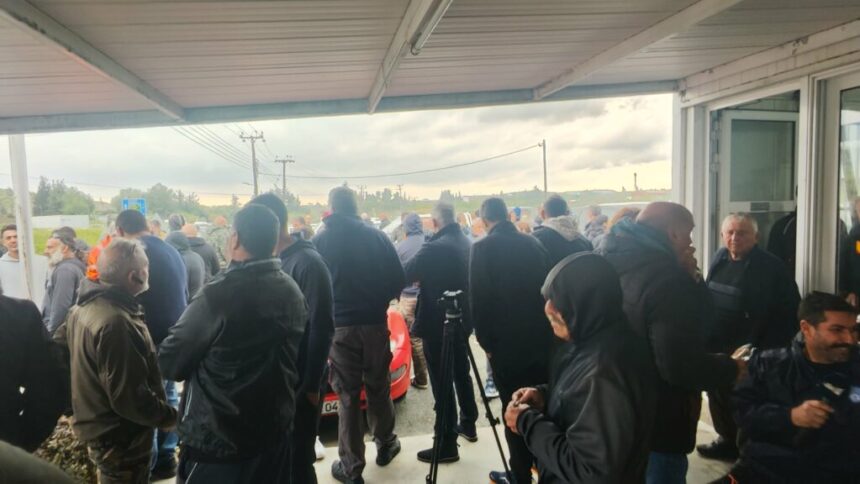
During a closed meeting on Saturday, March 14, livestock farmers expressed frustration after failing to secure an exemption from the European Commissioner Olivér Várhelyi and President Nikos Christodoulides. The farmers have given the government until Tuesday to respond to their questions about the culling protocols.

Photo: in-cyprus.philenews.com
Yiannakis Gavriel, chairman of parliament’s Agriculture Committee, announced that the committee’s agenda would be cleared to focus solely on foot-and-mouth disease. Both the finance and agriculture ministers have been summoned to attend, ensuring that farmers receive the essential information they are seeking.
In addition to the deadline, farmers are preparing to file mass court cases aimed at suspending or halting the culling of their livestock. Many have already signed relevant documents as part of this initiative.
The tension escalated on Saturday as farmers blocked the road from Aradippou to Athienou in protest, a move that was described as creating an “explosive atmosphere.” The road was reopened after approximately half an hour, but the unrest highlighted the growing frustration among farmers.
Some farmers proposed more drastic actions, including shutting down the Rizoelia roundabout and Larnaca airport, as a means to signify their discontent with the government’s handling of the situation.
Although a strong police presence was noted in the area, no intervention was necessary. The atmosphere remained charged as farmers voiced their concerns and fears for the future of their livelihoods.
Panicos Hambas, secretary-general of the Cyprus Farmers Union, spoke passionately about the crisis, stating, “Cyprus is going through one of its worst moments since 1974. It is a new haircut, but worse because it is a haircut of our souls too.”
Michalis Lytras, honorary president of the Pancyprian Farmers Union, also weighed in, urging for collective action to save the livestock population. He warned, “If we lose the livestock population, we will also lose halloumi, which we fought for.” He reassured farmers that they had received promises of compensation, though many remain sceptical about the promises being fulfilled.
Farmer Christos Karayiannis shared his personal struggle, saying, “They tell us they will bring us other animals, but if you destroy my mental state, if you destroy me as a person, what will become of us?” His statement reflects the deep emotional toll that the culling and its implications have on farmers.