cyprus negotiations — President Nikos Christodoulides has firmly rejected the idea of postponing the Cyprus negotiations, responding to UN Special Envoy Maria Angela Holguin’s suggestion that substantive talks could be deferred until after June.
Cyprus negotiations: No Barriers to Resuming Talks
In an interview with the Greek newspaper Ta Nea on Saturday, Christodoulides asserted that neither the upcoming parliamentary elections nor Cyprus’ presidency of the EU Council should hinder the resumption of negotiations. He stated, “Let me remind you that during Ms Holguin’s last visit to Nicosia, I submitted a five-point proposal,” outlining a clear roadmap for the discussions.
Key Points of the Proposal
The president’s five-point proposal encompasses various critical aspects aimed at moving forward with the negotiations:
- Affirmation of the Solution Basis: Christodoulides emphasised the need to reaffirm the agreed basis for a solution, referencing the joint statement from December 11, which highlighted political equality and Security Council resolutions.
- Documentation of Convergences: He called for the UN to record the convergences that had been reached up to the Crans Montana conference. Internal convergences should be communicated to both communities, while external ones should be shared with all five participants and preserved.
- Expanded Conference: The president urged the UN Secretary-General to convene an expanded conference based on the recorded document.
- Announcement of Substantive Talks: He proposed that the resumption of substantive talks should be publicly announced during the conference.
- Opening of Roadblocks: Finally, Christodoulides suggested that the opening of four roadblocks should also be announced.
Opportunities with New Leadership
Highlighting the potential for renewed discussions, Christodoulides noted that the recent change in Turkish Cypriot leadership could facilitate a restart of talks from where they stalled in 2017 at Crans Montana. He remarked, “The current unacceptable state of affairs cannot constitute the solution to the Cyprus problem.”
Impact of Greco-Turkish Relations
On the matter of Greco-Turkish relations, the president acknowledged their potential to positively influence negotiations. However, he also pointed out limitations, stating, “Full normalisation of Greco-Turkish relations without the resolution of the Cyprus problem cannot occur, as the Greek government itself has repeatedly stated.” He reiterated that any improvements in relations do not negate Turkey’s obligations towards the European Union, including the need to restart negotiations.
Regional Cooperation Remains Vital
Christodoulides further emphasised the importance of regional cooperation, noting the ongoing activity of the Cyprus-Greece-Israel trilateral despite regional tensions. He mentioned that the United States has shown a strong interest in supporting this collaboration.
Criticism of UN Envoy’s Approach
Menelaos Menelaou, the Greek Cypriot chief negotiator, echoed Christodoulides’ stance earlier this week, criticising the UN envoy’s portrayal of both sides as equally responsible for the delays in negotiations. He argued that the obstacles stem from “the persistence of positions that undermine the agreed framework for a solution” and dismissed the idea that elections or the EU Council presidency limit readiness for negotiations.
Menelaou also pointed to ongoing challenges with confidence-building measures, referencing the Turkish Cypriot side’s refusal to implement agreed crossing points, including the UN proposal for Pyroi–Athienou, which was accepted by the Republic in July.
Looking Ahead to Upcoming Meetings
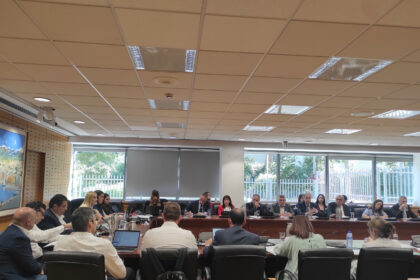
Preparations are underway for a scheduled meeting between Christodoulides and Turkish Cypriot leader Tufan Erhurman on February 24. The president reiterated that the resumption of negotiations remains his central focus, stating, “I am not distracted from the big goal. My main goal is the resumption of talks and that is where I am focusing all my efforts.”