trump peace — trump peace — Cyprus finds itself in a precarious position regarding its invitation to join Donald Trump’s controversial Peace Council for Gaza. After receiving the invitation on 17 January, the government initially embraced it, viewing it as a testament to the nation’s growing international stature. However, this optimism swiftly transformed into caution as serious concerns emerged about the implications of Trump’s initiative.

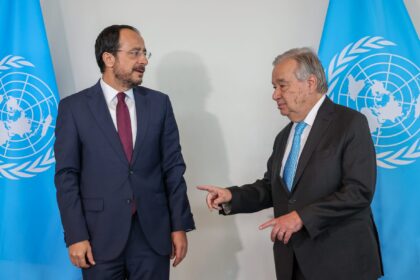
Photo: in-cyprus.philenews.com
Following the release of the invitation’s details, which were published verbatim by state leaders, scepticism began to take root both locally and internationally. Concerns centred on the possibility that the Peace Council might operate either in direct competition with the United Nations or even seek to supplant its role in international conflict resolution.

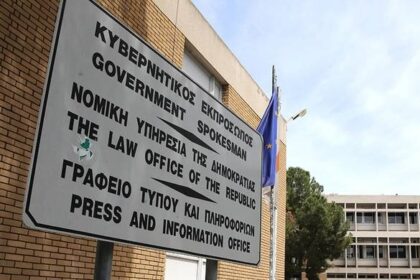
Photo: in-cyprus.philenews.com
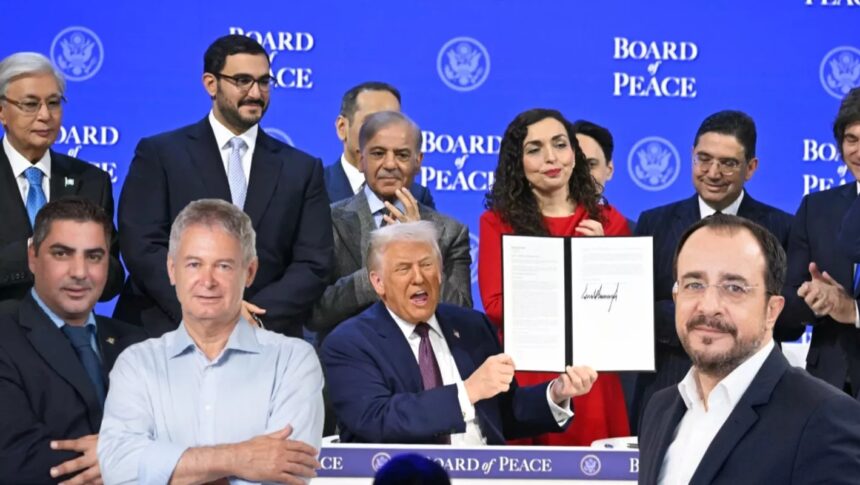
At the official Davos presentation, where Trump introduced the Peace Council, only Hungary and Bulgaria represented the EU, further compounding Cyprus’s apprehensions. Hours before this event, the Foreign Minister had confirmed Cyprus would not attend, citing “practical reasons” and acknowledging that Brussels was working to develop a unified EU stance.
The situation intensified when Trump extended a new invitation for a meeting on 19 February in Washington, specifically regarding Gaza’s reconstruction. This prompted an initially positive response from Nicosia, interpreting the invitation as focused solely on reconstruction efforts.
However, the list of invitees raised eyebrows. In addition to Cyprus, countries such as Greece, Spain, Germany, Italy, France, and others received invites, along with nations from the Middle East and beyond. This extensive reach of the Peace Council highlighted the potential for it to become a significant player in international diplomatic circles.
On 17 November 2025, the UN Security Council had already adopted Resolution 2803, which established a framework for post-war management in Gaza. This resolution outlined a peace plan that included a transitional governance period and deployment of an international stabilisation force, emphasising the UN’s central role in conflict resolution.
Trump’s initiative, however, appears to diverge from this established framework. He has referred to the Peace Council as a “bold new model” for addressing conflicts globally, which raises concerns about its legitimacy and adherence to international law. The founding charter of the Peace Council lacks explicit limitations to Gaza, indicating broader ambitions that could challenge existing international norms.
Cyprus faces a dilemma that is not merely about attending an international conference; it is fraught with political ramifications. As Deputy Government Spokesman Yiannis Antoniou noted, countries must consider their own circumstances when deciding how to respond. Cyprus is wary of any initiative that could undermine the UN’s authority, especially given its own long-standing issues related to Turkish occupation and its reliance on international law.
The potential consequences of participation or abstention are significant. Engaging with Trump’s Peace Council without clear parameters could signal acceptance of a parallel structure that might compete with the UN. Conversely, declining to participate may isolate Cyprus from crucial discussions about Gaza and could be seen as a lack of trust towards the United States.
Dr Andreas Mavrogiannis, a diplomat and former negotiator for the Cyprus issue, describes the Peace Council as a highly contentious initiative that raises questions about its alignment with international law. The charter appears to deviate from established norms, and many view it as an extension of Trump’s personal agenda rather than a genuine multilateral effort.
As Cyprus grapples with this complex situation, the need for a clear strategy becomes apparent. Any decision must balance the desire for closer relations with the US against the imperative to uphold international legal frameworks. The government’s initial satisfaction with the invitation has evolved into a cautious approach, reflecting the intricate nature of international diplomacy in a changing world.
The invitation to participate in the upcoming meeting presents an opportunity for Cyprus to assert its commitment to international legitimacy and the UN’s role in global governance. However, the path forward remains fraught with challenges, and the implications of any decision will resonate beyond the immediate context of Gaza reconstruction.