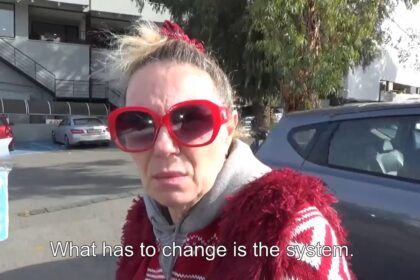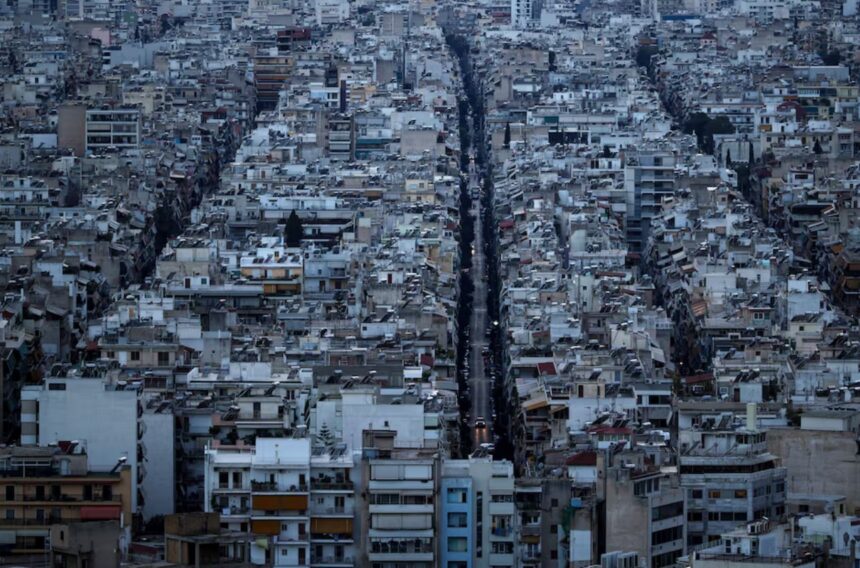
Soaring rents in Greece are posing a significant challenge to the country’s ongoing economic recovery. Eirini Syntihaki, a 28-year-old criminologist, recently faced the difficult decision to leave her beloved apartment in central Athens. Her flatmate’s departure prompted the apartment’s Chinese owners to announce a rent increase on her already unaffordable €700 monthly rent, which consumed nearly her entire earnings.
“With pain in my heart, I’m leaving a home I really love, the area, the house itself, the memories,” Syntihaki reflected as she packed her belongings to move in with her sister. “I knew I had to leave to survive.”
Soaring rents: Economic Growth Overshadowed by Rising Costs
While Greece’s economy is indeed rebounding sharply from the depths of the 2009-2018 financial crisis—outpacing the EU average in growth, repaying bailout loans ahead of schedule, and witnessing record tourist visits—many citizens are struggling under the weight of skyrocketing rents. Reports indicate that the economic recovery is leaving a significant portion of the population behind, with rising costs forcing families to cut back on essential expenses such as heating and entertainment.
The Small Enterprise Institute (IME), a confederation of small businesses in Greece, highlighted the grim reality: “Income adequacy is at a record low, with six out of ten households reporting that their monthly income does not reach the end of the month.” The IME’s report noted that economic difficulties are increasingly affecting middle-class families, not just those on low incomes.
Housing Shortages Rooted in Past Crises
The current housing crisis is largely a product of the financial turmoil that halted housing construction during the crisis years. According to a report by Piraeus Bank, there is currently a shortage of 180,000 houses for rent or sale in major Greek cities. This lack of available housing has been exacerbated by the introduction of golden visas in 2014, which have allowed foreign investors to purchase properties in Greece. Migration Ministry data indicates that around 20,000 properties have been sold to foreigners, primarily in Athens, while an additional 150,000 have been repurposed for short-term rentals.
Themistocles Bakas, president of the E-Real Estate Network, likened the current rental market to a historical food shortage. “It is like people waiting in line at a grocery store in the 1940s. Back then, they queued for food, oil, bread. Today, Greece appears to be waiting in line for a home,” he said.
Declining Home Ownership Rates
As rental prices continue to climb, home ownership among Greeks is also decreasing. Projections indicate that home ownership will drop below 70% in 2024, a significant decline from approximately 77% in 2009. This trend not only highlights the unaffordability of housing but also reflects the broader economic pressures facing many households.
Greece’s Housing Crisis Compared to Europe
While rising rents are a common issue across Europe, Greece’s situation stands out. From 2019 to 2024, rents in Athens surged by over 50% on average, according to E-Real Estate. In contrast, cities like Madrid and Paris saw increases of 26% and 14%, respectively. Despite a reported 27% rise in average Greek salaries during the same period, housing costs are consuming an increasingly larger share of these incomes. Data from Eurostat indicates that Greeks spend more on housing as a proportion of their income than any other EU nation.
The Greek government has attempted to alleviate some of the burden by providing rent subsidies to low earners; however, many renters report that these measures have had little effect. An IME survey revealed that over 83% of Greeks find it impossible to save money, and 40% reduced their spending on leisure activities such as dining out and attending movies last year.
Personal Stories of Displacement
The impact of rising rents is deeply personal for many Greeks. Kindergarten teacher Ioanna Tzaka, aged 52, recently received a notice to vacate her apartment in an upscale central Athens neighbourhood just days before Christmas. The property had been purchased by a Lebanese couple, and Tzaka was given only 30 days to find new accommodation.
She struggled to find a comparable property, as rents in her area had escalated from €1,300 to starting prices of €2,000. Ultimately, she relocated to the suburbs with her husband and their 14-year-old son, where they now pay €1,500 per month. “It feels like an uprooting for me and my family,” Tzaka lamented. “I grew up here. All my child’s friends live here.”
The experiences of individuals like Syntihaki and Tzaka illustrate the broader housing crisis in Greece, where soaring rents threaten to undermine the progress made in the country’s economic recovery.