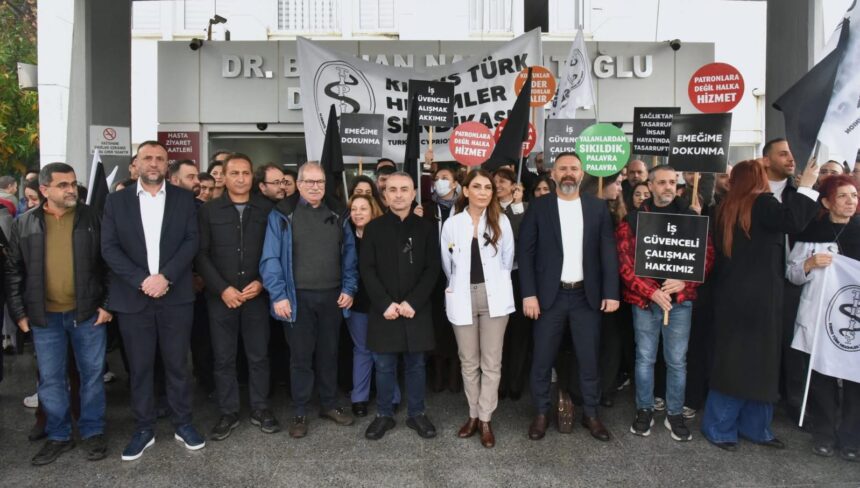
turkish cypriot — Turkish Cypriot doctors have taken to the streets, staging a full-day strike to highlight severe deficiencies in the region’s healthcare system. On Friday afternoon, members of doctors’ trade unions gathered outside the Dr Burhan Nalbantoglu hospital in northern Nicosia, expressing their frustration over the inability of health services to meet the growing demand.

Photo: cyprus-mail.com
Turkish cypriot: Rising Concerns Among Medical Professionals
Leading the protest was Ozlem Gurkut, the head of the Cyprus Turkish doctors’ trade union (Tip-Is), who articulated the widespread discontent among her colleagues. She condemned the government’s health ministry for allegedly redirecting funds away from public health initiatives to favour the private sector. “The inability to make preventative health services effective, coupled with bad demographic policies and deep poverty in this country, have led to an increase in the number of patients being admitted,” she stated.

Photo: cyprus-mail.com
Temporary Contracts and Staffing Issues
Gurkut highlighted alarming staffing issues, noting that over half of the doctors in the public sector are on temporary contracts. This precarious employment situation contributes to a lack of specialist doctors in many clinics throughout the north. “In some cases, doctors are so stretched that those working in their units are on call every day of the year,” she said, pointing to a concerning trend where the exception of long hours has become the norm.
Excessive Work Hours and Delayed Compensation
The average workweek for these doctors has swelled to about 60 hours, with on-call shifts often resulting in 30 consecutive working hours. Gurkut voiced her concern about delayed payments for these shifts, adding, “The system is sustained by the sacrifices of its employees. It places doctors under significant medical and legal risks, with heavy emotional burdens and irregular working hours.”
Critique of Healthcare Infrastructure
In her address, Gurkut did not shy away from criticising the conditions at hospitals, notably mentioning that the roof of the Dr Burhan Nalbantoglu hospital leaks during rain and some surgeries require doctors to bring their own equipment. She called for urgent reforms, urging the ruling coalition to implement legal regulations governing doctors’ working conditions and to invest in training opportunities.
Calls for Accountability from Health Officials
Cyprus Turkish medical association chairman Ceyhun Dalkan echoed these sentiments, directly challenging Health Minister Hakan Dincyurek to resign. “You have blood on your hands. You have not taken a single step to help anything,” he asserted, calling for an increase in hospital capacity and recruitment of more healthcare professionals.
Government’s Response to the Strike
In response to the strike, Minister Dincyurek defended the government’s approach, claiming that Tip-Is is exacerbating problems by resisting adherence to full-time work. He assured the public that the ruling coalition is committed to improving healthcare quality, stating, “Our people should rest assured. We will continue the process. We say we want better service for patients. They say they want to go on strike. The public will decide.”
A Growing Disconnect
The stark contrast between the government’s assurances and the realities faced by healthcare workers raises concerns about the future of health services in the north. As doctors demand better working conditions and a more robust healthcare system, the situation remains tense, with the possibility of further strikes looming if their grievances are not addressed.