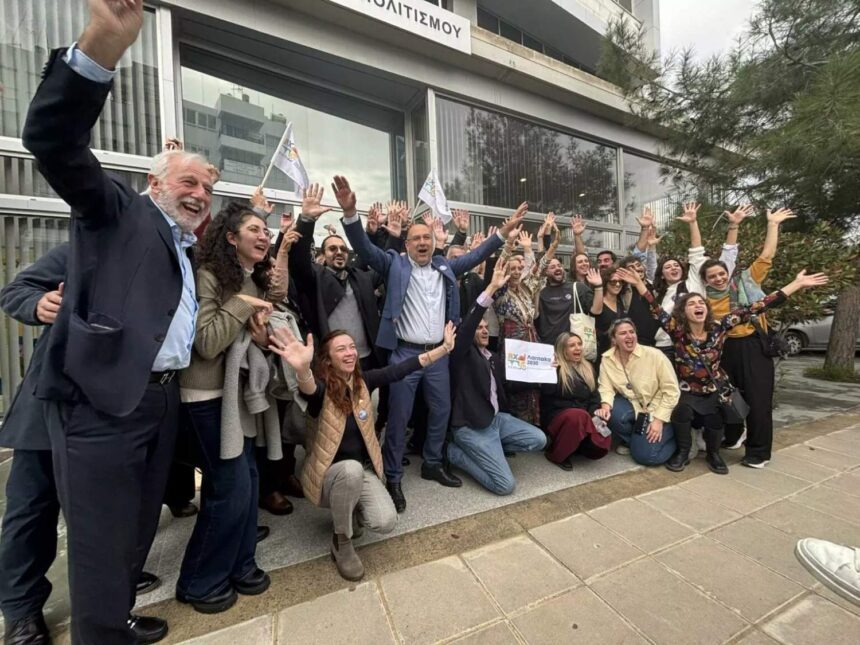
Larnaca’s European Capital of Culture team is racing to build the organisation needed to deliver a €27 million programme by 2030, with recruitment underway for key leadership positions.
- Larnaca's European Capital of Culture team is racing to build the organisation needed to deliver a €27 million programme by 2030, with recruitment underway for key leadership positions.
- Another initiative involves the European Network for Artist Mobility, focusing on artists' rights and improving working conditions, with a special emphasis on at-risk, exiled, and persecuted artists.
Kelly Diapouli, Artistic Director of Larnaca 2030, shared with the Cyprus News Agency that the project requires rapid expansion from its current four-person team. An open call is currently active, closing on 30 January, aimed at hiring a General Director and a Communications and Marketing Manager. The goal is to fill all critical positions by the end of March.
Before moving forward, the Deputy Ministry of Culture must officially designate Larnaca as the European Capital of Culture for 2030. Diapouli noted that while the expert committee’s decision was advisory, the ministry is expected to adopt the recommendation and relay this information to the European Commission and Parliament through formal channels.
The first year following formal designation will be heavily focused on procedural and organisational matters, particularly securing necessary funding. The Deputy Ministry has already pledged €10 million towards the cultural capital, though discussions regarding the timing and terms of disbursements are still ongoing.
The total budget of €27 million will be sourced from various entities. The Municipality of Larnaca is set to contribute €7.5 million, with the Provincial Organisation of Larnaca adding €2 million. An estimated €3.5 million is anticipated to come from sponsorships, while another €2 million will be sourced through competitive European programmes. The EU is expected to provide €1.5 million at the end of the funding process, with Diapouli emphasising that cultural capitals typically receive their budgets mainly from national sources.
Larnaca 2030 has already made strides in securing funding from two European programmes won last year. As part of a social art project, six foreign artists will spend a month in Cyprus, collaborating with residents from the Tsiakkilero and Agioi Anargyroi neighbourhoods. These collaborations will culminate in new works to be showcased during an October festival.
Significant events are already on the calendar, including a major European conference set for 6-8 May, coinciding with Europe Day. This conference will gather over 100 delegates from cities that are current candidates for or past holders of the European Capital of Culture title.
Another initiative involves the European Network for Artist Mobility, focusing on artists’ rights and improving working conditions, with a special emphasis on at-risk, exiled, and persecuted artists.
Diapouli is also planning a celebratory party to honour all artists who have contributed to Larnaca 2030 thus far. In April, the organisation will invite artists and cultural organisations from both the city and the province—those already involved and those wishing to participate. This event will present the programme, foster networking opportunities with European artists and organisations, and outline routes for participation. The projects showcased in 2030 will stem from this collaborative process.