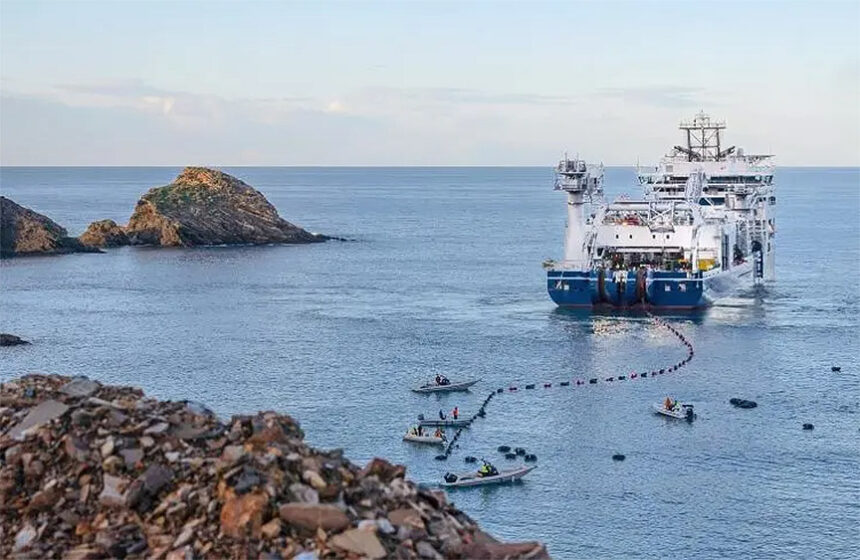
great sea — The Great Sea Interconnector (GSI) is facing significant setbacks as French telecoms company Nexans has withdrawn the tenders associated with the project. The company has informed interested parties that the GSI will not proceed according to its existing timeline, a move that raises concerns over the project’s future.
- As the situation develops, the newly appointed energy minister, Michalis Damianos, has not yet provided comments on Nexans' recent decisions or the future of the GSI.
Sources close to the government disclosed to the Cyprus Mail that the reassessment by Nexans was anticipated, especially given the numerous delays that have plagued the GSI. This decision comes amid broader discussions about the project’s viability and its alignment with current strategic goals.
Officials have indicated that subcontractors had been prepared for delays, as sustaining the original construction schedule was deemed impossible while the project awaited a comprehensive review. President Christodoulides, speaking to reporters on Tuesday, noted that he had not received any formal briefings regarding Nexans’ actions and emphasised the importance of responsible public communication.
Nexans has confirmed that written notices were dispatched to subcontractors, officially cancelling the tenders due to the project’s inability to move forward as initially intended. However, the company has stopped short of declaring a full withdrawal from the GSI, indicating instead that a reevaluation process is underway and a revised programme will be communicated before any new tenders are issued.
Interestingly, only weeks prior to this announcement, Nexans’ CEO Julien Emper had expressed confidence in the project’s progress, even dismissing the idea of developing a ‘plan B.’ This comes despite previous statements from the company mentioning alternative uses for the cables should the GSI fail to materialise.
Compounding the uncertainty, Nexans had previously received a substantial payment of up to €250 million from Greece’s electricity operator, Ipto, for completed work. It remains unclear whether any additional payments have been made since that time.
Discussions regarding the GSI have also involved high-level meetings between President Nikos Christodoulides and Greek Prime Minister Kyriakos Mitsotakis in Athens. The leaders have recognised the necessity of updating the interconnector’s technical parameters to attract potential investors, reaffirming the project’s strategic importance for regional security and Cyprus’ energy independence.
The European Commission has publicly communicated its strong support for the GSI. EU energy commissioner Dan Jorgensen, in a written response to MEP Michalis Hadjipantela, reiterated that completing the electricity interconnector remains a top priority for the EU. He confirmed that no further studies are required, as the evaluation of the project has already been completed, demonstrating that its benefits surpass the associated costs.
As the situation develops, the newly appointed energy minister, Michalis Damianos, has not yet provided comments on Nexans’ recent decisions or the future of the GSI.