exceptional textiles — Three exceptional textiles from the Eastern Mediterranean will feature prominently in Cypria Auctions’ Winter 2025 sale, each representing a unique artistic heritage from the 16th to the 19th centuries. These rare items, sourced from a distinguished private Greek collection, are poised to attract collectors and enthusiasts alike.

Photo: in-cyprus.philenews.com
Exceptional textiles: Spotlighting the Rare Ottoman Silk Brocade Kemha Panel
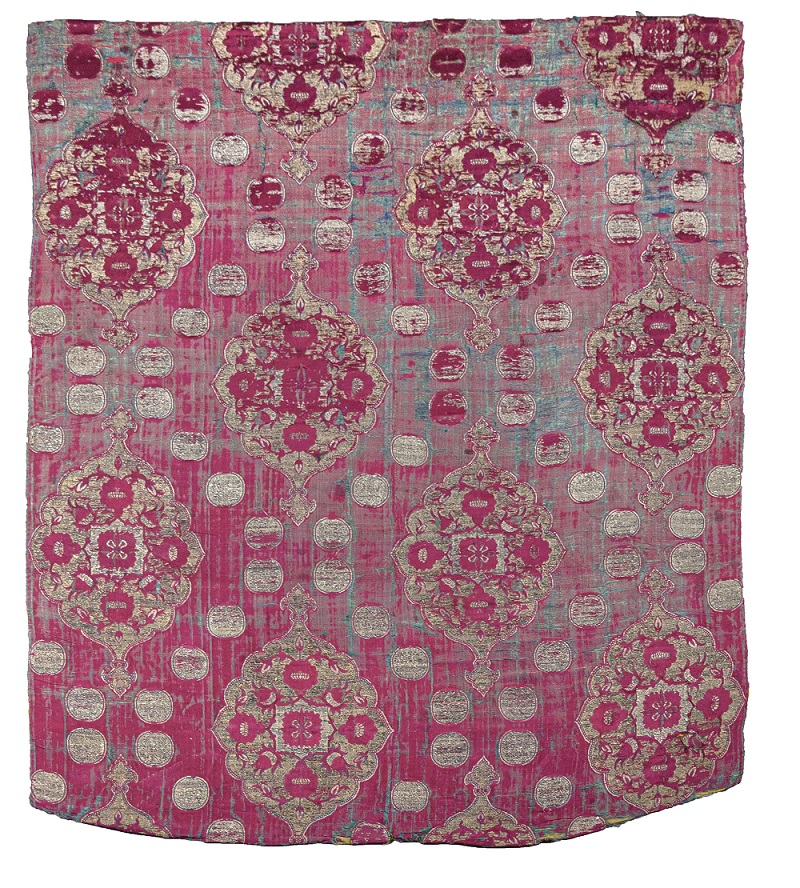
Among the standout pieces is a Rare Ottoman Silk Brocade Kemha Panel, dating back to the late 16th century. This exquisite textile is estimated to fetch between €4,000 and €6,000. Known for its vibrant hues of crimson, gold, and pale blue, the panel showcases a repeating arrangement of ogival medallions, intricately designed with detailed internal decoration.

Photo: in-cyprus.philenews.com
The finesse of the weave, along with the metallic threadwork, exemplifies the architectural clarity of the patterns typical of the period. This kemha panel not only serves as a testament to the peak of Ottoman textile production but also illustrates the cross-cultural influences that were prevalent during its creation.
Comparative studies highlight similarities to a 16th-century embroidered satin kerchief documented by Walter Denny in his influential work, Tulips, Arabesques & Turbans (1982). A minor segment of this textile was previously exhibited at the Turkophilia exhibition in Paris in 2011 and also featured in Sotheby’s An Eye for Opulence sale in 2012.
The Timeless Elegance of the Epirus Embroidered Panel
Another remarkable item is the Epirus Embroidered Panel, hailing from the late 18th or early 19th century. This silk on linen piece is estimated to sell for between €1,200 and €1,500. The panel, originally part of a bedsheet, showcases the distinctive needlework of the Epirus region, recognised for its intricate designs and skilled craftsmanship.
Executed using herringbone, chain, and outline stitches, the panel features a vibrant floral motif consisting of stylised rosettes, leaves, and geometric borders. This design was drawn directly onto the base fabric, allowing embroiderers to improvise while adhering to traditional forms.
Notable comparisons can be found in A. J. B. Wace’s pivotal study, Mediterranean and Near Eastern Embroideries (1935), which documents similar motifs and compositions from the Epirus region. This panel stands as a testament to the domestic artistry of women embroiderers, preserved in both clarity and colour integrity.
Skyros’ Folkloric Symbolism Captured in Textile
Completing the trio is the Skyros Embroidered Cushion Cover, known as The Great Cockerel, from the 18th century. With an estimated value of €2,500 to €3,500, this cushion cover features a vibrant depiction of the iconic cockerel, a powerful folk symbol of the island of Skyros.
The design, rendered in colourful silks, symbolises fertility, independence, and vitality, making it a significant piece in the realm of Skyrian embroidery. This motif has been interpreted as a symbol of resistance during the Ottoman period, embodying the spirit of the local culture.
Scholarly references to similar works include Angeliki Hatzimichali’s Greek Popular Art I: Skyros (1925) and Roderick Taylor’s Embroidery of the Greek Islands and Epirus (1998), which discuss the cockerel’s representation as a secret emblem of pride and independence. The present example is notable for its balanced composition and excellent state of preservation, marking it as one of Skyros’s most desirable folk textiles.
Auction Details and Viewing Information
The auction will take place on 10 December 2025, starting at 7:00 PM at Gallery K in Nicosia. For those interested in attending, a public viewing will be available until the auction date. Bids can be placed in person, online, or via telephone, with comprehensive details available in the auction catalogue at cypriaauctions.com.
As these textiles enter the auction market, they offer a rare glimpse into the rich artistic history of the Eastern Mediterranean, inviting collectors to engage with a legacy that spans centuries and cultures.