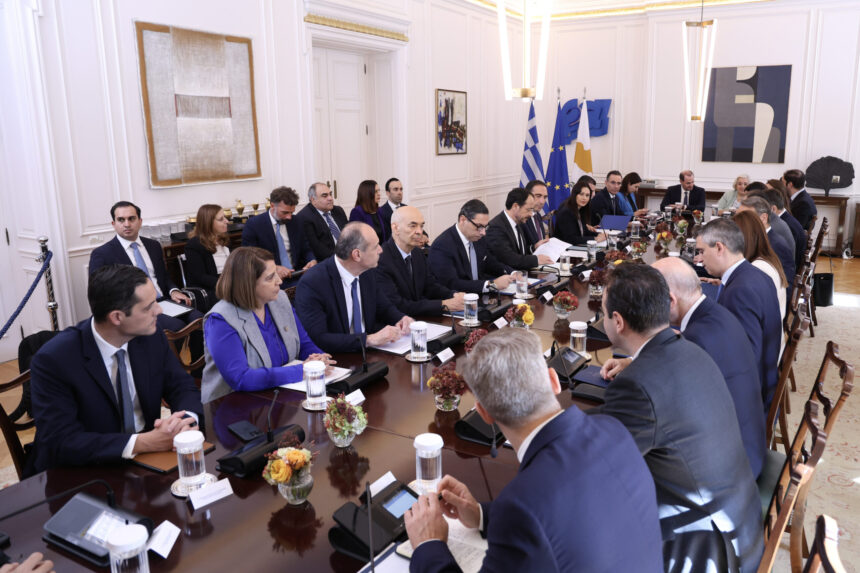
The Great Sea Interconnector project has taken a significant step forward as Cyprus and Greece agreed to update its economic and technical parameters during a joint summit in Athens on Wednesday. This ambitious initiative aims to connect the electricity grids of Cyprus, Greece, and Israel, fostering greater energy collaboration in the region.
Great sea: Strengthening Regional Energy Cooperation
Greek Prime Minister Kyriakos Mitsotakis underscored the importance of this agreement, stating that it will attract new, robust investors, ultimately benefiting all involved parties. The Prime Minister noted that strengthening the interconnector project reflects a shared commitment to enhancing regional energy security and interconnectivity.
Commitment to Collaborative Progress
Cypriot President Nikos Christodoulides echoed Mitsotakis’ sentiments, highlighting that the two nations are working together to expand their mutual energy cooperation. He emphasised the necessity for actionable steps that yield tangible economic benefits while also establishing a significant geopolitical footprint.
Financial Dynamics and Tensions
Despite the positive developments, financial tensions have marked the relationship between the two governments. Cyprus initially agreed to make five annual payments of €25 million to Greece’s independent transmission system operator, Admie, to help finance the project. These payments, designed to provide a stable income for Admie, would be made in advance of the project’s completion.
However, the Cypriot government has withheld these funds, citing a lack of visible progress on the project and ongoing disagreements over the funding sources. Cypriot Energy Minister George Papanastasiou previously stated that Cyprus would only proceed with the first instalment when the project is fully underway, expressing that the mere construction of cables does not meet the necessary criteria for disbursing funds.
Miscommunication and Political Friction
The relationship between the two nations has been strained further by accusations of misinformation. Cypriot Finance Minister Makis Keravnos labelled statements from Greek officials as “fake news,” while Greek Foreign Minister Giorgos Gerapetritis called for clearer communication regarding Cyprus’ stance on financial contributions.
These tensions arose after Papastavrou, a Greek official, claimed to possess studies indicating that the project lacks sustainability. In contrast, he was informed that these studies were commissioned by Cyprus’ Energy Minister and had been properly shared with the Greek energy ministry.
International Support and Future Meetings
In a more promising development for the interconnector, Papanastasiou participated in a recent ‘3+1’ meeting involving the energy ministers from Cyprus, Greece, Israel, and the United States. This gathering reaffirmed the commitment to advancing electrical interconnection projects, with all parties expressing the need to diversify energy supplies and reduce dependence on unreliable sources.
The meeting concluded with a pledge to reconvene in Washington DC between April and June next year, aiming to strengthen regional energy partnerships and improve connectivity among like-minded nations.
A Vision for the Future
As Cyprus and Greece embark on updating the Great Sea Interconnector project parameters, the implications extend far beyond mere electricity grids. This initiative not only promises enhanced energy security for the participating nations but also aims to bolster economic ties and geopolitical stability in the eastern Mediterranean region.
With the recent agreement, both governments appear committed to overcoming past obstacles and ensuring that this vital project reaches fruition. As they work collaboratively towards a shared vision, the Great Sea Interconnector stands as a testament to the potential for regional cooperation in addressing energy challenges.