ambulance response — ambulance response — The health services have firmly rejected police claims regarding the absence of ambulances during the deadly Limassol mountain fire, insisting that their emergency response was both present and effective. State Health Services Organisation (SHSO) spokesman Charalambos Charillaou has called for immediate retraction of the police statements that questioned the readiness and deployment of health services during the crisis.
This dispute emerged following the release of a police report that scrutinised the coordination of state services during the tragic mountain fire. The report’s references to missing ambulances sparked a strong reaction from health authorities, who felt the police portrayal did not accurately reflect the situation on the ground.
Ambulance response: Ambulance Presence and Deployment
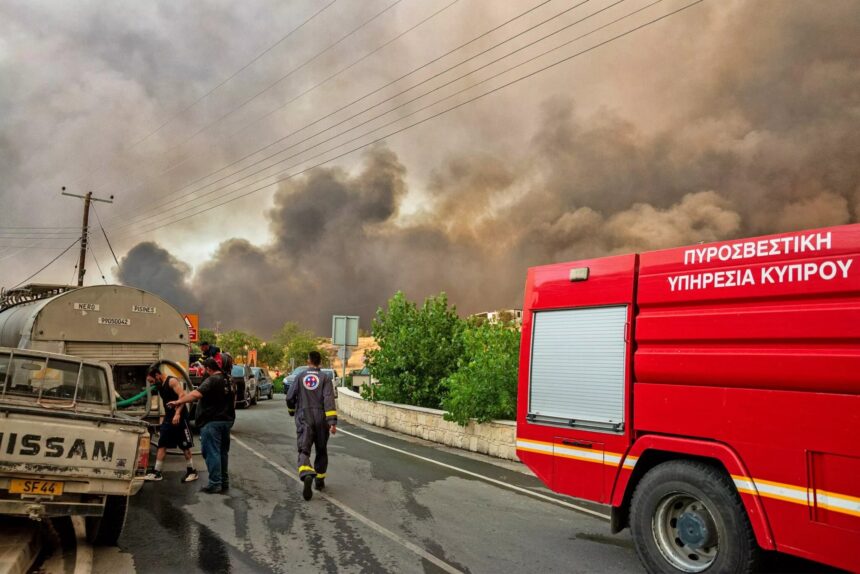
Charillaou was clear in his rebuttal, stating, “The Ambulance Service was present and covered the entire area with 9 ambulances.” He explained that not only were ambulances on site, but they were actively mobilised with designated personnel for potential patient airlifts and evacuations as the fire spread.
As the crisis unfolded, health services established a first aid station in Kypides, later relocating to Erimi due to safety concerns for staff as the fire intensified. Charillaou noted, “Our personnel were at risk when the fire expanded and the First Aid centre was moved to Erimi.” This move, he emphasised, was a precautionary measure to ensure the safety of the medical team.
Continuous Coordination and Support
The spokesman highlighted that there was always an Ambulance Service representative at the Coordination Centre, actively contributing to the response efforts. He challenged the notion that ambulances should have been stationed at every location merely for appearances, stating, “Unless they mean we should have had an ambulance there just to distribute panadol. The ambulances were in the field providing first aid to citizens.” This pointed response underscores the operational focus of health services during the emergency.
Evidence of Response
In a bid to dispel doubts about the ambulance presence, Charillaou pointed to GPS tracking capabilities, asserting, “We can prove at any moment where each ambulance was located. Our ambulances have GPS, and through this, we can prove where they were and refute claims about their absence.” This technology serves as a critical tool in validating the health services’ actions amidst the crisis.
During the course of the emergency, health services treated 82 citizens across two first aid centres and the Pachna Health Centre. Emergency departments were kept on high alert, with 21 individuals transported to Limassol General Hospital, seven of whom required admission, including two patients treated at the burns unit in Nicosia Hospital.
Ongoing Support for the Community
Charillaou also noted the continued mental health support being offered to residents in the affected area. Despite other agencies departing once the fire was extinguished, health services maintained their presence. He stated, “All other services left once the fire was extinguished. We remained there and continue to remain there, providing psychological and other support, so nobody is justified in speaking about Health Services absence.” This commitment to ongoing support showcases the dedication of health services in the wake of such a traumatic event.
In a decisive conclusion to his statements, Charillaou urged the police to retract their claims, insisting that their report did not correspond to the reality experienced during the Limassol mountain fire. His strong stance reflects the ongoing tensions between the health services and police regarding the narrative of the emergency response.