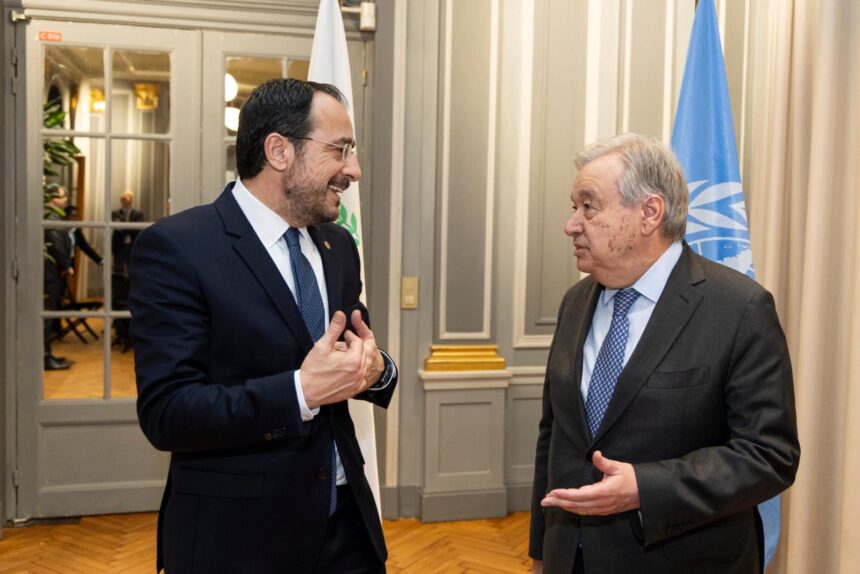
trust building — trust building — United Nations Secretary-General Antonio Guterres has acknowledged the commitment of Cyprus’ leaders, President Nikos Christodoulides and Turkish Cypriot leader Tufan Erhurman, to fostering a relationship based on trust. In an advance copy of his latest report on the UN’s engagement in Cyprus, Guterres highlighted the positive dialogue that has intensified between the Greek Cypriot and Turkish Cypriot leaders in recent months.
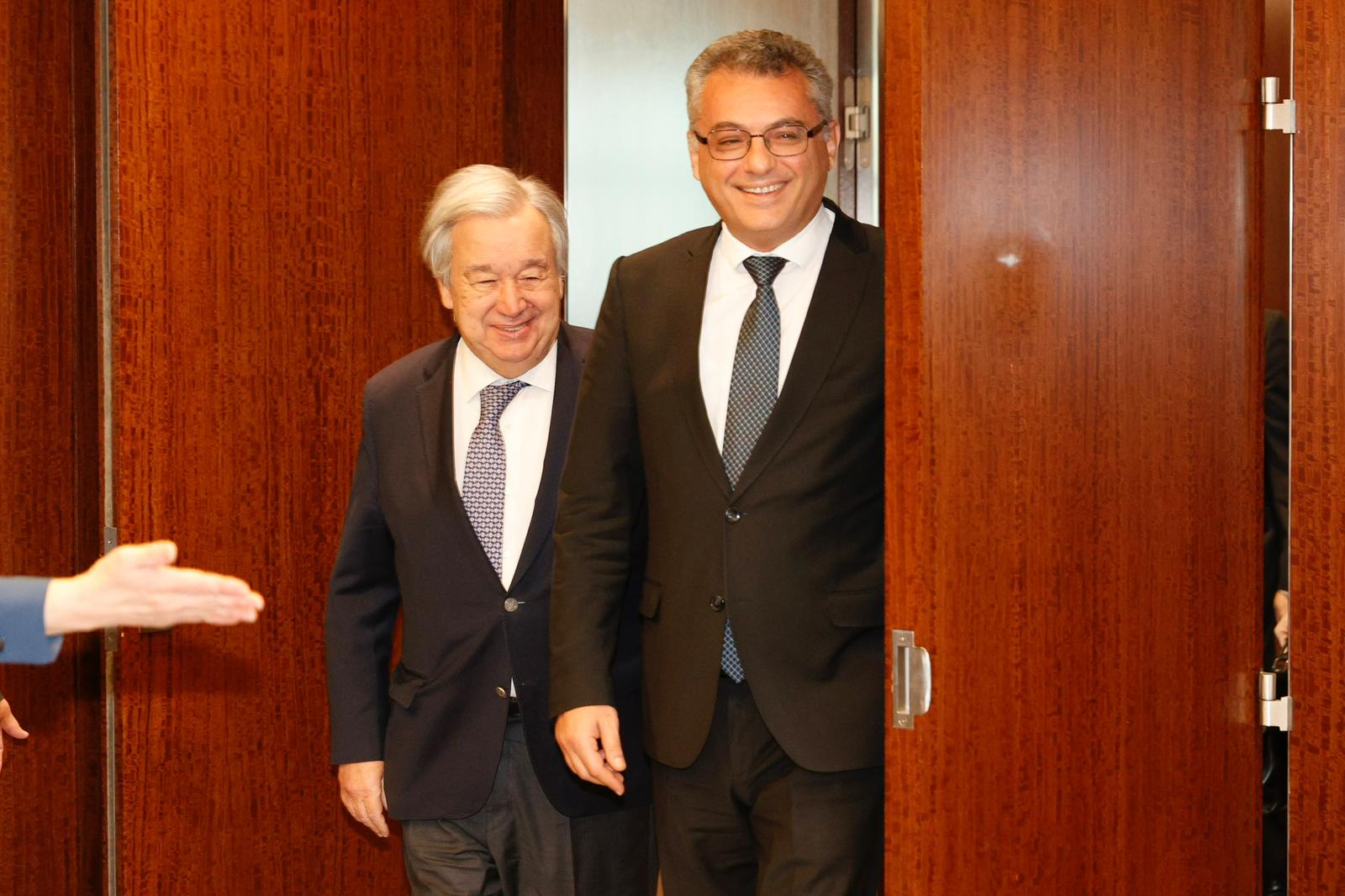
Photo: cyprus-mail.com
Guterres remarked, “The intensification of dialogue between the Greek Cypriot and Turkish Cypriot leaders over the reporting period remains positive. It demonstrates their commitment to building a relationship based on trust and to finding a path forward on the Cyprus issue.” However, he pointed out that several agreed trust-building initiatives from meetings held in March and July last year remain unimplemented.
“Implementation of these initiatives would improve the daily lives of Cypriots and demonstrate concretely that the sides possess the political will to make progress,” Guterres stated. He urged both leaders to continue their constructive engagement, particularly with UN envoy Maria Angela Holguin, and to seize the current opportunity for making tangible progress.
In his report, Guterres emphasised the need for both sides to demonstrate openness, flexibility, and compromise as outlined in UN Security Council Resolution 2723. He praised the ongoing work of bicommunal technical committees and encouraged further support in key areas such as education, crisis management, and environmental cooperation. “I once again stress the importance of education to instil reconciliation, forgiveness, and cooperation among school-aged children,” he added.
While Guterres noted positive developments, he expressed concern regarding unilateral actions by both sides in and around the buffer zone, and the lack of progress in de-escalation efforts. He called on the leaders to explore ways to overcome the impasses surrounding the opening of new crossings and urged the full implementation of the European Union’s Green Line regulation to enhance intra-island trade.
The Secretary-General welcomed the agreement reached in May concerning the conduct of religious services, appreciating the role of religious leaders as advocates for peace and dialogue. He also expressed gratitude for the support from Cyprus’ guarantor powers—Greece, Turkey, and the United Kingdom—in finding a mutually acceptable path forward amid a volatile regional landscape.
In their updates included in the report, both Christodoulides and Erhurman reaffirmed their commitment to a negotiated solution. Christodoulides expressed his “steadfast conviction” that a federal solution is the only viable path forward, while addressing concerns about Turkey’s actions in the occupied areas, which he claimed undermine the negotiation environment.
He highlighted the ongoing trend of Green Line trade but noted that the appropriate conditions for negotiations are being compromised by Turkey’s policies, including the illegal exploitation of properties belonging to displaced persons. He raised alarms about Turkey’s military enhancements in the occupied part of Cyprus and recent territorial expansions into the buffer zone.
Erhurman countered that since taking office, he has been committed to reversing the negative dynamics following the failed talks at Crans-Montana in 2017. He mentioned his four-point proposal aimed at ensuring meaningful negotiations and the importance of direct contact to bridge the widening socio-economic gap between the two communities.
He expressed disappointment over the rejection of a bicommunal children’s football match proposal, asserting that the absence of direct interactions continues to exacerbate divisions. Erhurman also condemned politically motivated arrests related to property issues by the Greek Cypriot side, highlighting how such actions damage trust between communities.
Amid these challenges, Guterres’ report serves as both a call to action and a recognition of the progress made in dialogue. The leaders of Cyprus are now faced with the critical task of translating their commitment into concrete actions that will benefit all Cypriots and pave the way for a sustainable solution to the long-standing divide.