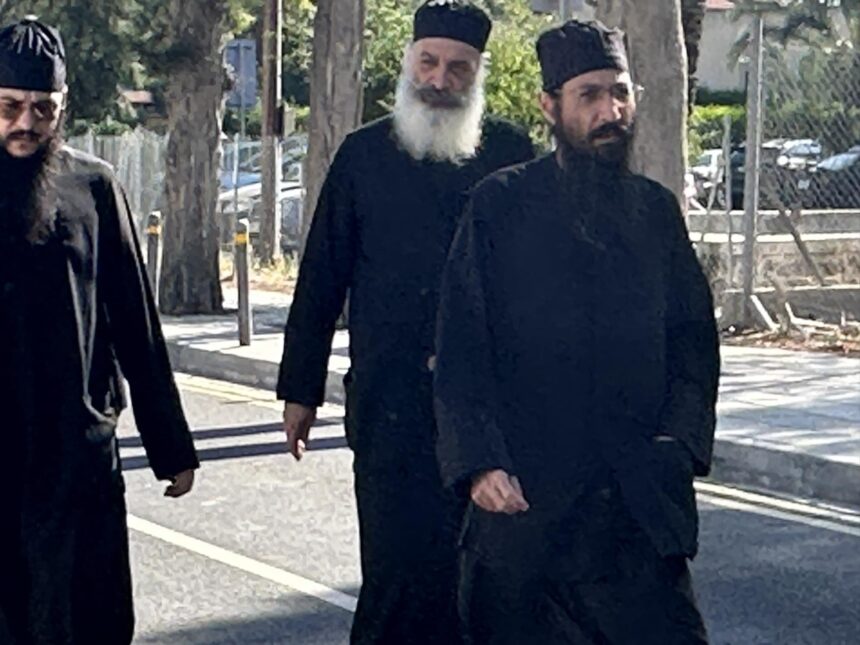
police legitimacy — police legitimacy — Doubt has been cast on the legitimacy of police actions during the ongoing Avakoum monastery trial in the Nicosia criminal court, particularly regarding the documentation and cataloguing of evidentiary items. The trial centres around monks Nektarios and Porfyrios, who face multiple serious charges, including conspiracy to defraud, forgery, and handling stolen goods.
Police legitimacy: Charges Against the Monks
Nektarios and Porfyrios have pleaded not guilty to the various allegations against them. The case emerged following the discovery of €800,000 in cash, alongside claims of fabricated miracles and CCTV footage of illicit activities within the monastery.
Incident Leading to the Trial
The legal proceedings were initiated after authorities investigated the monastery, revealing significant financial irregularities. As the trial progressed, the defence raised concerns over how certain items were seized and presented as evidence. Specifically, on the night of March 5, 2024, after the monastery had closed, the monks’ lawyers contended that individuals wearing hoods trespassed onto the property and removed various objects, which were later found at the Tamasos bishopric.
Defence Motions and Court Decisions
The defence team requested a trial within a trial to assess the legality of how these items were obtained. They argued that the police’s actions could have violated legal protocols, thus casting doubt on the integrity of the evidence presented. However, the court ultimately rejected this motion, paving the way for the trial to proceed without further examination of the evidence-gathering process.
Police Witness Testimonies
On Monday, during the proceedings, a police officer testified as the prosecution’s first witness. He was responsible for photographing items at both the Avakoum monastery and the Tamasos bishopric. During cross-examination, the defence scrutinised his methods and the circumstances under which he documented the evidence.
The officer recounted that he took photographs of various items of evidence on March 9, 2024, at the Tamasos bishopric, where he was accompanied by the financial crimes department. He described how items were tagged and numbered but could not recall specific details regarding who was responsible for the cataloguing process.
Questionable Entry and Authorisation
When questioned about the entry to the monastery, the officer admitted he could not recall whether the gates were opened for them or if they had received permission to enter. He further stated that he was not in charge of obtaining such authorisations, which raises questions about the legality of their presence during the evidence collection.
The defence attorney pressed the officer on whether he had observed any written authorisation from the monks or an active search warrant permitting the police entry. Again, the officer stated he could not recall, leaving a critical gap in the chain of custody for the evidence collected.
Prosecutorial Challenges
In addition to challenges regarding police procedures, the trial also faced complications regarding the legal representation of one of the monks. The defendant requested legal assistance, claiming he could not afford the fees associated with his defence. Lead prosecutor Vasilis Bissas opposed the request, citing a welfare services report indicating the monk’s employment and property ownership.
The monk argued that, despite earning around €1,000 a month from his job at a confectionary, his financial situation was precarious, with expenses of approximately €700. He contended that his immovable property was not easily liquidated, thereby complicating his ability to fund his legal representation.
The court has requested additional information regarding the monk’s financial circumstances before making a determination on his request for legal aid.
Continuing Developments
The trial is set to continue on Wednesday, as both the prosecution and defence prepare for further testimonies and evidence presentation. The outcome of this case holds significance not only for the accused monks but also for the credibility of police operations in such sensitive legal matters.
As the proceedings unfold, attention will remain focused on the validity of the evidence collected and the implications of any procedural missteps that may arise within the court’s examination of the case.